Roofing insurance for contractors
Roofing Contractor Insurance: Coverage for Roofers and Roofing Companies
Roofing contractor insurance covers the business behind the roof: the finished roofs your crews leave behind, the fire that hot work can start, and the fall from height. This is the overview of how the five lines fit together and where the rules change by state.
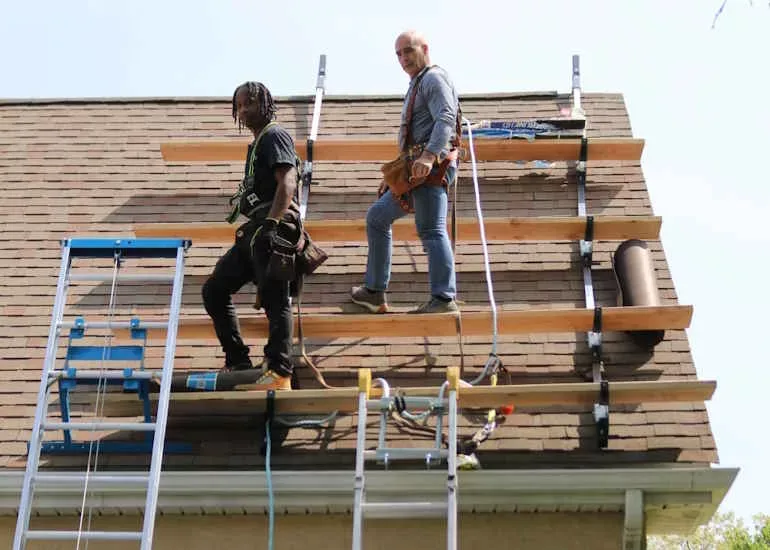

Roofing contractor insurance is the set of business policies a roofing company carries to answer for three exposures: a finished roof that leaks or fails, a fire on a hot-work job, and a crew member who falls. It is built from general liability, workers compensation, commercial auto, contractors equipment, and umbrella liability, and each line answers a different part of that risk.
This page is the overview of insurance for roofing contractors. It explains how the lines fit together, what changes with the kind of roofing you do and the state your crews work in, and where to go for the detail on each line. If you want a quote, tell us the roofing you do and the states you work in, and we place it with carriers that write the roofing class.
What roofing insurance covers
A roofing program is five lines working together, and each one answers a different question.
- General liability answers for the people and property around your work: a passerby hurt by falling debris, a building damaged during tear-off, and the claim that arrives months later when a finished roof leaks or fails.
- Workers compensation answers for your own crew. Roofing crews work at height, and a fall is a workers compensation claim.
- Commercial auto covers the trucks and trailers that carry crews, tear-off debris, and materials between jobs. General liability does not cover vehicles.
- Contractors equipment covers your own ladders, harnesses, nailers, metal-forming machines, and the materials you stage on site or move between jobs. General liability pays for harm to others, not for your property.
- Umbrella liability adds limit above general liability, commercial auto, and the employers-liability side of workers compensation, which matters when a single claim could exceed a primary limit or a contract asks for more limit.
The roof you leave behind
A roof keeps existing after the crew is gone. If it leaks or fails later, the damage lands on a building you no longer work on, and the claim arrives as a third-party property-damage or injury claim. That is the completed-operations exposure, and it is why your general liability needs to account for work you have already finished. Poor workmanship on its own is a separate matter: general liability is not a warranty on your own work, and the post on the “your work” and faulty-workmanship exclusion explains where that line sits. For the claim side, see whether general liability covers a roof leak.
Hot work and torch-down fire
Torch-applied membrane roofing puts an open flame on the roof. A fire that starts during hot work can damage the building and its contents. Federal construction rules treat heating, cutting, and welding as fire-prevention work: OSHA’s fire-prevention rule for welding, cutting, and heating sets out what an employer must do to keep fire hazards away from that work. How you manage hot work belongs in your submission, alongside the coverage rather than in place of it. Our post on hot-work and torch-down fire coverage goes deeper.
Falls from height and workers compensation
Roofing work happens at height. OSHA’s construction fall-protection rule addresses roofing by name: it has separate paragraphs for roofing work on low-slope roofs, for steep roofs, and for residential construction, and each calls for protection such as guardrails, safety nets, or personal fall arrest systems once the work is above the rule’s trigger height. Prevention and insurance do separate jobs. When a crew member does fall, the claim is a workers compensation claim, not a general liability claim, and how you run fall protection belongs in your submission. The posts on OSHA fall protection for roofing contractors and workers’ comp and falls from height go deeper.
Four states handle workers compensation differently from the rest of the country. In North Dakota, Ohio, Washington, and Wyoming it runs through a state-administered fund instead of private carriers, so a roofer with crews in those states arranges that coverage separately from the private policies used elsewhere. The workers compensation page explains how we handle a multi-state crew.
Subcontractors, general contractors, and certificates
A roofing contractor working as a subcontractor under a general contractor, or for a project owner who writes the insurance terms into the contract, meets those terms in the subcontract. They can specify the limits you carry, the additional-insured wording on your general liability and whether it reaches completed operations, and the certificate holder named on your evidence of insurance. We read the contract language with you before the policy is written so the program matches what the job requires. Two posts walk through it: what insurance general contractors require from roofing subs and additional insured for roofing contractors. When a contract asks for more limit than your primary policies carry, umbrella and excess limits are how you reach it.
Three kinds of roofing, three risk pictures
The program changes with the roofing you do. Residential roofing is steep-slope shingle work, re-roofs and tear-offs, and storm and hail repair, where the completed-operations tail and storm-driven volume matter. Commercial and industrial roofing is low-slope and flat work, where hot-work fire and larger contract requirements matter. Specialty, metal, and tile roofing is standing-seam, metal, and tile installation, where material cost and installation precision matter. A roofer can do more than one, and we write the program against the mix.
Licensing and insurance rules differ by state
Roofing licensing is set state by state, and the state rules change what a roofer has to carry and show. The state pages cover each state; three show how different the rules can be. Florida licenses roofing contractors under its Construction Industry Licensing Board and separates certified contractors, who may work anywhere in the state, from registered contractors, who may work only in the jurisdictions where they registered. California licenses roofing as its own contractor classification. Oklahoma uses a registration through its Construction Industries Board, and the board’s roofing FAQ says a contractor registering for residential roofing work must furnish proof of general liability insurance. Other states fold roofing into a general contractor license, rely on a registration, or leave it to local permitting, and each state page says which. Browse all the states we serve.
What drives the cost
Nobody can responsibly publish one price for roofing insurance, because the premium is built from your operation. The drivers are crew payroll and the work it covers, since payroll is the rating basis for workers compensation; your revenue and the completed work you leave behind; the mix of steep-slope, low-slope, hot-work, and specialty roofing; storm-season surges and the temporary or subcontracted crews that come with them; the value of your trucks and equipment; your claims history; and the limits your contracts require. Our guide to what actually drives roofing contractor insurance cost takes them one at a time, and the state cost guides add each state’s weather, licensing, and workers compensation posture.
Why Roofing Guard
We write one class, roofing contractors, and we place coverage with carriers that write the roofing class. That focus shows up in the questions we ask before we quote: the roofing you do, whether you run hot work, how your crews are staffed through a storm surge, what your contracts demand, and the states your crews work in. When a certificate request lands on your desk with requirements you do not recognize, that is a call we take.
Related reading
Start with the line that matches your question, then read across. General liability answers completed operations and hot work, and workers compensation answers the fall. Commercial auto and contractors equipment cover what you drive and own, and umbrella liability adds limit when a contract calls for it.
The five coverage lines
- General Liability Insurance
- Workers Compensation Insurance
- Commercial Auto Insurance
- Contractors Equipment Insurance
- Umbrella Liability Insurance
The roofing you do
- Residential Roofing Insurance
- Commercial and Industrial Roofing Insurance
- Specialty, Metal, and Tile Roofing Insurance
By state and by cost
- What drives roofing contractor insurance cost
- Roofing insurance by state
- Florida roofing insurance
- California roofing insurance
- Oklahoma roofing insurance
For roofing owners
- How roofing workers’ comp rates are built
- Roofing workers’ comp by state
- How to grow a roofing business
- How to sell a roofing business
Guides for roofing contractors
- What insurance a roofing contractor should have
- Workers’ comp for roofing contractors in California
- Roofing workers’ comp rates in Houston
- Workers’ comp for roofing contractors in Chicago, Illinois
- What “licensed and insured” means for an Ohio roofing contractor
- How to qualify as an insurance-approved roofer in Virginia
- How to lower roofing insurance cost without gaps
- What underwriters ask for in a roofing insurance quote
- Commercial auto insurance for roofers
- What general liability covers for roofing contractors
Get covered
Primary sources
Frequently asked questions about roofing contractor insurance
What does roofing contractor insurance cover?
It is a program of five business lines. General liability answers for third-party injury and property damage, including the claim from a finished roof that leaks or fails later. Workers compensation answers for your own crew’s job injuries, which in roofing means the fall. Commercial auto covers the crew trucks and trailers. Contractors equipment covers your tools, ladders, harnesses, and staged materials. Umbrella liability adds limit above the primary liability lines.
What insurance does a roofer need?
It depends on your state, whether you have employees, and the contracts you sign. General liability, workers compensation, commercial auto, contractors equipment, and umbrella are the lines a roofing program is built from, and a contract or a state registration can make some of them mandatory. We map the requirements to your operation before the program is written.
How much does roofing insurance cost?
There is no single price, because the premium is built from your operation. The main drivers are crew payroll and the work it covers, your revenue and the completed work you leave behind, the mix of steep-slope, low-slope, hot-work, and specialty roofing you do, storm-season surges and the crews they bring in, the value of your trucks and equipment, your claims history, and the limits your contracts require.
What exposures shape roofing contractor insurance?
Three exposures shape a roofing program. The roof stays behind after the crew leaves, so a later leak or failure can become a third-party claim. Torch-applied membrane work puts an open flame on the roof, so fire is a loss to plan for. And the work happens at height, so a fall is a workers compensation claim. A program built for a roofer starts from those three.
Do roofing subcontractors need their own insurance?
A subcontract can require you to carry your own coverage at stated limits, to name the general contractor as an additional insured, and to provide a certificate of insurance. Whether the additional-insured status reaches your completed operations is a wording question worth checking before you sign. We read the contract language with you and build the program to match it.
Is workers compensation handled differently in some states?
Yes. In North Dakota, Ohio, Washington, and Wyoming, workers compensation runs through a state-administered fund rather than through private carriers. A roofer with crews in those states arranges that coverage separately from the private policies used elsewhere, so no crew is left without the statutory coverage it is owed.
Which states do you write roofing insurance in?
Roofing Guard Insurance is licensed in 48 states and places roofing coverage for residential, commercial and industrial, and specialty metal and tile roofers across all of them. Each state page covers the licensing posture, workers compensation setup, and weather that shape a roofing program there.
What do I need to get a roofing insurance quote?
Tell us the roofing you do, the states your crews work in, your payroll, your revenue, the trucks and equipment you run, your claims history, and any contract that sets insurance terms. We take that picture to carriers that write the roofing class and come back with a program rather than a single-line price.
Get a quote for your roofing business
Tell us the roofing you do, the states your crews work in, and any contract that sets insurance terms, and we will market it to carriers that write the class.