
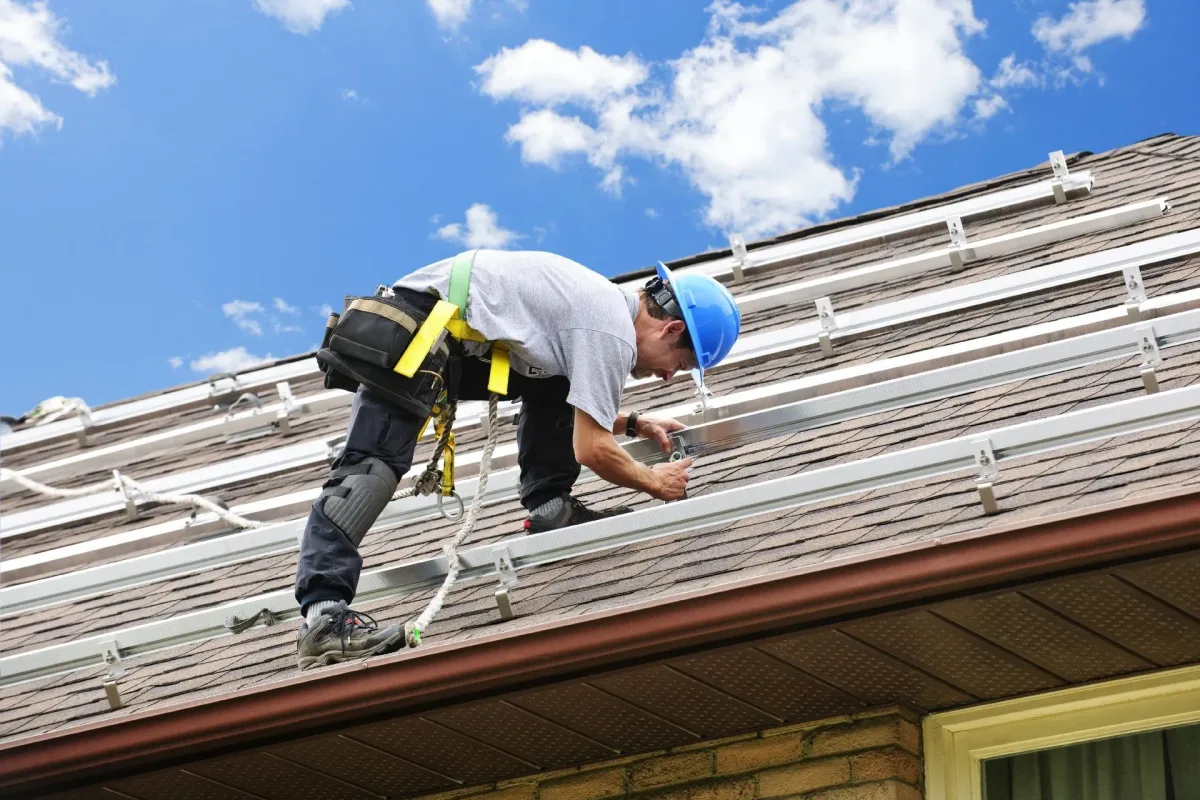
A roof you installed or repaired can leak or fail long after final payment — and when it does, water reaches the finishes, contents, and people in the building below. That downstream, third-party damage is the covered event general liability’s completed-operations side is built to answer.
The short version: when your finished roof causes property damage or bodily injury to a third party, the general liability policy responds through what the form calls the products-completed operations hazard. The coverage form is usually the occurrence version, CG 00 01, though a claims-made version, CG 00 02, exists and triggers differently. Editions and exact forms vary by carrier; confirm what is actually attached. The general liability page owns the coverage architecture — this post is about the completed-operations exposure roofing carries on the work it leaves behind.
What the products-completed operations hazard actually covers
The products-completed operations hazard is a real defined term in the standard coverage form, and it is the part of general liability that keeps working after your crew has gone. In plain terms, it covers bodily injury or property damage that arises out of your completed roofing work, occurring away from premises you own or rent, once the work is finished. A roof you installed keeps existing after final payment — shedding water, taking wind uplift, freezing and thawing, aging in the sun — and if it later fails and harms a third party or their property, that harm falls inside the completed-operations hazard. This is the exposure roofing carries more heavily than almost any trade, because the work you leave behind is the building’s first line of defense against weather.
When your roofing work counts as “completed”
The completed-operations coverage only takes over once your work is treated as finished, and the standard form is specific about when that happens. Your roofing work is considered completed at the earliest of a few points: when all of the work called for in your contract is done, when all of the work to be done at the job site is finished, or when the part of the roof you were hired to install is put to its intended use. Whichever comes first is the moment the exposure shifts from work in progress to completed operations. In practice that means a roof can be “completed” for coverage purposes the day the building is occupied and the roof is doing its job, even if a punch-list item or two remains open. The distinction matters because a loss that happens after that point is answered by the completed-operations side of the policy rather than the premises-and-operations side that covers work still underway — and for roofing, where the signature loss surfaces well after the crew has gone, the completed-operations side is the one carrying the weight. Editions and exact wording vary by carrier, so the honest instruction is the same as always: read how your form defines completed work rather than assume.
The covered event: your finished roof damages a third party
The completed-operations side responds when your finished roof causes damage to someone else — the property owner, a tenant, the building and its contents below — not to the roof itself. Draw the line clearly. The covered event is downstream, third-party harm: a leak that opens two winters after final inspection and ruins the ceilings, finishes, and stock inside; a membrane seam that lets water into occupied space; a section that fails and injures someone below. In each case the damage lands on a person or property other than your work, and that is exactly what the completed-operations side of general liability is built to answer. The claim usually names your business because the finished roof is alleged to have caused the loss, and the completed-operations coverage is what lets the policy respond on your behalf.
Occurrence versus claims-made: why the trigger matters on roofing’s long tail
Roofing claims surface late, so how the policy is triggered — by when the damage happens, or by when the claim is made — decides whether a policy answers at all. Most contractors carry the occurrence form, CG 00 01. An occurrence policy responds based on when the bodily injury or property damage happens, regardless of when the claim is finally reported — so a leak that surfaces seasons after the job can still reach back to the policy that was in force when the damage occurred. The claims-made version, CG 00 02, triggers differently: it responds based on when the claim is made against you, subject to its retroactive date and any reporting conditions, not simply when the damage happened. For a trade whose signature loss shows up long after final payment, that distinction is not academic. A claims-made policy that lapses, or whose retroactive date is reset, can leave a gap exactly on the long tail roofing is known for. Editions and exact forms vary by carrier; confirm which form is actually attached and how it is triggered before you assume a late-surfacing leak is covered.
Real-World Scenario: A crew re-roofs a commercial building, passes final inspection, and demobilizes. More than a year later a seam opens and water ruins the ceilings, flooring, and stored inventory below; the property owner’s claim names the roofing business as the cause. Because the roofer carried the occurrence form, the completed-operations coverage reached back to the policy in force when the damage occurred and responded to the third-party property damage — even though the claim arrived long after the crew had left the site.
The seam: what general liability won’t pay to redo
General liability answers the damage your finished roof does to others — it does not pay to tear out and redo the defective roof itself. This is the seam roofing contractors most often misread. The completed-operations side pays for third-party bodily injury and property damage your finished roof causes. It does not pay to rip out and replace your defective workmanship — the roof you were paid to install. That cost sits behind the your-work exclusion, and it is a different conversation entirely; the what general liability won’t pay to redo post cuts that seam in detail. Keep the two straight: the water damage to the building’s interior and contents is the covered third-party loss; the labor and materials to correct the faulty roof is the part general liability is not designed to fund.
What completed operations does not reach
Completed-operations coverage answers third parties — not your crew, trucks, or tools. It is worth naming the lines it does not touch, because a roofing business runs on several policies at once. An injury to your own crew — including a fall from the roof, the signature roofing injury — runs through workers compensation, a separate line, not general liability. Your vehicles run through commercial auto, and your tools, harnesses, and staged materials through contractors equipment. Completed operations is specifically about the harm your finished work does to other people and their property. And when a general contractor wants your policy to protect it for that completed-operations exposure on a job you subbed, that is handled through the additional-insured endorsements covered in the additional insured for roofing contractors post — a related but separate mechanism.
Read your form before the leak surfaces
The takeaway is practical: a roof you installed or repaired that later leaks or fails and damages a third party is the completed-operations claim general liability is built to answer — but only if the coverage is in force and triggered when you need it. Confirm the completed-operations hazard is covered, understand whether your form is occurrence or claims-made, and read the trigger against roofing’s long tail before a season-late leak tests it. Coverage depends on the specific policy and forms actually attached, so it is worth reading rather than assuming. When you are ready, start a quote and tell us about the residential and commercial roofing work you do, read the full general liability page to see how completed-operations coverage actually works, or browse the coverage overview to see where each line sits.