
A roofing contractor should have workers’ compensation where the state requires it, general liability including completed operations, and commercial auto for the crew trucks, then decide on equipment, umbrella and any other exposures your work creates. The Small Business Administration advises insuring against things you would not be able to pay for on your own.
Workers’ compensation: the injury of your own crew
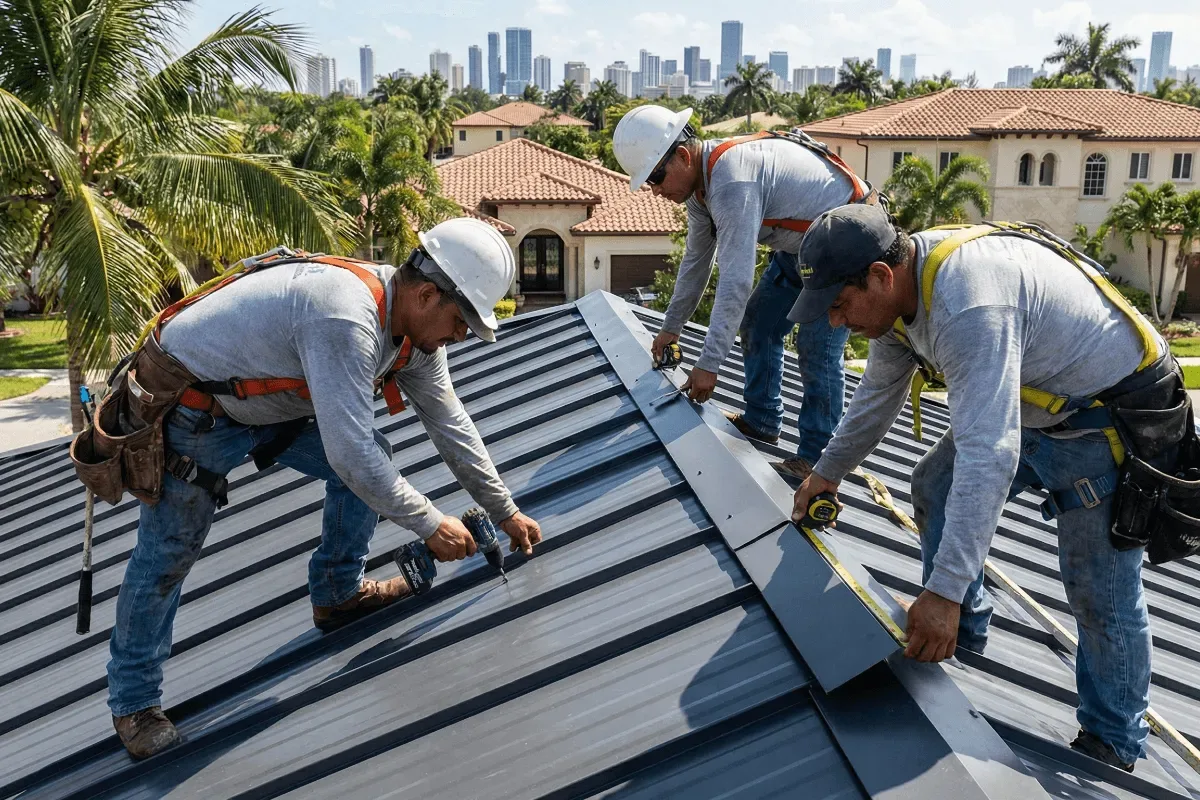
Roofing puts people on elevated surfaces, and a fall is the injury the policy exists for. Whether the state requires the policy depends on the state. The Small Business Administration says some states require additional insurance, and that laws requiring insurance vary by state. The roofing workers’ comp by state post shows how California, Illinois and Texas differ.
The document you will be asked for is the workers’ comp proof for the state where the crew works, and the question to ask your agent is whether every state you work in is listed on the policy. Payroll sets the rating basis, so tell the agent when a crew is added. See the workers’ compensation coverage page for how the coverage responds.
General liability: damage and injury to other people
General liability responds when your work injures someone who is not on your payroll or damages property that is not yours. The Small Business Administration describes it as coverage that protects against financial loss as the result of bodily injury, property damage, medical expenses, libel, slander, defending lawsuits, and settlement bonds or judgments.
For a roofer, the part to look for is completed operations. The National Association of Insurance Commissioners glossary defines completed operations liability as coverage for the liability of contractors to persons who have incurred bodily injury or property damage from defective work or operations completed or abandoned by or for the insured, away from the insured’s premises. A roof can leak long after the crew leaves, which is why the completed operations post matters. The general liability page covers the policy itself.
Real-World Scenario: A roofing contractor finishes a reroof in the fall and moves on to the next job. In spring, the owner of the building reports water damage to the ceiling below. The contractor’s general liability policy is where the claim goes, so the owner who checked the completed operations wording at renewal knows what the policy says. The owner who assumed it was included reads the form for the first time after the claim.
Commercial auto: trucks, trailers and crews on the road
A business vehicle is not a personal vehicle. The National Association of Insurance Commissioners says commercial auto policies typically have higher liability limits than personal auto and may include provisions that cover rented and other non-owned vehicles, including employees’ cars driven for company business. The same material says that a business owner’s policy typically does not include commercial auto insurance or workers’ compensation.
Roofers carry ladders, material and crews, so the policy needs the vehicles and the drivers listed accurately. See commercial auto for roofers and the commercial auto page for the disclosure list.
Contractors equipment and stored material
Tools, compressors, nailers and staged material sit outside the vehicle policy and outside the liability policy. Equipment coverage is a separate line, and the owner’s question is what it covers on the jobsite and in transit. The crew truck and equipment post and the contractors equipment page explain where the lines meet.
Umbrella and excess: higher limits on top
The Insurance Information Institute says an umbrella liability policy provides coverage over and above a business’s other liability coverages and is designed to protect against unusually high losses. For a roofer it sits above general liability and auto and extends the limit. A contract can require limits above what the base policy carries, which is when an owner learns about it. The umbrella and excess post covers it and the umbrella page describes the coverage. Ask what the umbrella is written over and which underlying limits it requires.
Which policy answers which loss
A checklist is easier to keep when each loss has a name. A crew member falls from the eave: workers’ compensation. A ladder strikes a passerby, or a dropped bundle dents a customer’s car: general liability. A truck rear-ends another vehicle on the way to a job: commercial auto. A nailer and a compressor disappear from a locked trailer: equipment coverage. A roof the crew finished last season leaks into a tenant’s space: completed operations under general liability. A judgment exceeds the limits on the base policy: the umbrella, if one was bought.
Each of those answers depends on the form, the endorsements and the facts, so treat the list as a map, not a promise. Its use is to show an owner which losses have no named home. If you can describe a loss your crews could cause and cannot name the policy that answers it, bring it to the agent.
The documents a roofer will be asked for
Policies matter when a customer asks for proof. A general contractor can ask for a certificate of insurance, additional insured status and a waiver of subrogation. A property owner or manager can ask for the same. The GC requirements post lists the usual asks, and the additional insured post explains the endorsement that roofing subs have to read closely.
Exposures to ask us about
Some exposures sit outside a standard roofing package. Pollution liability, professional liability and installation floaters are ask-us items: they depend on the work you do, the contracts you sign and how you store and move material. The National Association of Insurance Commissioners notes that a business owner’s policy typically does not include liability for claims of wrongful professional practices. If you design, specify or advise on systems, or work with materials and equipment that could release a contaminant, put those facts in front of an agent. You do not need to guess which of those lines applies to you.
The shop, the yard and stored material
A roofing business may keep material and equipment in a shop, a yard or a rented unit between jobs. The Insurance Information Institute says property insurance compensates a business if the property used in the business is lost or damaged by perils such as fire or theft, and that it covers personal property, meaning machinery, inventory and other items vital to operations. For a roofer, that prompts a different set of questions from the crew-side policies: what is stored where, what it is worth to replace and what happens to the schedule if the yard is damaged.
The Institute also describes business income insurance, which compensates a business owner for income lost following a disaster. Whether the coverage fits a roofing business depends on how much of the work runs through a fixed location. Ask your agent to explain what triggers it and what it would pay for.
The Insurance Information Institute lists coverages beyond the four major ones, including errors and omissions or professional liability, employment practices liability and umbrella policies. It describes employment practices liability as coverage for damages for which an employer is legally liable, such as violating an employee’s civil or other legal rights, along with legal defense costs.
Whether a roofing company needs any of these depends on how it hires, what it designs or specifies and what its contracts say. They are ask-us exposures: bring the facts, and the agent can say whether the coverage fits. The hiring and retaining crews post covers the employment side of a growing crew.
Questions to ask your agent
Use this list at the next renewal:
- Is workers’ comp in force for every state where crews work, and does payroll by classification match the work?
- Does the general liability form include completed operations, and what does it say about roofing work done on a prior job?
- Which vehicles and drivers are listed on the commercial auto policy, and is hired and non-owned coverage included?
- What does the equipment policy cover on the jobsite, in transit and in storage?
- Which contracts require umbrella limits, and what underlying limits does the umbrella need?
- Which of pollution, professional liability or an installation floater applies to the work we perform?
- What certificates and endorsements can you issue the same day a customer asks?
Start with the roofing insurance hub for how the pieces fit, and use the quote page to tell us what you run. Sources: the Small Business Administration’s guide to business insurance, the National Association of Insurance Commissioners’ small business insurance page its glossary of insurance terms and the Insurance Information Institute’s small business insurance basics. This post is general education, not legal or tax advice.