Roofing insurance by state
Roofing Contractor Insurance in California
The two forces that shape a California roofing program before a policy is written: a wildfire-ember and wildland-urban-interface climate that drives Class A and ember-resistant re-roofing, and one of the most regulated roofing environments in the country — the CSLB C-39 license and an SB 216 workers-comp mandate that reaches C-39 roofers whether or not they have employees.
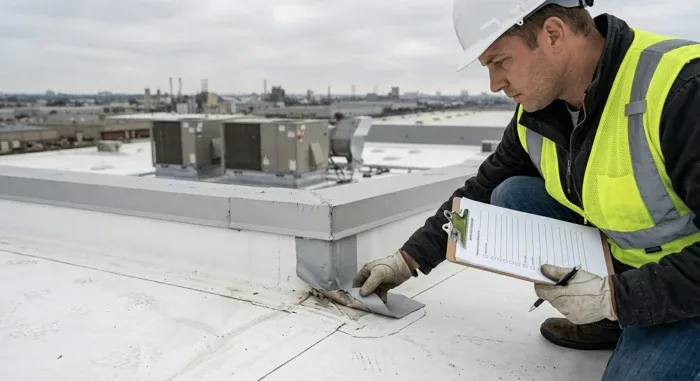

Roofing in California starts with fire. The state’s defining roof peril is not hail or hurricane but the wildfire ember and the wildland-urban-interface zone — the belt where subdivisions meet chaparral and forest — and it reaches deep into how roofs are specified, built, and re-roofed. Ember-driven ignition is what pushes Class A and ember-resistant roofing requirements across large parts of California, and that single fact reorders a roofing program: the emphasis moves toward fire-rated assemblies, careful edge and vent detailing, and the completed-operations question of whether a roof was actually installed to the fire standard its location calls for. Seismic exposure sits behind that as a secondary structural consideration, not the driver.
Layered on top is a regulatory environment that is among the most demanding in the country. California licenses roofers through a genuine state credential and singles roofing out for a workers-comp mandate no other trade carries the same way. Put the two together — an ember-driven climate and a heavily regulated trade — and a California roofing program has to answer for exposures and requirements a generic business policy never accounts for. This page walks those California-specific realities: the peril profile first, then the C-39 license and the SB 216 comp mandate, then what drives cost, the claims we see, and the major markets across the state. The coverage lines themselves — general liability, workers compensation, commercial auto, contractors equipment, and umbrella — are covered in depth on their own pages; here the focus is how California changes the emphasis.
Common Roofing Risks in California
California’s dominant roofing exposure is the wildfire ember and wildland-urban-interface zone, which drives Class A and ember-resistant roofing requirements; seismic context is a secondary structural consideration. That ember-first profile is what makes California distinct, and it drives the exposures underwriters key on:
- Fire-hardening completed operations. An ember-resistant re-roof that later proves not to meet the Class A or interface standard it was billed to is the completed-operations claim this trade turns on in California — the exposure the general liability program and its completed-operations terms are built to answer.
- Falls from height. The workers compensation exposure the SB 216 mandate makes unavoidable in California — the crew is working at height on every job, and comp is required whether or not the business has employees.
- Hot-work and torch-down fire. Concentrated on the low-slope commercial and industrial roofs of the Los Angeles, San Francisco, and Central Valley markets, where an ignition on the job is a third-party property claim.
- Heat and UV weathering. Sustained Central Valley heat and intense UV age low-slope membranes and shift the claim pattern toward material degradation rather than storm damage.
Because the interface re-roof and the fire-rated assembly are so central here, the way a program is written differs sharply between a fire-hardening residential re-roofer and a metal and tile specialist doing Class A premium work.
California Roofing Regulations & Licensing
California requires the Contractors State License Board (CSLB) C-39 Roofing classification — a Class C specialty license. Under SB 216, C-39 roofers must carry workers compensation whether or not they have employees.
The practical effect is that in California the C-39 license and your insurance are checked together. Because the credential is a real state competency license rather than a local registration, a general contractor, developer, or building owner leans on your C-39 status, your bond, and your coverage — your limits, your completed-operations terms, and your additional-insured endorsements — to decide whether to let you on the job. In an ember-zone re-roof, those completed-operations terms carry unusual weight, because the fire-hardening question outlives the season the roof was installed in.
The SB 216 workers-comp mandate. California is a private-market workers compensation state (a competitive market, with the State Compensation Insurance Fund as a competitive option, not a monopoly). Note that SB 216 mandates workers compensation for C-39 roofers specifically. The part that reshapes a California roofing program is that SB 216 singles out the C-39 roofing classification: a licensed roofer must carry workers compensation whether or not the business has employees. In a trade where a fall from a roof is the signature injury, that mandate is the single most consequential coverage requirement a California roofer meets — we place it in the state’s competitive private market and read it against your crews and your contracts rather than treating it as a box to check.
What Roofing Contractor Insurance Costs in California
There is no single California price, because premium is driven by your operation, not your ZIP code alone. The cost drivers that matter most here:
- Payroll and crew classifications. Roofing is among the highest-severity workers compensation classes, and under SB 216 a C-39 roofer carries comp regardless of employee count — which makes payroll and the comp line a fixed, central part of the California cost picture rather than an option.
- Fire-hardening and interface work. How much of your book is Class A ember-resistant re-roofing in the interface zone, and how you document that the assembly meets the standard, is something underwriters weigh closely.
- The roofing you do. Fire-hardening steep-slope residential, low-slope hot-work commercial, and premium metal or tile each carry a different completed-operations and fire profile, and each prices differently.
- Heat, UV, and region. A Central Valley low-slope contractor working sustained heat looks different to an underwriter than a coastal or foothill interface re-roofer.
- Claims history and subcontractor use. Prior losses and how you handle the additional-insured status of the crews you sub to both move the number.
Two of those levers are unique to California. The SB 216 mandate removes the option a solo operator in most states would have to skip comp, so the workers compensation line is a fixed cost here rather than a variable one — and it is rated on a high-severity class. And the interface itself is a rating factor: a book weighted toward Class A fire-hardening work in high-severity fire zones is read differently than one built on ordinary suburban re-roofs, because the completed-operations stakes and the scrutiny of the assembly are both higher.
We price to the real operation rather than quoting a figure off the state name.
Common California Roofing Claims We See
Described qualitatively, with generic carrier language — every claim is handled by the carrier, never named here, and with no fabricated figures:
- The fire-hardening shortfall. An interface re-roof billed as ember-resistant that later proves not to meet the Class A standard for its location, leaving the building owner exposed and the contractor answering a completed-operations claim under general liability.
- The at-height injury. A crew member hurt in a fall on a C-39 job — the workers compensation exposure SB 216 makes unavoidable, answered by the comp policy the mandate requires the roofer to carry.
- The commercial hot-work fire. A torch-down operation on a low-slope commercial roof that ignites, damaging the building and its contents — third-party property damage answered under general liability.
- The heat-aged membrane. A low-slope commercial roof in the Central Valley whose membrane degrades under sustained heat and UV faster than expected, surfacing a coverage question about workmanship versus ordinary weathering that the carrier evaluates on the facts.
Major California Roofing Markets
California is not one roofing market but several, each with its own peril and operating profile:
Los Angeles and the foothill interface
The state’s largest metro spreads into the wildland-urban-interface foothills, where ember exposure and Class A re-roofing demand meet a dense stock of low-slope commercial and industrial roofs — concentrating both hot-work fire exposure and ember-driven re-roof volume in one market.
San Diego and the coastal interface
A market that runs from the coast up into chaparral canyons squarely inside the interface zone, where ember-resistant assemblies and defensible-space expectations shape the re-roof, and the completed-operations question becomes whether a roof was built to the fire-hardening standard the location calls for.
San Jose and the Bay Area tech corridor
High land values and dense build-out put premium residential and large commercial campuses on the same crews, where metal and tile assemblies raise material-cost and installation-precision stakes and the secondary seismic structural context adds to the underwriting picture.
San Francisco and the peninsula
An older, high-value building stock with a heavy share of low-slope and built-up commercial roofs, where torch-down and hot-work fire exposure and the cost of any interior water intrusion make completed operations the exposure that dominates the risk.
Sacramento and the Central Valley
Valley heat and intense UV age roofing membranes while the Sierra-foothill edge of the metro pushes into interface fire country — a split profile where a valley re-roofer and a foothill fire-hardening specialist look very different to an underwriter.
Fresno and the southern Central Valley
A high-volume agricultural and residential market where sustained heat and UV drive membrane weathering on low-slope roofs, and rapid subdivision growth adds new-construction completed-operations exposure on fast-moving crews.
Why California Roofers Choose Roofing Guard Insurance
We write one class — roofing contractors — and we place coverage with carriers that actually want the work. In California that focus shows up in the questions we ask before we quote: how much of your book is Class A ember-resistant interface work and how you document that the assembly meets the standard; how the SB 216 comp mandate is placed given your crew size; whether you pour your risk into fire-hardening residential, low-slope hot-work, or premium metal and tile; and whether your general liability carries the completed-operations and additional-insured terms a California general contractor will demand alongside your C-39. When a certificate request lands on your desk with fire-hardening or interface requirements you do not recognize, that is a call we take.
That single-class focus also means we are not learning your business on your dime. We already know why an interface re-roof in the foothills carries a heavier completed-operations tail than the same job on the coast, why the SB 216 mandate changes the comp conversation for a two-person crew that would go uncovered in most other trades, and why a Class A tile assembly is rated differently than a steep-slope shingle re-roof. When your CSLB status, your certificate, and your endorsements all have to line up before a general contractor will clear you onto a job, we make sure the coverage reads the way the contract needs it to — before the certificate request arrives, not after.
Related reading
Coverage for a California roofing business works as a system, and the ember-driven climate and the SB 216 mandate move two lines to the front. The ones that carry the most weight here are general liability (fire-hardening completed operations on interface re-roofs) and workers compensation (mandatory for C-39 roofers under SB 216), alongside commercial auto, contractors equipment, and umbrella liability when a contract demands higher limits. How the program is written also differs by the roofing you do across the three service pillars.
Coverage for California roofers
- General Liability Insurance
- Workers Compensation Insurance
- Commercial Auto Insurance
- Contractors Equipment Insurance
- Umbrella Liability Insurance
The roofing you do
- Residential Roofing Insurance
- Commercial and Industrial Roofing Insurance
- Specialty, Metal, and Tile Roofing Insurance
Get covered
California sources
Frequently asked questions about roofing insurance in California
Do roofing contractors need a license in California?
Yes. California is one of the more strictly regulated roofing states — roofing is a licensed trade under the Contractors State License Board (CSLB), and roofers hold the C-39 Roofing classification, a Class C specialty license. That is a genuine state competency credential rather than a local registration, so a general contractor or building owner in California checks your C-39 status, your bond, and your insurance together. Because the license is real and specific, your coverage and its endorsements sit alongside the C-39 as part of how you qualify for work.
Does an SB 216 California roofer have to carry workers compensation with no employees?
Yes. California is a private-market workers compensation state, but SB 216 mandates workers compensation for C-39 roofers specifically — the roofing classification is singled out, so a C-39 roofer must carry comp whether or not the business has employees. That makes California unusual: in most trades a solo operator can go without comp, but a licensed roofer here cannot. Because a fall from a roof is the defining injury of the trade, we treat the SB 216 comp requirement as a core coverage question, not a formality, and place it in the state’s competitive private market.
How does wildfire and the wildland-urban-interface shape a California roofing program?
California’s dominant roofing exposure is the wildfire ember and wildland-urban-interface zone, and it drives Class A and ember-resistant roofing requirements across large parts of the state. For a roofing business that means ember-hardening re-roofs, fire-rated assemblies, and the added completed-operations weight of whether a roof was actually installed to the fire standard the location calls for. It is the operational reality we build the general liability and completed-operations coverage around, rather than pricing a California roofer as if the driving peril were ordinary weather.
What kind of roofing does the Class A and ember-resistant requirement affect?
Class A and ember-resistant requirements push a large share of interface work toward metal, tile, and other fire-rated assemblies and toward careful detailing at edges, vents, and valleys where embers intrude. That raises the material-cost, precision, and specialty-crew profile of the job, which changes how the work is rated. A wildfire-hardening re-roof, a valley low-slope commercial job, and a Bay Area premium metal or tile installation each look different to an underwriter, and we price to the actual work rather than the state name.
How much does roofing contractor insurance cost in California?
There is no single price, because premium is driven by your specific operation. In California the biggest factors are your payroll and crew classifications — roofing is a high-severity workers compensation class, and under SB 216 a C-39 roofer carries comp regardless of employee count — plus how much of your work is fire-hardening interface re-roofing versus low-slope commercial hot-work versus premium metal and tile, your use of subcontracted crews, and your claims history. A foothill ember-hardening specialist, a Central Valley low-slope contractor, and a Bay Area metal and tile installer each price very differently. We price to the real operation rather than a generic guess.
Do you write roofing insurance across all of California?
Yes. Roofing Guard Insurance places coverage for roofing contractors across California — from the Los Angeles and San Diego wildland-urban-interface foothills to the San Francisco and San Jose coastal and tech corridors and the Sacramento and Fresno Central Valley — and across the rest of the 48 states we serve. We write residential, commercial and industrial, and specialty metal and tile roofers, matched to how the operation actually runs in its part of the state.
Get a quote for your California roofing business
Tell us where in California you work, how much of your book is fire-hardening interface work, and how the SB 216 comp mandate fits your crew — and we will market it to carriers that write the class.