Coverage line
Contractors Equipment Insurance for Roofing Contractors
The inland marine policy that covers your own movable property — the ladders, harnesses, nail guns, standing-seam machines, and the roofing material staged for the next job — on the jobsite, in transit, and in storage, wherever the work takes it.
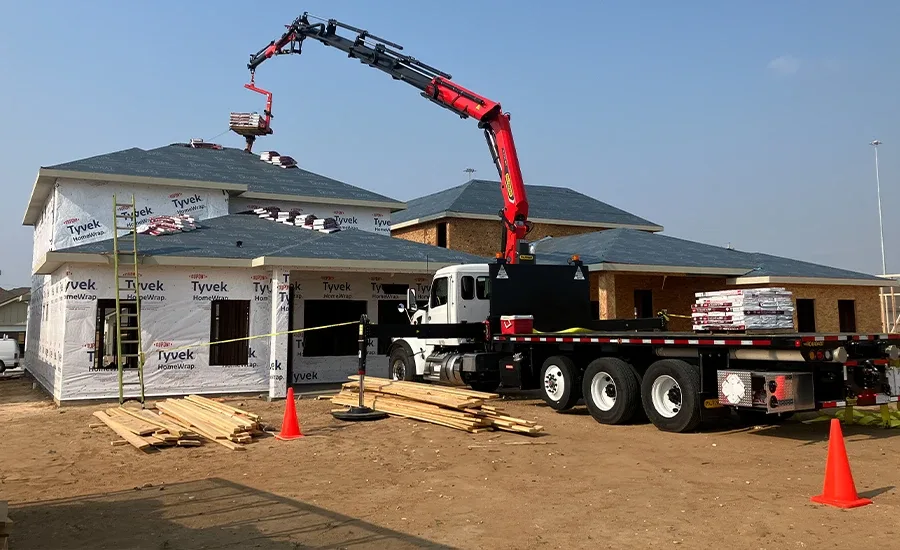

Contractors equipment is the coverage for the property your roofing business owns and carries to the work — not the harm your work can do to others, and not the truck on the road, but the tools, machines, and materials themselves. It is an inland marine line: the insurance family built for property that moves, equipment that lives on a different roof every day, rides in the truck between the shop and the jobsite, and sits in the yard between jobs. When a load of tools is stolen off a site, a roll-former is damaged, or staged material disappears before it goes up on the roof, this is the line that responds.
For a roofing contractor that exposure is real money. The value of the operation is not tied up in a building — it is in ladders and harnesses, nail guns and compressors, generators, standing-seam machines and metal brakes, and the shingles, membrane, coil, and tile staged for the next install. All of it is portable, all of it is valuable, and almost none of it is protected by a property policy written on a fixed address. This page covers what contractors equipment protects, how it pays after a loss, and the two seams where it stops and general liability and commercial auto begin.
What contractors equipment covers
Contractors equipment covers the movable property you own and use to do roofing work, wherever that property happens to be. The list is the everyday inventory of a roofing operation:
- Tools and small equipment. Nail guns, compressors, hand and power tools, ladders and roof jacks, generators — the equipment a crew loads out with every morning.
- Fall-protection and safety gear. Harnesses, lanyards, anchors, and the rest of the fall-protection equipment the trade runs on — portable, valuable, and easy to lose off a site.
- Larger and specialty machines. Standing-seam roll-formers, metal brakes, and the fabrication equipment a metal or tile operation depends on — often the highest-value items a roofing contractor owns.
- Roofing material staged for the work. Shingles, membrane rolls, metal coil and panels, tile, fasteners, and underlayment you own and have staged for an upcoming install, on the site or in the yard or in transit.
What the line responds to is theft, vandalism, fire, and accidental physical damage to that property — the load stolen out of a parked truck overnight, the machine damaged when it topples on a job, the material that disappears off a site before install day. Because roofing equipment is portable and often left on site, theft and jobsite loss are the exposures this line is written for.
Inland marine, not commercial property: why the difference matters
The instinct is to assume a business property policy covers your equipment. For a roofing contractor it usually does not, and the reason is structural. Commercial property insurance is built around a fixed premises — it protects what sits at a stated building or yard address. But a roofing business does not keep its value at one address: the tools go to a different roof every day, the machines ride in the truck, and the material is staged wherever the next job is. Property sitting at a covered building is exactly where a roofing contractor is least exposed.
Inland marine is the coverage family built for property that travels, and contractors equipment is the piece of it written for a contractor. Instead of tying protection to a single location, it follows the equipment — to the jobsite, on the road, and into temporary storage. For a trade whose entire working inventory is portable, that is the difference between property that is protected and property that is protected only while it sits still, which is almost never.
Actual cash value versus replacement cost
How a contractors equipment policy is written to pay matters as much as what it covers, and the choice comes down to two ways of valuing a loss. It is worth understanding before a claim rather than discovering the difference in a settlement.
Actual cash value settles a claim based on what the item was worth at the moment it was lost — its replacement price reduced for age, wear, and depreciation. A ladder, a compressor, or a roll-former that has been on the job for years is worth less than a new one, so an actual-cash-value settlement pays less than it costs to re-buy. Replacement cost settles based on what it costs to replace the item with a comparable new one, without the depreciation taken out. Roofing equipment is used hard and ages fast, so the valuation basis has real teeth: after a theft or a fire it decides whether you can actually re-equip the crew. Which basis applies, and to which items, is written into the policy — worth reading before a loss.
Scheduled equipment and blanket coverage
A contractors equipment policy also has to decide how to list what it covers. Scheduling names each item individually with its own value — the approach that fits the higher-value machines a metal or tile operation runs, where you want the specific roll-former, brake, or large generator on record. Blanket coverage protects a group of smaller items under a single limit without listing each one, which fits the everyday hand tools, ladders, and small power tools that would be impractical to schedule piece by piece.
Most roofing contractors end up with a mix — the big machines scheduled, the small tools on a blanket — and keeping the schedule current as you buy equipment matters, because a machine added after the policy was written may not be on it. The point is that the policy can be shaped to the real equipment list rather than left generic.
Materials in transit and the installation exposure
The materials side of this line is easy to overlook and, for a roofing contractor, expensive to miss. The shingles, membrane, coil, panels, and tile you own and stage for an upcoming install are real value sitting exposed — on the jobsite before install day, in the yard, or in the bed of the truck. Theft of staged material off a site, or damage to it in transit, is a loss to your business, not the property owner’s.
The mechanism that covers material being moved to and installed on a project is sometimes described as an installation floater, part of the same inland marine family as the equipment floater. Whether your policy schedules materials, at what limit, and while they sit at which locations depends on how it is written — worth confirming before the material shows up on site, because the exposure is largest exactly when a load is staged and waiting to go up, which is also when it is easiest to lose.
Where contractors equipment stops: the seams that matter
Two neighboring lines are constantly confused with this one, and naming the boundaries plainly is the point. This line covers your own movable property. Two exposures that look adjacent belong elsewhere.
The property-versus-harm seam — general liability. Contractors equipment answers damage to your own tools, machines, and materials. It does not answer the harm your work does to other people or their property — a dropped tool that hurts a passerby, tear-off debris that damages a vehicle below, water that ruins a building interior during a re-roof. That is third-party harm, and it runs through general liability. The clean line is ownership: your property is contractors equipment, someone else’s is general liability.
The vehicle seam — commercial auto. The crew truck and trailer that carry the equipment are not contractors equipment. The vehicle itself, its physical damage, and the liability when it is on the road all run through commercial auto. But the tools, harnesses, machines, and roofing material carried in or on that truck — including while they are in transit — stay under contractors equipment. So the truck is auto and the load is equipment, even when they move together: a load stolen out of a parked truck is a contractors equipment claim, while a dented tailgate is commercial auto.
Why roofing contractors need it
What sets this trade apart is that almost all of its value is portable and almost none of it stays put. A roofing operation runs on equipment that goes up on a roof, rides in a truck, and sits on a jobsite where it is easy to steal — and on material staged in the open before it is installed. A property policy on the shop leaves most of that exposed, because most of it is never at the shop. Contractors equipment closes that gap and keeps a theft or a fire from becoming a week the crew cannot work.
Because the equipment differs by the roofing you do, the coverage has to fit the operation. A Residential Roofing contractor runs on ladders, nail guns, compressors, and the fall-protection gear a steep-slope crew depends on. A Commercial and Industrial Roofing operation adds the larger equipment and the membrane, coil, and built-up material staged for bigger low-slope jobs. A Specialty, Metal, and Tile Roofing contractor carries the highest-value machines in the trade — standing-seam roll-formers and metal brakes — alongside premium metal and tile material where the stock itself is a major exposure. Writing all three off one generic equipment list can leave the machines that matter most underinsured, so we build the schedule to the real operation.
What contractors equipment responds to
These are the categories underwriters expect on a roofing contractors equipment file — described qualitatively, with no fabricated cost or frequency figures.
- Jobsite theft and vandalism. Tools, gear, machines, or staged material stolen or vandalized on a site — the everyday exposure of equipment left where the work is.
- In-transit loss. Equipment and material stolen out of a parked truck, or damaged in transit between the shop and the jobsite, distinct from damage to the vehicle itself.
- Accidental physical damage. A machine, tool, or piece of gear damaged by fire, a fall, or an accident on the job.
- Staged-material loss. Shingles, membrane, coil, panels, or tile you own and have staged for an upcoming install lost to theft or damage before it goes up on the roof.
- Higher-value scheduled machines. Standing-seam roll-formers, metal brakes, and large generators scheduled individually where their value warrants naming the specific item.
Why Roofing Guard Insurance
We are an independent agency that writes one class — roofing contractors — and we place coverage with carriers that actually want the work. We know to ask what machines you run before we quote; to schedule the roll-former and the brake and blanket the hand tools; to check whether your equipment is written on actual-cash-value or replacement-cost terms; and to draw the line cleanly between what is contractors equipment, what is general liability, and what is commercial auto so nothing falls through the seam. When a machine is stolen off a site and you need to know whether it is covered, that is a call we take. Start with a quote, or talk it through with us first.
Learn more
Coverage for a roofing business works as a system. Contractors equipment protects your own tools and materials, while general liability answers the harm your work can do to others, commercial auto covers the crew trucks that carry the equipment, workers compensation covers the crew and the falls exposure, and umbrella liability adds limit when an account demands it. How the equipment coverage is built also differs by the roofing you do across the three service pillars — Residential Roofing Insurance, Commercial and Industrial Roofing Insurance, and Specialty, Metal, and Tile Roofing Insurance.
Coverage for roofing contractors
- General Liability Insurance
- Workers Compensation Insurance
- Commercial Auto Insurance
- Umbrella Liability Insurance
Insurance by the roofing you do
- Residential Roofing Insurance
- Commercial and Industrial Roofing Insurance
- Specialty, Metal, and Tile Roofing Insurance
Get covered
Primary sources
Frequently asked questions about Contractors Equipment Insurance
What does contractors equipment insurance cover for a roofing contractor?
Contractors equipment is an inland marine line that covers the movable property your roofing business owns and uses to do the work — ladders and roof jacks, harnesses and the rest of your fall-protection gear, nail guns and compressors, generators, standing-seam roll-formers and metal brakes, hand and power tools, and the roofing material staged for the next job. It responds to theft, vandalism, fire, and accidental physical damage to that property wherever it happens to be — on the jobsite, in transit between the shop and the roof, and in storage or the yard. What it does not cover is harm your work does to other people or their property, which is general liability, or the crew truck itself, which is commercial auto. This line is about your own tools and materials.
How is inland marine coverage different from commercial property insurance?
The difference is where the property lives. Commercial property insurance is built around a fixed premises — a building, an office, a yard address — and it protects what sits at that location. A roofing business does not keep its equipment at one address; the tools, machines, and materials move to a different roof every day and ride in the truck to get there. Inland marine — the family that contractors equipment belongs to — is the coverage built for property that travels. It follows the equipment to the jobsite, on the road, and into temporary storage, rather than tying protection to a single building. That is why a roofing contractor whose value is in mobile tools and staged material needs contractors equipment, not just a property policy on the shop.
What is the difference between actual cash value and replacement cost on my equipment?
It is how the policy pays after a covered loss. Actual cash value settles a claim based on what the item was worth at the time it was lost — its replacement price reduced for age, wear, and depreciation — so an older ladder, compressor, or roll-former pays out less than it costs to buy a new one. Replacement cost settles based on what it costs to replace the item with a comparable new one, without the depreciation subtracted. For a roofing contractor whose equipment gets used hard and ages fast, the valuation basis on the policy has real consequences after a theft or a fire, because it decides whether you can actually re-equip the crew. Which basis applies, and to which items, is written into the policy, and it is one of the first things worth reading before a loss rather than during one.
Are the tools and materials in my truck covered by my auto policy or by contractors equipment?
By contractors equipment, not the auto policy. This is the seam that trips up a lot of roofing contractors. Commercial auto covers the truck and trailer themselves — the vehicle, its physical damage, and the liability on the road. It does not cover the tools, harnesses, machines, and roofing material you carry in or on the vehicle. Those are your movable property, and they stay under contractors equipment whether they are sitting on the roof, locked in the shop, or in transit in the bed of the truck. So a load of tools stolen out of a parked truck, or equipment damaged when it shifts on the road, is a contractors equipment claim, while damage to the truck itself is commercial auto. The two lines are written together but they answer different property.
Does contractors equipment cover the roofing material staged for an upcoming job?
It can, and for a roofing contractor that materials exposure matters as much as the tools. Shingles, membrane rolls, metal coil and panels, tile, fasteners, and underlayment that you own and have staged for an upcoming install represent real money sitting on a jobsite, in the yard, or on the truck before it goes up on the roof. The mechanism that covers material being moved to and installed on a project is sometimes called an installation floater, and it is part of the inland marine family alongside the equipment floater. Whether your policy schedules materials, at what limit, and while they are at which locations depends on how it is written — which is exactly the kind of detail worth confirming before the material shows up on site, not after a theft.
What is the difference between scheduling equipment and blanketing it?
It is how the policy lists what it covers. Scheduling means each item is named on the policy individually, usually with its own value — the approach that fits higher-value equipment like a standing-seam roll-former, a metal brake, or a large generator, where you want the specific item and amount on record. Blanketing means a group of smaller items is covered together under a single limit without listing each one, which fits the everyday hand tools, ladders, and small power tools that would be impractical to schedule one by one. Most roofing contractors end up with a mix: the big machines scheduled, the small tools on a blanket. Getting the split right, and keeping the schedule current as you buy equipment, is part of building the coverage to match the operation.
Get contractors equipment coverage built around what you actually own
Tell us what tools and machines you run and what material you stage, and we will market it to carriers that write the class — with the roll-former scheduled, the small tools blanketed, and the load in transit covered, not assumed.