Roofing insurance by state
Roofing Contractor Insurance in North Carolina
North Carolina is really two roofing states in one: an Outer Banks and coastal-plain edge that takes direct hurricane wind and salt, and a Piedmont interior that lives under frequent hail and severe convective wind. Both work under a state licensing board that issues a roofing-specialty license — so the exposure shifts by region while the credential stays statewide.
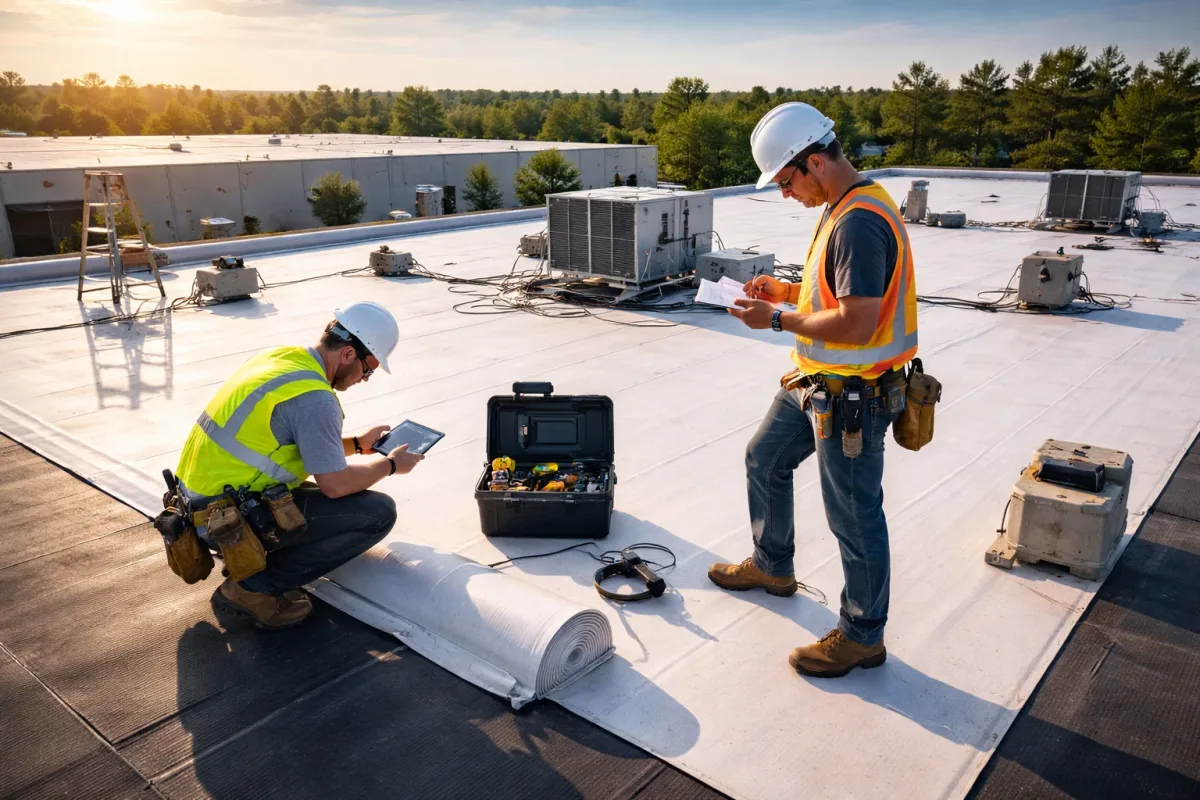

Roofing in North Carolina is shaped by geography more than almost any other state, because the peril flips as you cross it. The Outer Banks and coastal plain carry heavy hurricane and tropical wind plus salt exposure, while the Piedmont sees frequent hail and severe convective wind. On the eastern edge, hurricane and tropical wind and salt define the risk; in the Piedmont interior, hail and severe convective wind do. A roofer working both is really running in two markets with two different failure patterns — and pricing a single roof program off the state name misses that split entirely.
Holding it together is a genuine state credential: North Carolina licenses roofing through the state licensing board, including a roofing-specialty classification, so the license stays statewide while the exposure shifts by region. This page walks the North Carolina-specific realities in the order they matter here: the two-region peril profile first, then the licensing regime, what moves cost, the claims we see, and the major markets. The coverage lines themselves — general liability, workers compensation, commercial auto, contractors equipment, and umbrella — are covered in depth on their own pages; here the focus is how North Carolina changes the emphasis.
Common Roofing Risks in North Carolina
The two-front peril profile — hurricane on the coast, hail in the Piedmont — is what makes North Carolina a high-frequency roofing market, and it drives the exposures underwriters key on:
- Coastal hurricane wind and salt. On the Outer Banks and coastal plain, tropical-wind uplift and salt corrosion test whether a roof was fastened and detailed to survive the next landfall.
- Piedmont hail and completed operations. Inland, a roof installed fast during a post-hail surge that later leaks or fails is the products-completed-operations claim this trade turns on.
- Falls from height. Roofing is among the highest-severity workers compensation classes of any trade because the crew is at height on every job.
- Hot-work and torch-down fire. Concentrated on the low-slope commercial and industrial roofs of the Triad and the larger metros, where torch and heat operations carry a real ignition exposure.
North Carolina Roofing Regulations & Licensing
The North Carolina Licensing Board for General Contractors issues a general contractor license above the statutory project-cost threshold and a Specialty Contractor – Roofing classification covering the installation, repair, and demolition of roofs and decks; a general or roofing-specialty license applies.
The practical effect for a roofing program is that in North Carolina the license and the certificate of insurance work together, and general contractors verify both. On top of the license, they lean on your general liability program, your limits, and your additional-insured endorsements — especially on coastal work where the completed-operations exposure is highest. A roofing-specialty license and a well-built liability program are what let a resident contractor win the larger commercial and institutional projects across the state.
Workers compensation. North Carolina is a private-market workers compensation state; coverage is written by private carriers. Because a fall from a roof is the defining injury of this trade, the workers-comp line is one of the most consequential coverage choices a North Carolina roofer makes — we walk through it against your crews and your contracts on the workers compensation page.
What Roofing Contractor Insurance Costs in North Carolina
There is no single North Carolina price, because premium is driven by your operation, not your region alone. The cost drivers that matter most here:
- Payroll and crew classifications. Roofing is among the highest-severity workers compensation classes, and payroll is the base the exposure is rated on.
- Coastal versus Piedmont footprint. A coastal-plain hurricane contractor looks different to an underwriter than a Charlotte or Triangle hail-belt re-roofer.
- The roofing you do. Steep-slope residential, low-slope hot-work commercial, and metal or tile each carry a different completed-operations and fire profile.
- Storm-season revenue swing. Volume that spikes after a hurricane or a hail event and pulls in temporary crews is something underwriters weigh closely.
- Claims history and subcontractor use. Prior losses and how you handle the additional-insured status of subs both move the number.
We price to the real operation rather than quoting a figure off the state name.
Common North Carolina Roofing Claims We See
Described qualitatively, with generic carrier language — every claim is handled by the carrier, never named here, and with no fabricated figures:
- The coastal wind-uplift failure. A coastal-plain roof that peels in the next tropical-wind event, raising a workmanship and completed-operations question the carrier evaluates on how it was fastened and detailed.
- The Piedmont hail-surge leak. An inland re-roof installed during a hail-season rush that lets water in a season or two later, damaging the building interior — a completed-operations claim answered under general liability.
- The fall-from-height injury. A crew member hurt in a fall during high-volume storm work — the high-severity workers compensation exposure that defines the roofing trade.
Why North Carolina Roofers Choose Roofing Guard Insurance
We write one class — roofing contractors — and we place coverage with carriers that actually want the work. In North Carolina that focus shows up in the questions we ask before we quote: whether your work leans coastal or Piedmont and how that shapes the completed-operations exposure; how your storm-season volume and crew surge are staffed and documented; whether you pour your risk into steep-slope residential, low-slope hot-work, or metal and tile; and whether your general liability carries the completed-operations and additional-insured terms a North Carolina general contractor will demand alongside your state license. When a certificate request lands on your desk with requirements you do not recognize, that is a call we take.
Major North Carolina Roofing Markets
North Carolina is not one roofing market but several, split between coast and Piedmont:
Charlotte and the southern Piedmont
The state’s largest metro sits in the Piedmont hail belt, and its fast-growing residential and commercial footprint turns a severe storm into a metro-wide re-roof surge — concentrating completed-operations exposure on fast steep-slope work and pulling in temporary crews.
Raleigh–Durham and the Research Triangle
A high-growth market of institutional, tech-campus, and residential roofs where new-construction completed-operations exposure and additional-insured requirements land on crews already carrying hail-driven re-roof volume.
Greensboro and the Triad
A central-Piedmont market with a mix of residential, industrial, and commercial low-slope roofs, so hail-driven steep-slope work sits alongside hot-work and torch-down exposure on flat roofs.
Winston-Salem and the northwest Piedmont
A market where a dense older housing stock and periodic severe hail keep tear-off and reroofing demand high, and the completed-operations tail on fast shingle work stays in play.
Fayetteville and the Sandhills
A transitional market between coast and interior that catches both remnant tropical wind and Piedmont-edge hail, shifting the claim pattern by storm track from year to year.
The Outer Banks and coastal plain
The eastern edge where hurricane and tropical wind and salt-air corrosion dominate, so wind-uplift detailing and the completed-operations question of whether a roof survives the next landfall define the coastal risk.
Related reading
Coverage for a North Carolina roofing business works as a system. The lines that carry the most weight here are general liability (completed operations, coastal and Piedmont) and workers compensation (the falls-from-height exposure), alongside commercial auto, contractors equipment, and umbrella liability when a contract demands higher limits. How the program is written also differs by the roofing you do across the three service pillars.
Coverage for North Carolina roofers
- General Liability Insurance
- Workers Compensation Insurance
- Commercial Auto Insurance
- Contractors Equipment Insurance
- Umbrella Liability Insurance
The roofing you do
- Residential Roofing Insurance
- Commercial and Industrial Roofing Insurance
- Specialty, Metal, and Tile Roofing Insurance
Get covered
North Carolina sources
Frequently asked questions about roofing insurance in North Carolina
Do roofing contractors need a license in North Carolina?
North Carolina licenses roofing through the state Licensing Board for General Contractors. Above the statutory project-cost threshold a contractor holds a general contractor license, and the board also issues a Specialty Contractor – Roofing classification that covers the installation, repair, and demolition of roofs and decks — so a general or roofing-specialty license applies to work above the threshold. General contractors and project owners verify the license alongside your insurance before letting you on the job, and below the threshold local permitting and the contract govern.
Why is North Carolina described as two roofing markets?
Because the exposure changes sharply by region. The Outer Banks and coastal plain carry heavy hurricane and tropical wind plus salt exposure, where the completed-operations question is whether a roof survives the next landfall. The Piedmont interior — Charlotte, the Triangle, the Triad — sees frequent hail and severe convective wind, where the pattern skews toward impact damage and post-storm re-roof surges. A roofer working both has to answer for two different risk profiles under one statewide license, and we build the general liability and workers compensation to reflect the region the work is actually in.
What coverage does a coastal North Carolina roofer need that a Piedmont roofer might not?
A roofer working the Outer Banks and coastal plain operates under hurricane and tropical-wind exposure with salt-air corrosion, which raises the wind-uplift and completed-operations stakes on whether an installed roof holds through the next storm. A Piedmont roofer faces frequent hail and convective wind, with a heavier surge cycle after severe storms. The core lines are the same statewide, but the coastal emphasis shifts toward hurricane-driven durability while the Piedmont emphasis shifts toward hail-surge volume and completed operations on fast work.
Does a North Carolina roofer have to carry workers compensation?
North Carolina is a private-market workers compensation state — coverage is written by private carriers and is generally required once you have employees. Because roofing is among the highest-severity workers compensation classes of any trade, and a fall from a roof is the signature injury, the workers-comp line is one of the most consequential parts of a North Carolina roofing program, and many general contractors and project contracts require it regardless of crew size. We read the exposure against your actual payroll and crew classifications.
How much does roofing contractor insurance cost in North Carolina?
There is no single price, because premium is driven by your specific operation. In North Carolina the biggest factors are your payroll and crew classifications (roofing is a high-severity workers compensation class), your coastal versus Piedmont footprint, the type of roofing you do — steep-slope residential, low-slope hot-work, or metal and tile — your storm-season revenue swing, and your claims history. A coastal-plain hurricane contractor and a Charlotte hail-belt re-roofer look very different to an underwriter, so we price to the real operation rather than the state name.
Do you write roofing insurance across all of North Carolina?
Yes. Roofing Guard Insurance places coverage for roofing contractors across North Carolina — from the Charlotte and Raleigh Piedmont to Greensboro, Winston-Salem, and the Outer Banks and coastal plain — and across the rest of the 48 states we serve. We write residential, commercial and industrial, and specialty metal and tile roofers, matched to how the operation actually runs in its part of the state.
Get a quote for your North Carolina roofing business
Tell us whether you work the coast or the Piedmont, how your storm-season volume runs, and the roofing you do — and we will market it to carriers that write the class.