

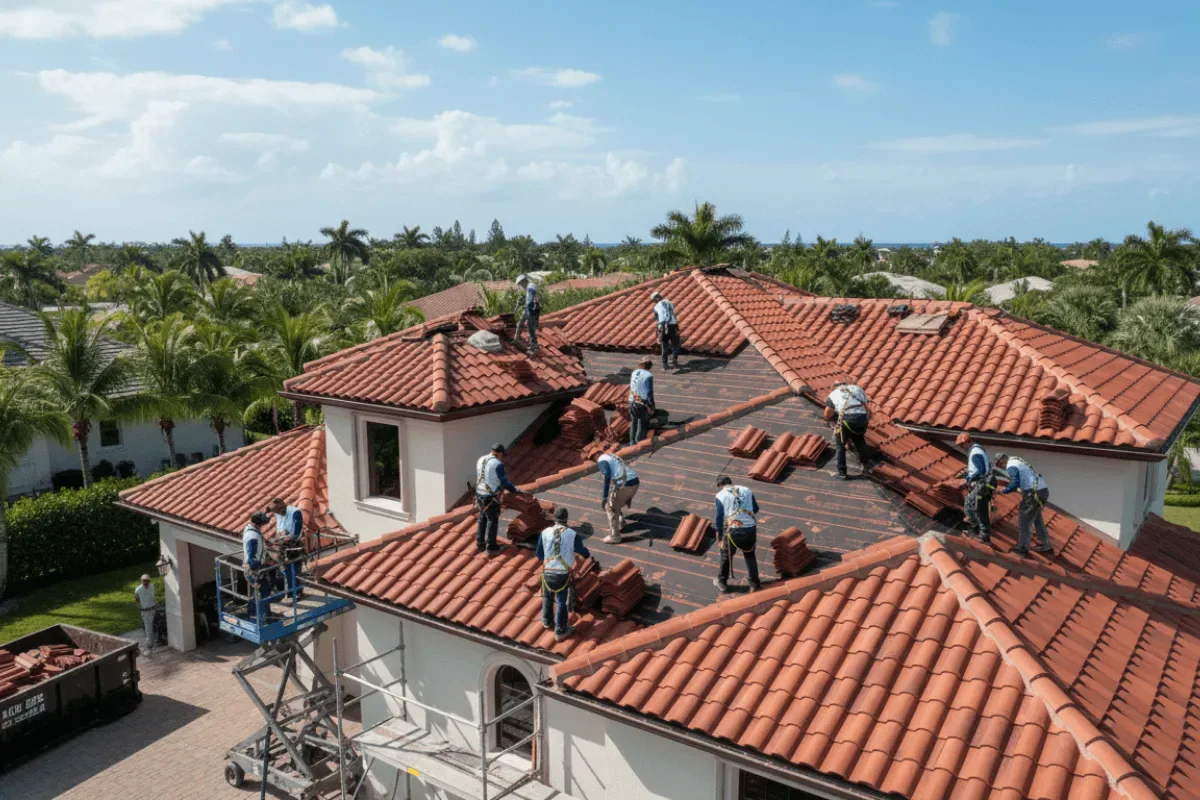
A Phoenix shingle roofer with employees needs workers’ comp: the Industrial Commission of Arizona says it is mandatory for employers to secure workers’ compensation insurance for their employees, regardless of the number of workers. The rule is statewide, so the local work is choosing how to meet it, covering subcontractors and keeping the paperwork straight.
The Arizona rule a Phoenix roofer starts with
Workers’ compensation in Arizona is set at the state level. The Industrial Commission of Arizona says it is mandatory for employers to secure workers’ compensation insurance for their employees, and its employer guidance says the employer is required to carry the insurance regardless of the number of workers they have. A residential shingle company with a single helper is inside that rule the same as a company running several crews across the valley.
That makes the policy a condition of running a crew, not an optional purchase. The Arizona location page covers the rest of the coverage a roofer carries in the state, and the Arizona cost guide explains what moves the price. This post stays on the workers’ compensation questions a Phoenix owner asks before the season: how to meet the rule, who it reaches and what the state does when a business ignores it.
Two ways to meet the requirement
Arizona’s statute on securing compensation gives an employer two routes. The first is insuring and keeping insured the payment of compensation with an insurance carrier authorized by the director of the Department of Insurance and Financial Institutions to write workers’ compensation insurance in the state. The second is furnishing the commission satisfactory proof of financial ability to pay the compensation directly or through a workers’ compensation pool approved by the commission.
For a residential shingle company, the insured route is where the conversation starts. The premium is estimated at the start of the term and checked against your payroll records at the end, so the accuracy of the estimate matters as much as the rate. Tell your agent when you add a crew or take on a large run of re-roofs, rather than letting the audit discover it. The policy is priced on payroll and classification, and the code that describes roofing work at height sets the base. The post on roofing workers’ comp class codes explains how that code is chosen, and the workers’ compensation coverage page explains what the policy pays for. Whichever route a company takes, the employer guidance from the Industrial Commission of Arizona says the employer is required to post a notice of workers’ compensation insurance once coverage is in place.
Who the rule reaches on a shingle crew
The requirement attaches to employees, and a residential crew can include more of them than an owner counts at first. The commission’s guidance speaks of the number of workers, not of full-time status, so the helper who carries bundles on busy weeks belongs in the conversation with your agent. The post asking do I need workers’ comp for my roofing crew covers employees, subcontractors and owners in turn.
Owners raise a separate question. Arizona’s statute says a business that uses the services of a sole proprietor who has waived the sole proprietor’s rights is not liable for workers’ compensation coverage or the payment of premiums for that sole proprietor. A waiver like that answers a narrow question about a sole proprietor working for another business. It does not settle whether a roofing company’s own crew is covered, so ask the insurer and an attorney before relying on one.
Subcontractors and the original employer
Residential shingle work in Phoenix can involve subcontracted crews for tear-off, installation or cleanup. Arizona’s statute addresses that directly. If the roofing company that hires a contractor keeps supervision or control over the contractor’s work, section 23-902 counts the contractor, its employees and any subcontractor’s employees as employees of the original employer, the company that procured the work.
The same section offers a written agreement as a way for a business and an independent contractor to prove that relationship, and the agreement has to show that the business lacks authority to supervise or control the actual work. The statute lists further conditions the agreement has to state. A roofer who directs a crew’s hours, methods and materials on the roof should not expect a label to change the answer.
The practical step is the same either way. Before a subcontractor’s crew climbs onto a roof, collect a current certificate showing its own workers’ compensation, and keep it on file. The post on what insurance GCs require from roofing subs shows how a builder handles the same paperwork with you.
Real-World Scenario: A Phoenix shingle contractor takes on a run of re-roofs after a storm and brings in a tear-off crew it has not used before. The office collects the crew’s certificate on the first day but never checks the dates. Midway through the job, a tear-off worker is hurt, and the certificate turns out to have expired before the crew arrived. The contractor now faces questions about a worker it never put on its payroll. A contractor who checked the dates against the job schedule would have caught the lapse before the first ladder went up.
Shingle work, heat and the exposure on the roof
Residential shingle roofing puts crews on pitched roofs, on ladders and around open edges, and the Phoenix summer adds heat to all of it. Those conditions shape how an underwriter views the account and what an injury on the crew can involve. A written fall protection program, a heat plan with water, shade and rest, and training records are the kind of evidence an underwriter can ask to see.
None of that changes the legal requirement, but it changes the conversation about the account. The post on OSHA fall protection for roofing contractors covers the program side, and the post on falls from height explains the claim the policy exists for. The post on how to reduce liability and comp claims covers the habits that keep a loss history clean.
What the state does about uninsured businesses
The Industrial Commission of Arizona describes a Compliance Unit that identifies, investigates and recommends action on employers that do not comply. Its compliance guidance says an Order of Civil Penalty is issued once it has been determined that an uninsured business does not qualify for an exception, and that the commission is authorized to seek an injunction that will force the business to cease its operations.
For a residential roofer, that is a business-continuity risk as well as a legal one. A company shut down in the middle of the season loses the jobs on the schedule along with the penalty. Keeping the policy in force, paid and matched to the payroll is the cheaper path.
Your license and your workers’ comp are separate obligations
A roofing license and a workers’ compensation policy answer different questions. The Arizona Registrar of Contractors says it issues separate licenses for commercial and residential work, and dual licenses that cover both commercial and residential work. Its license classification requirements list roofing under R-42, C-42 and CR-42. Confirm with the Registrar which classification fits your residential shingle work.
Holding the license does not replace the policy, and carrying the policy does not replace the license. The post asking do roofing contractors need a license covers the licensing side across states, and the residential roofing page covers the coverage a steep-slope company weighs beyond workers’ compensation.
City permits and contracts are separate questions
This post rests on state sources: the Industrial Commission of Arizona, the Arizona Revised Statutes and the Registrar of Contractors. It does not cover City of Phoenix permits, city licenses or the insurance terms a homeowner association, property manager or builder writes into a contract. A city can have its own permit or licensing rules, and the office that issues them is the one to ask.
Before a job, ask the permitting office what proof of insurance it wants, and send any contract’s insurance exhibit to your agent before you sign.
Questions to ask your agent before the season
- Does my policy cover every person I pay to work on a roof, including part-time and seasonal helpers?
- How is my roofing payroll classified, and does the description match residential shingle work?
- Which of my subcontractors have a current certificate, and do the dates cover the job?
- How am I, as the owner, treated on the policy?
- Have I posted the notice of coverage the commission’s guidance describes?
- What will the auditor ask for at the end of the term?
To have your Arizona coverage reviewed, use the quote page, and see the roofing insurance hub for how workers’ compensation fits with the other policies. Sources: the Industrial Commission of Arizona’s employer questions and compliance questions, the Arizona Revised Statutes on employers subject to the law and methods of securing compensation, and the Arizona Registrar of Contractors’ license classifications page and license classification requirements. This post is general education, not legal or tax advice.