
The most effective way to reduce a roofing business’s liability and workers-compensation claims is to attack the highest-severity exposure first — the fall — and then work down through fire risk on hot-work jobs, workmanship disputes, and vehicle losses. Loss control is not a policy you buy; it is how you run the operation so the claims come less often and cost less when they do.
The short version: fewer and less-severe claims are the result of a handful of disciplines run every day, and their payoff is a cleaner loss history — the thing an underwriter reads most closely on a trade defined by severe, long-tail losses. This post walks the levers in order of impact. It references the OSHA fall-protection post for the fall rule rather than re-teaching it, and points to the workers’ compensation and general liability pages for how the coverage behind these exposures is built.
Start where the severity is: fall-protection discipline
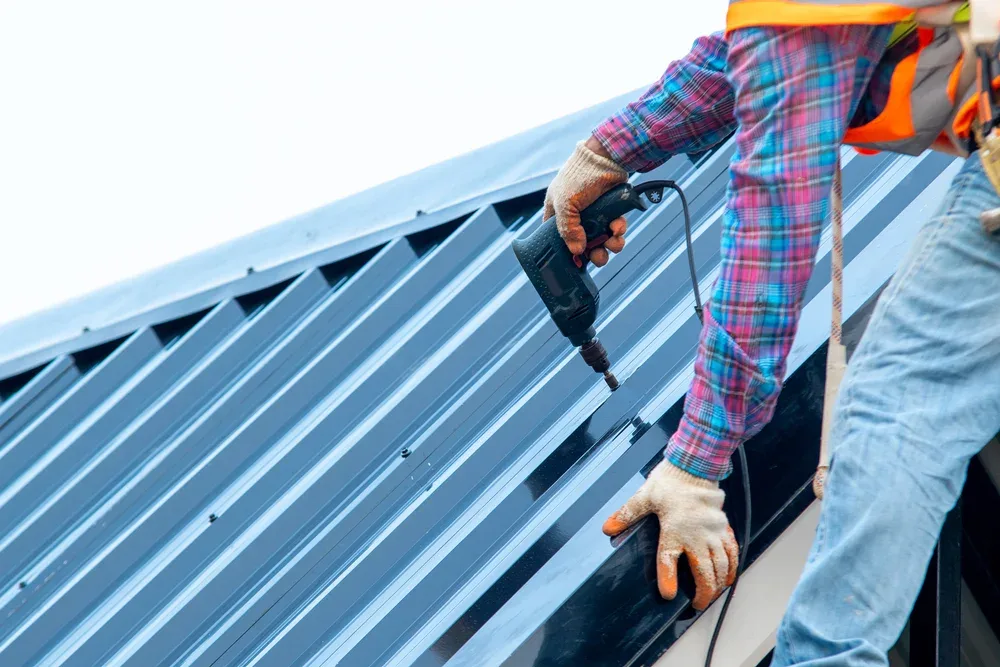
The first and largest lever is fall protection, because the fall from height is the roofing trade’s defining exposure and its most expensive claim. The OSHA fall-protection post covers what the federal rule actually requires, so this is not the place to restate it — the loss-control point is narrower: the same practices that satisfy the regulation are the ones that prevent the severe workers-compensation losses that drive a roofer’s cost. A disciplined program means the gear is not just in the truck but used on every roof, the crews are trained to inspect and wear it, a competent person oversees the work, and the training and inspections are documented. Prevent the fall and you prevent the claim; prevent the claim and the loss history a carrier prices stays clean. Everything else in this playbook matters, but nothing matters as much as this, because nothing else the trade does carries the same severity when it goes wrong.
Build a fire-watch protocol for hot-work jobs
The second lever addresses the trade’s most severe property exposure: fire on hot-work jobs. Torch-down membrane work and other open-flame roofing carry a real risk that a smoldering ignition flares into a structure fire hours after the crew has packed up — a routine job that becomes a severe general-liability claim overnight. A disciplined fire-watch protocol is the defense: a trained crew member monitoring the work area during the burn and for a set period after, extinguishers staged and reachable, combustibles cleared from the deck and the space below, and a written sign-off that the watch happened. The general liability page owns how the coverage responds when a fire occurs despite the protocol; the loss-control job is to make the fire far less likely in the first place. Torch-down work is common enough on commercial low-slope roofs that a written fire-watch standard is worth treating as non-negotiable rather than a per-job judgment call.
Control workmanship — and document it
The third lever is quality control on the work itself, aimed squarely at completed-operations claims — the leaks, blow-offs, and failures that surface after the roof is finished and the crew is gone. Two things move this exposure. The first is craftsmanship during the job: correct fastening, flashing, and detailing, verified before the crew leaves rather than discovered later. The second, and the one contractors under-invest in, is documentation — dated photos of the deck and the finished work, inspection sign-offs, and records of the materials installed. When a completed-operations claim is alleged months or years on, the contractor with a clean file can show what was actually done, which limits both the disputes that turn into claims and the defense cost of the ones that proceed. Good workmanship does not erase completed-operations exposure — the long tail on roofing work is exactly why the coverage exists — but it reduces how often and how expensively those claims arrive. And because that same documentation is what a carrier can actually see at renewal, workmanship records do double duty: they limit the claim, and they evidence a well-run operation to the underwriter reading the file, which is the quiet second payoff of every dated photo and signed inspection.
Manage the drive: crew-truck and driver safety
The fourth lever sits off the roof entirely, in the trucks. A roofing crew loads, tows, and drives between jobs every working day, and the vehicle losses that come with that land in the same account and the same loss history as the fall and fire exposures. Driver screening before hire, a written vehicle-use policy, basic maintenance discipline, and a clear rule against distracted or fatigued driving reduce the frequency of the commercial auto claims that quietly inflate a roofer’s cost. It is easy to treat the fleet as a background concern next to the dramatic risks of height and fire, but an at-fault crash with a loaded truck can produce a severe liability claim of its own, and unlike a roof leak it can involve people who never hired you. Managing the drive is not a separate program; it is part of the same loss-control discipline, and it protects the same loss run.
Tie it together with hiring and training
The fifth lever is the one that makes the other four real: how you hire and train. Equipment, protocols, and checklists do nothing if the crews do not know them, do not use them, or do not stay long enough to build habits. Disciplined hiring — screening for experience and attitude — paired with consistent onboarding and recurring training turns the written program into daily practice, and it is what keeps the fall-protection plan, the fire watch, and the quality standards from decaying into paperwork nobody follows. Crew stability compounds the effect: experienced, well-trained roofers have fewer accidents and produce cleaner work, which feeds directly back into the loss history. This lever is slower than the others and harder to measure, but it is the multiplier — without it, the rest of the playbook is a binder, not a practice.
Real-World Scenario: Two roofing contractors of nearly the same size come up for renewal in the same season. One has run a disciplined loss-control program for years — a written fall-protection plan with training logs, a standing fire-watch protocol on torch-down jobs, photo-documented workmanship, and a clean driving record across the crew trucks — and its claims run is quiet. The other owns the same equipment but keeps little of the paper and has absorbed a scatter of falls, a torch-down fire, and a couple of at-fault crashes. Same trade, same revenue; the underwriter sees two different risks, because one can show a managed operation and a clean loss history while the other cannot. The disciplined contractor did not buy a better deal — it earned a better loss run, and that is what a carrier is reading.
Why fewer claims read to underwriters as a better risk
All of this connects to insurance through one channel: your loss history. No carrier publishes a “ran a good safety program” discount, and this post names no figures because the payoff is not a number you can quote in advance — it is the cumulative effect of fewer and less-severe claims over time. Underwriters price a roofing account largely on the losses it has produced, and they read the account’s documentation as a proxy for how it is managed, because they cannot watch your crews work. A written program, current training records, and a clean claims run signal a risk being run deliberately; a thin file and a pattern of losses signal the opposite. That is why the workers’ compensation and general liability lines that carry a roofer’s core exposures are read alongside the safety and quality file, not separately from it. Loss control is the input; the loss history is the output; the price and the appetite follow.
Where loss control meets coverage
Run the disciplines because they protect your people and your work first — the insurance benefit is the consequence, not the reason. But the two belong together: loss control lowers how often the claims come, and coverage responds when they come anyway, because no program drives the risk to zero. Build the fall-protection program, write the fire-watch protocol, document the workmanship, manage the trucks, and hire and train for it — then carry the general liability, workers’ compensation, and commercial auto that stand behind those exposures, and match the coverage to the residential or commercial work your crews actually do. When you are ready to put the coverage side in place around a book you have worked to keep clean, start a quote and tell us how you run your crews — the loss-control story is part of how the account is read.