Roofing insurance by state
Roofing Contractor Insurance in Arizona
What sets an Arizona roofing program apart before a policy is written: a sky that ages every roof year-round through relentless UV and heat, monsoon microbursts and haboob wind that lift roofing off exposed jobs, and a genuine ROC roofing license that sets a floor your coverage still has to build on.
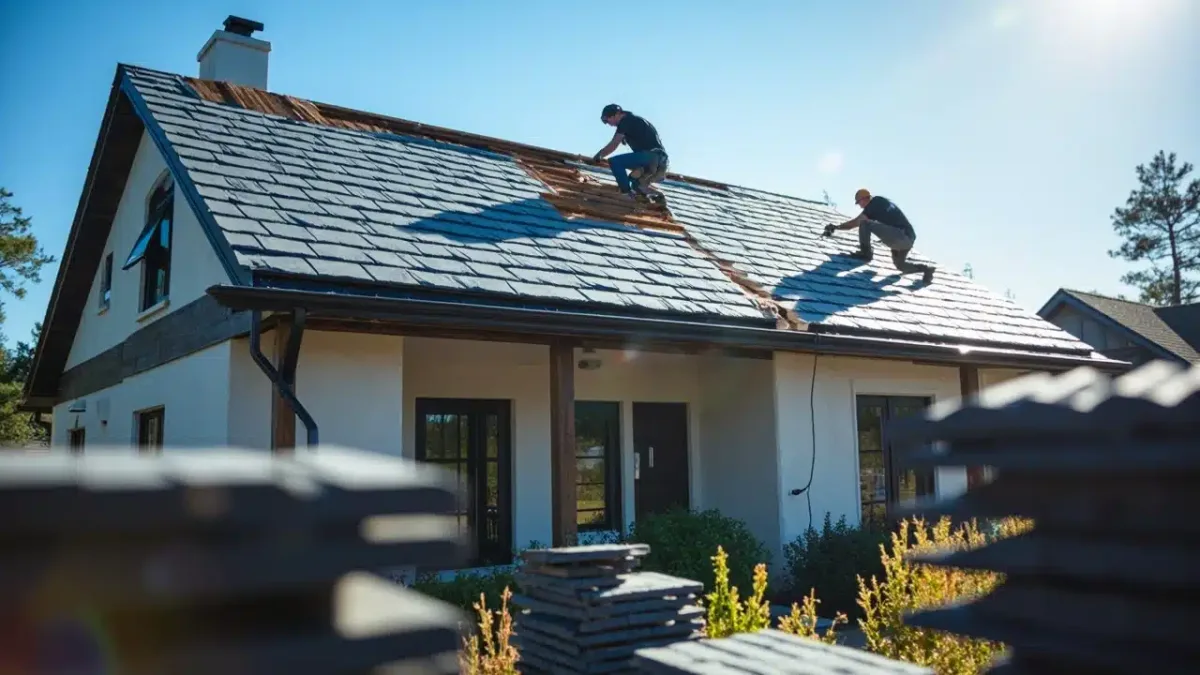

Roofing in Arizona starts with the sky. Arizona roofs face intense year-round UV and heat degradation plus North American Monsoon microbursts and haboob dust-storm wind, with occasional hail at higher elevations. No other input shapes an Arizona roofing program the way that year-round exposure does: a roof here is aging on a clear, calm day, not only during a storm. Layer on the monsoon — microburst downdrafts and haboob dust-storm wind that arrive fast and lift roofing off exposed jobs — and the picture is a market where the completed roof is under pressure the day it is finished and every day after. What separates Arizona from the license-free storm states is that the work sits under a real credential: the state licenses roofers for real, which sets a floor but does not answer the exposures the desert creates.
This page walks the Arizona-specific realities a roofing program has to answer for: the peril profile the desert builds, the ROC licensing posture, what actually drives cost here, the claims we see, the major markets across the state, and why Arizona roofers work with us. The coverage lines themselves — general liability, workers compensation, commercial auto, contractors equipment, and umbrella — are covered in depth on their own pages; here the focus is how Arizona changes the emphasis.
Common Roofing Risks in Arizona
The desert produces a peril profile a generic business policy never prices, and it is weighted toward wear as much as toward any single catastrophic event:
- UV and heat degradation. Relentless sun fatigues membrane, coatings, and tile over time, so a roof installed today can fail seasons later — the products-completed-operations claim this trade turns on, answered under general liability, and the signature Arizona exposure.
- Monsoon microburst and haboob wind. Fast, hard downdraft and dust-storm wind lift and strip roofing off exposed or recently finished jobs, driving both property and completed-operations questions of whether a roof was fastened to hold.
- Occasional high-elevation hail. Higher-elevation markets see hail that most of the low desert does not, adding an impact-damage exposure to an otherwise heat-and-wind profile.
- Falls from height. The workers compensation exposure on every job — a crew works at height on each roof, which is why workers compensation is a core line even under a state that licenses the trade.
- Hot-work and torch-down fire. Concentrated on the low-slope commercial and industrial roofs of the Phoenix market, where commercial and industrial roofing work carries a third-party fire exposure a heat-only view of the state would miss.
Arizona Roofing Regulations & Licensing
Arizona requires a Registrar of Contractors (ROC) roofing license for work valued above the state threshold — roofing is a specialty classification (R-42 residential, C-42 commercial, and the dual CR-42).
The practical effect for a roofing program is that even with a real license in hand, the certificate of insurance still carries weight. A general contractor, developer, or building owner reads your coverage, your limits, and your additional-insured endorsements alongside the ROC license to decide whether to let you on the job — the credential sets the floor, and the coverage answers what the license does not. That is why the general liability program and its completed-operations and additional-insured terms matter so much in a market where the roof keeps aging long after the ROC sign-off.
The workers-comp reality. Arizona is a private-market workers compensation state; coverage is written by private carriers. Because a fall from a roof is the defining injury of this trade, workers compensation is a core coverage decision for any Arizona roofer with a crew — one we read against your payroll and crew mix rather than treating as fine print, and one many general contractors require by contract regardless of state rule.
What Roofing Contractor Insurance Costs in Arizona
There is no single Arizona price, because premium is driven by your operation, not your ZIP code alone. The cost drivers that matter most here:
- Payroll and crew classifications. Roofing is among the highest-severity workers compensation classes, and payroll is the base the exposure is rated on.
- The roofing you do. Steep-slope shingle, tile, low-slope hot-work commercial, and specialty metal and tile each carry a different completed-operations, material-cost, and fire profile, and each prices differently.
- The UV-aged completed-operations tail. A long tail on heat-fatigued roofs is the exposure underwriters weigh most closely in Arizona, and how you document installation quality speaks to it.
- Busy-season and monsoon-season surge. How you staff, supervise, and document temporary or subcontracted crews during peak demand is something underwriters look at.
- Claims history and subcontractor use. Prior losses and how you handle the additional-insured status of crews you sub to both move the number.
We price to the real operation rather than quoting a figure off the state name.
Common Arizona Roofing Claims We See
Described qualitatively, with generic carrier language — every claim is handled by the carrier, never named here, and with no fabricated figures:
- The UV-fatigue leak. A membrane, coating, or tile roof that fatigues after seasons of heat and lets water in, damaging the building interior — a completed-operations claim the carrier answers under general liability long after the install.
- The monsoon wind-uplift loss. A microburst that lifts or strips roofing off a partially completed or recently finished job, raising both property damage and the completed-operations question of whether the roof was fastened to hold.
- The commercial hot-work fire. A torch-down operation on a Phoenix-area flat roof that ignites, damaging the building and its contents — third-party property damage answered under general liability.
Major Arizona Roofing Markets
Arizona is not one roofing market but several, each with its own peril and operating profile:
Phoenix and the Valley of the Sun
The state’s largest metro packs a dense stock of low-slope commercial roofs and tile-and-shingle residential under relentless sun, so heat-degradation completed-operations and hot-work fire on flat roofs concentrate in one market where re-roof demand almost never pauses.
Tucson and the Sonoran high desert
Monsoon microburst downdrafts and dust-storm abrasion age roofs on a different curve than a hail market does, shifting the claim pattern here toward wind uplift on exposed work and grit-driven surface wear rather than impact damage.
Mesa and the East Valley
A deep base of aging tile and shingle residential drives steady re-roof volume, which pulls temporary and subcontracted crews onto jobs during the busy season and stretches the completed-operations tail on work turned around quickly.
Chandler’s tech corridor
Commercial campuses and high-value custom homes raise the material-cost and installation-precision stakes on metal and premium roofing, so a single completed-operations claim carries a larger repair-and-replacement figure than a standard shingle job would.
Scottsdale and the resort corridor
High-value custom homes and resort properties, many on tile and premium systems, push property values up — which lifts completed-operations severity and material-replacement cost when an installed roof has to be reopened.
Glendale and the West Valley
Rapid new-construction subdivisions put new residential roofs up at volume, landing new-construction completed-operations exposure and tight production schedules on the same crews at the same time.
Why Arizona Roofers Choose Roofing Guard Insurance
We write one class — roofing contractors — and we place coverage with carriers that actually want the work. In Arizona that focus shows up in the questions we ask before we quote: whether the roofing you do is steep-slope shingle, tile, low-slope hot-work, or metal, and how long the completed-operations tail runs on heat-aged roofs; how your busy-season and monsoon-season surge is staffed and documented; and whether your general liability carries the completed-operations and additional-insured terms a Arizona general contractor will demand on top of your ROC license. When a certificate request lands on your desk mid-season with requirements you do not recognize, that is a call we take.
Related reading
Coverage for an Arizona roofing business works as a system. The lines that carry the most weight here are general liability (completed operations on UV-aged and wind-exposed roofs) and workers compensation (the falls exposure on a trade that works at height), alongside commercial auto, contractors equipment, and umbrella liability when a contract demands higher limits. How the program is written also differs by the roofing you do across the three service pillars.
Coverage for Arizona roofers
- General Liability Insurance
- Workers Compensation Insurance
- Commercial Auto Insurance
- Contractors Equipment Insurance
- Umbrella Liability Insurance
The roofing you do
- Residential Roofing Insurance
- Commercial and Industrial Roofing Insurance
- Specialty, Metal, and Tile Roofing Insurance
Get covered
Arizona sources
Frequently asked questions about roofing insurance in Arizona
Do roofing contractors need a license in Arizona?
Yes. Arizona requires a Registrar of Contractors (ROC) roofing license for work valued above the state threshold, and roofing is a genuine specialty classification — R-42 for residential, C-42 for commercial, and the dual CR-42. That is a stricter posture than the states that license no roofers at all. The license sets a real competency floor, but it does not answer the exposures the desert climate creates, which is where your coverage and your contracts still carry the weight. General contractors, developers, and building owners layer their own certificate-of-insurance and additional-insured requirements on top of the state license.
How does Arizona’s UV and heat climate affect a roofing insurance program?
It is the defining factor. Arizona roofs face intense year-round UV and heat degradation, which means a roof here is aging on a clear, calm day, not only during a storm. For an insurance program that pushes the emphasis onto products-completed-operations: a membrane, coating, or tile roof installed today can fatigue and fail seasons later, surfacing as a completed-operations claim long after the crew has left. We build the general liability program around that long tail rather than pricing an Arizona roofer as if the risk ended at project sign-off.
Does an Arizona roofer have to carry workers compensation?
Arizona is a private-market workers compensation state, so coverage is written by private carriers rather than through a state monopoly. It is not one of the four monopolistic states. Because a fall from a roof is the signature injury of this trade, workers compensation is a core line for any Arizona roofer with a crew, and general contractors and project contracts frequently require it regardless. We place it with carriers that write the roofing class and read your crew mix and payroll against the exposure rather than treating comp as a box to check.
What does monsoon and haboob wind mean for an Arizona roofing program?
The North American Monsoon brings microburst downdrafts and haboob dust-storm wind that arrive fast and hit hard, and at higher elevations there is occasional hail. For roofers the exposure is wind uplift — roofing lifted or stripped off a partially completed or recently finished job — and abrasion from wind-driven grit. That shapes both the property and completed-operations sides of the program: whether an installed roof was fastened to hold through the next monsoon cell is the kind of question that surfaces in a claim, and it is why the completed-operations and property emphasis matters here even in a market people think of as dry.
How much does roofing contractor insurance cost in Arizona?
There is no single price, because premium is driven by your specific operation. In Arizona the biggest factors are your payroll and crew classifications (roofing is a high-severity workers compensation class), the roofing you actually do — steep-slope shingle, tile, metal, or low-slope hot-work — the length of the completed-operations tail on UV-aged roofs, how you staff and document the busy-season and monsoon-season surge with temporary or subcontracted crews, and your claims history. A Phoenix tile-and-shingle re-roofer, a Tucson low-slope commercial contractor, and a Scottsdale metal specialist each look very different to an underwriter. We price to the real operation rather than quoting a figure off the state name.
Do you write roofing insurance across all of Arizona?
Yes. Roofing Guard Insurance places coverage for roofing contractors across Arizona — from the Phoenix and Mesa Valley market to Tucson and the Chandler, Scottsdale, and Glendale corridors — and across the rest of the 48 states we serve. We write residential, commercial and industrial, and specialty metal and tile roofers, matched to how the operation actually runs in its part of the state.
Get a quote for your Arizona roofing business
Tell us where in Arizona you work, the roofing you do, and how your busy-season crews are staffed — and we will market it to carriers that write the class.