

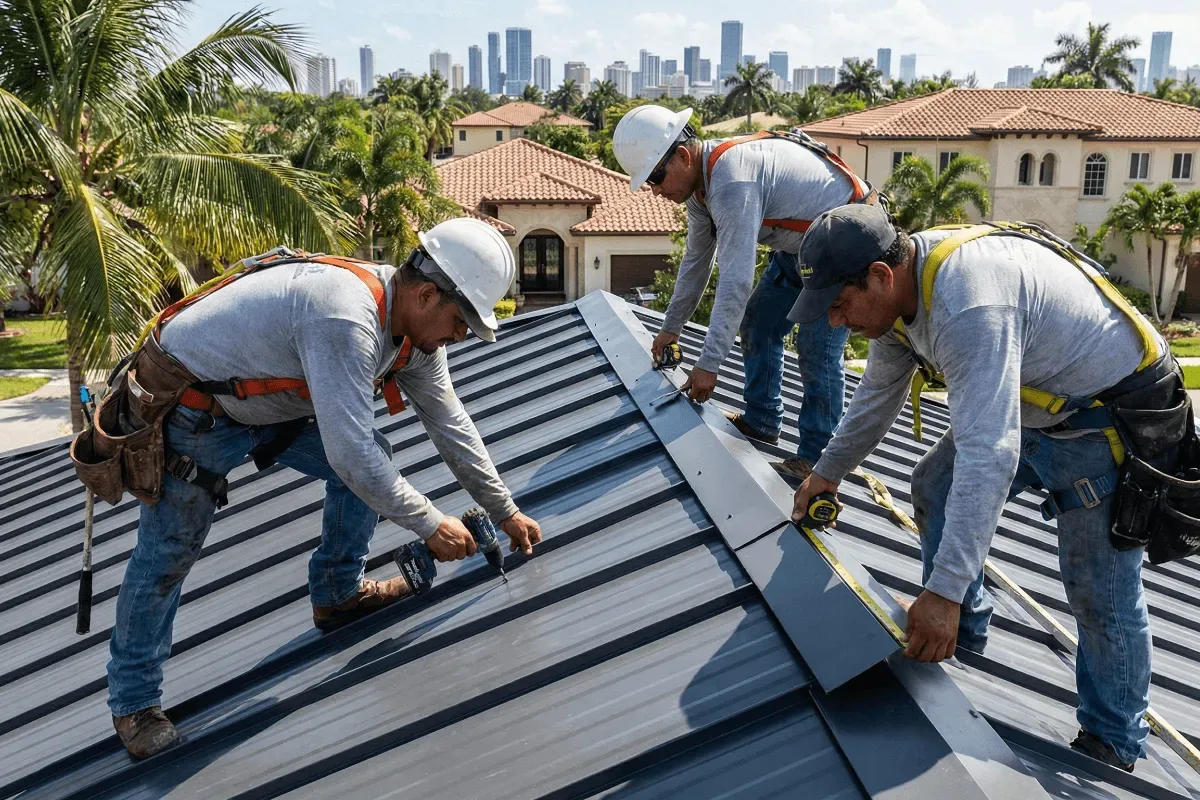
Whether a roofing contractor needs a license has no single national answer — it depends entirely on the state. Some states issue a dedicated roofing license, some fold roofing into a general contractor license, some ask only for a registration, some leave it to cities and counties, and some have no statewide roofing license at all. This post is general education, not legal or licensing advice: requirements vary and change, so confirm your state’s current rules with the state directly.
The short version: there is no federal roofing license, and the states scatter across five distinct postures. This post is a framework, not a fifty-state directory — it explains the five postures, what each means for an owner, and how to check your own state, with a few representative states linked as examples. When you want the state-by-state context for where you work, each state page carries the verified regulator and licensing posture for that state, and the how to start a roofing business post covers where licensing fits in the larger setup.
The one answer that is true everywhere: it depends on your state
The honest headline is that “do I need a license” resolves only at the state line. There is no national roofing license, no federal roofing board, and no single rule you can carry from one state into the next. What exists instead is a patchwork: a genuine roofing license in some states, a general contractor license that happens to cover roofing in others, a registration in others still, purely local rules in several, and no statewide requirement at all in a handful. Sort your state into the right one of those five postures and you know what kind of credential to look for; assume the posture from a neighboring state and you can end up either unlicensed where a license is required or hunting for a license that does not exist. The five classes below are drawn from the verified licensing posture attached to each state on this site, and the practical instruction throughout is the same: confirm the current rule with the state itself.
Class one: a dedicated statewide roofing license
Some states issue a roofing license as its own credential — a specialty classification a roofing contractor holds directly. Florida is the clearest example: roofers there are licensed through the state’s construction industry board as either Certified, which is valid statewide by state exam, or Registered, which is limited to the local jurisdiction that issued it. California issues a specialty roofing classification, the C-39, through its state license board, and pairs it with a roofer-specific workers-compensation mandate. Utah licenses roofing through its Division of Professional Licensing under classification S280 (per Utah Administrative Code R156-55a-301). In a dedicated-license state, the roofing credential is the thing you apply for by name, typically with an exam, financial-responsibility, and insurance conditions attached. If your state is in this class, there is a specific license to hold — and operating without it is the version of the license question with the sharpest consequences.
Class two: roofing under a general or residential contractor license
In a second group of states there is no roofing-specific license, but roofing is legally captured by a broader general, residential, or building contractor license. Virginia is a representative case: contractors are licensed through the state’s Board for Contractors by class and by classification, and roofing falls under the Roofing Contracting specialty within the residential and commercial building classifications rather than as a standalone credential. The practical meaning for an owner is that you are still licensed by the state — the license simply is not called a “roofing license,” and roofing sits inside a wider scope of work the license authorizes. The trap here is assuming that “no roofing license” means “no license,” when in fact the state requires a contractor license that covers the roofing you do. Read what your state’s contractor classes actually include before concluding roofing is exempt.
Class three: registration, not a competency license
A third posture asks for registration rather than a license. Washington is the standard example: all construction contractors, roofers included, must register with the state’s Department of Labor and Industries, with surety-bond and liability-insurance minimums — but the registration verifies bonding and insurance rather than testing trade skill the way an exam-based license does. Registration is a real, enforceable requirement; working unregistered where registration is mandatory is a violation. But it is a lighter credential, and it is easy to misread in both directions — treating a required registration as optional, or assuming a registration proves the same competency a full license would. Some states also blur the line, calling the requirement a registration while attaching exam or endorsement conditions, and a few are actively converting registrations into full licensure. As with every class, the current program is the one to read.
Class four: no statewide license — cities and counties set the rules
In a fourth group there is no statewide roofing or general-contractor license, and the entire question is pushed down to the local level. Ohio is a clean example: there is no state roofing board, and roofing contractors are regulated city by city and county by county, where registration, permit, and bonding rules vary. Colorado works the same way — licensing is municipal, so a contractor may need a city credential in one jurisdiction and a different one next door, with no statewide reciprocity to lean on. For an owner, the local-only posture is the most operationally demanding, because the answer literally changes as you cross into the next city’s permitting authority. There is no single state office to satisfy; there is a map of local jurisdictions, each with its own rule, and the burden is on the contractor to check every one where crews actually work.
Class five: no statewide roofing license at all
The fifth posture is the lightest: no statewide roofing license, and comparatively little state machinery around the trade. Texas is the marquee example — roofing is not a state-licensed trade, the state does not administer roofing licensure, and the one Texas roofing credential is a voluntary industry certification rather than a government license. Oversight there runs through local permitting and, heavily, through the insurance and certificate-of-insurance requirements that general contractors and project owners impose by contract. Maine sits in the same class: no statewide occupational roofing license, with roofing governed by contract-disclosure law and local permitting instead. The distinction from the local-only class is subtle but real — here even the local picture is comparatively thin, and the practical control on who roofs is often the private contract, not a public credential. That is worth naming plainly: in a no-statewide-license state, being “allowed” to roof and being insurable enough to win work are two different bars, and the second is usually the higher one.
Real-World Scenario: A roofing contractor builds a clean book in a dedicated-license state, holding the specialty roofing license by name for years, then expands into a neighboring state to chase storm work. Assuming the credential carries over, the owner never checks — and the new state turns out to be a local-only jurisdiction where the state issues no roofing license, but the city where the first big job sits requires its own contractor registration and permit. The out-of-state license means nothing locally; the missing city credential stalls the permit, and the general contractor’s subcontract, which required proof of local licensing, will not let the crew start. Same company, same skill, same trucks — a different posture across the state line, checked one job too late.
How to check your own state — and why licensing is not the whole picture
The practical step is simple to say and easy to skip: identify which of the five postures your state takes, then confirm the exact, current requirement with the state agency that governs it — and check the city or county where the job actually sits, because local permitting can apply even in a state with a dedicated license. Requirements move. States add licenses, tighten registrations, and convert one into the other; a program that was a registration last year may be licensure this year. That is why this post is deliberately a framework rather than a fifty-state answer key, and why every state page on this site carries the verified regulator and posture for that state as a starting point rather than the last word. Confirm before you bid, and confirm again when you cross a line.
And keep licensing and insurance in their separate lanes, because they are separate systems that an owner needs to satisfy together. A license authorizes you to do the work; coverage responds when the work goes wrong. Some states tie a general-liability or workers-comp minimum to the license or registration itself, but being licensed never replaces carrying general liability, and being insured never replaces being properly licensed. A roofing business generally needs both, each verified against the rules that actually apply where it works. When you are ready to build the coverage side, start a quote — and settle the license side with the state directly, because this post is education, not licensing advice, and the state’s current rule is the only one that governs your business.