

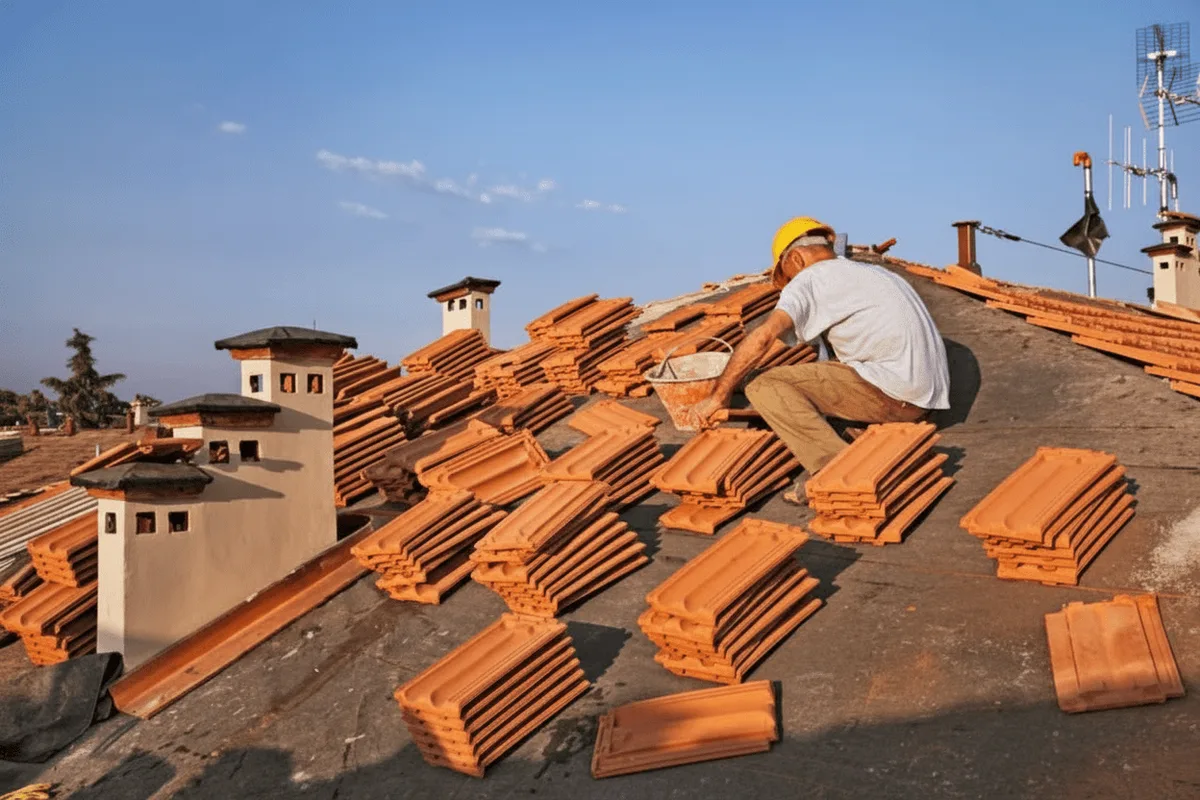
A Massachusetts slate or flat-roof contractor with employees must carry workers’ comp: the Department of Industrial Accidents says all employers operating in the state are required to carry it. The state also separates Home Improvement Contractor registration from the Construction Supervisor License, and the roof type then shapes the liability, equipment and auto coverage.
Workers’ comp: the Massachusetts rule
The Massachusetts Department of Industrial Accidents says all employers operating in Massachusetts are required to carry workers’ compensation insurance for their employees. A slate company with a small crew and a flat-roof company with several crews start from the same rule.
The department draws lines around owners. It says sole proprietors of an unincorporated business are not required to carry workers’ compensation insurance for themselves, and that corporate officers who meet the ownership threshold it sets can request an exemption. Neither point changes the duty to cover employees. A roofing owner who is exempt still needs a policy the moment someone else is on the roof for the company.
The consequences of a gap are spelled out. The department says its Office of Investigations will issue a stop work order to employers who do not have workers’ compensation insurance, and that uninsured employers are also subject to debarment from public contracts. Its page also describes fines and possible criminal charges. For a contractor who bids public buildings, that debarment alone is reason to keep the policy current. The workers’ compensation coverage page explains what the policy pays for.
Where the policy comes from
The department’s guidance on buying coverage is plain: to obtain a workers’ compensation policy, contact your local insurance agent or broker or an insurance company directly. Roofing is a class some insurers do not write, so a roofer can be declined for reasons that have nothing to do with the company itself.
For an employer that insurers reject, the department says to contact the Workers’ Compensation Rating and Inspection Bureau to apply for coverage, and it says that bureau oversees the workers’ compensation assigned risk pool. The post on who offers workers’ comp for roofing contractors explains how private markets and markets of last resort fit together, and the post on whether you need workers’ comp for your roofing crew covers employees, subcontractors and owners.
HIC registration and the Construction Supervisor License
Massachusetts uses two separate credentials, and a roofer can need both. The Office of Consumer Affairs and Business Regulation says residential contractors, subcontractors, partnerships or corporations that solicit, bid on or perform covered work must register as a Home Improvement Contractor, and it describes that work as being on an existing, owner-occupied, non-commercial property within the unit limit the office sets. Its contractor work chart marks both minor roofing repairs and new or replacement roofing as needing HIC registration and a CSL, and it marks a building permit as required for new or replacement roofing, with a roofing CSL as the minimum.
The Construction Supervisor License is a different credential. Mass.gov says a Construction Supervisor License is different from an HIC registration and they are not interchangeable. Among the license types, the state lists a roof covering specialty whose scope covers the construction, reconstruction, alteration, repair and removal of roof covering, alongside an unrestricted license with a broader scope. Which license your work calls for is a question for the licensing office, and the answer should match the work described on your policies.
The office also says HIC registration comes with a separate mandatory payment to the Guaranty Fund, based on the number of people you employ. Keep the registration, the license and the insurance on the same renewal calendar. The post on whether roofing contractors need a license compares how other states handle it, and the Massachusetts location page covers the state as a whole.
Real-World Scenario: A slate contractor is hired to replace damaged slates and rebuild copper valley flashing on an older church. The crew sets roof hooks and staging, and a worker solders the new valley in the afternoon. That evening a member of the congregation notices smoke near the eave. The fire department finds smoldering material behind the old fascia. The owner calls the agent the next morning and learns the claim will turn on the policy’s hot work terms and on what the crew did to watch the area after soldering.
What slate work adds
Slate is heavy, brittle and long-lived, and each of those traits shapes the insurance conversation. None of this is a Massachusetts legal requirement. It is general insurance explanation.
Slate breaks under foot, so crews work from roof hooks, ladders and staging rather than walking the surface. That brings scaffolding and staging into the fall exposure, and it puts property damage to an existing roof at the center of the job. Slate repairs can also involve soldered copper flashing and valleys, which is hot work on a building that may be old and dry inside. The post on torch-down and hot work fire risk explains why insurers ask about flame and heat on a roof.
Slate roofs can sit on older homes, churches, schools and other buildings where the property below is valuable and hard to replace. A slate roof is also meant to last a long time, which means the completed operations exposure on a slate job can follow the contractor for years. The specialty metal and tile roofing page covers how specialty materials are described to underwriters.
What flat-roof work adds
Flat roofs on multi-family and commercial buildings across the state bring a different set of exposures. Torch-applied modified bitumen puts an open flame on the roof, adhesives used with single-ply membranes can bring fumes into occupied space, and a leak during or after the job can reach tenants’ apartments and businesses. Fumes and adhesives are a pollution question to ask us about, and fire is the question an underwriter will ask first.
The completed operations side of general liability is where a leak after the job lands. The post on whether general liability covers a roof leak explains how that coverage responds, and the general liability coverage page covers the policy in full. Snow and ice that sit on a flat roof through a Massachusetts winter can expose drainage and flashing problems, so a written closeout inspection with photographs is a record worth keeping.
Equipment, trucks and the job site
Slate and flat-roof work both depend on equipment that moves from job to job: staging and scaffolding, hoists, roof hooks, torches and propane cylinders, welders for single-ply seams, and the trucks and trailers that carry them. The contractors equipment page explains how that equipment is scheduled, and the post on commercial auto for roofers covers the vehicles.
City jobs add their own steps. Staging on a sidewalk, a dumpster on a street or a crane on a narrow lot can need local permits, and the city or town decides what proof of insurance it wants. Ask the local building department before the job, and keep a current certificate ready.
Subcontracted help deserves the same discipline. Slate and flat-roof contractors can bring in sheet metal, carpentry or tear-off crews for parts of a job, and an auditor at the end of the policy term can ask how each of those workers was covered. Collect a current certificate from every subcontractor before the crew starts, check that the named business matches the company doing the work, and keep the certificate with the job file. A subcontractor without coverage can turn into payroll on your own audit, and into a claim on your own policy if someone is hurt. The post on what insurance GCs require from roofing subs shows the same paperwork from the other side of the contract.
Questions to ask about Massachusetts coverage
- Does my workers’ comp policy cover every employee, and is any owner exemption documented correctly?
- Do I hold the HIC registration and the Construction Supervisor License my residential and permitted work requires?
- How does my general liability policy treat soldering, torch work and other hot work?
- Is damage to an existing slate roof during repairs covered, excluded or a separate question?
- Are staging, hoists, torches and propane cylinders listed on my equipment coverage?
- What should I do if insurers decline my workers’ comp application?
The Massachusetts cost guide explains what moves a roofing premium in the state. When you are ready for a review, start on the quote page.
Sources: the Department of Industrial Accidents’ workers’ compensation insurance requirements and its page on how and where to get workers’ compensation insurance, Mass.gov’s guide to Construction Supervisor Licenses, and the Office of Consumer Affairs and Business Regulation’s HIC contractor resources and HIC registration and renewal page. This post is general education, not legal or tax advice.