

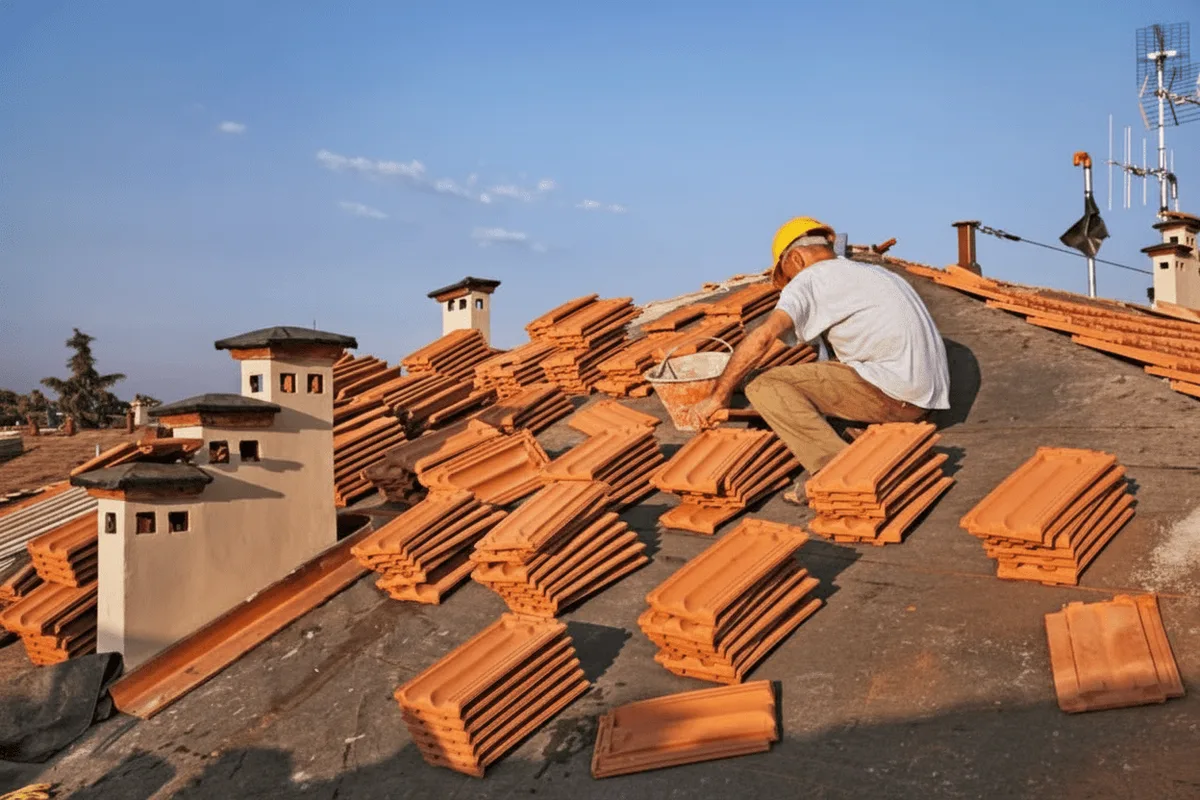
Hiring and keeping good crews is the hardest part of running a roofing business, and it is the part that quietly decides everything else. The skilled trades are competing for a shrinking pool of experienced hands, the work is demanding and happens at height, and every green crew member is both a safety exposure and a long-term investment. How you recruit, train, and retain people is the center of the operation.
The short version: treat recruiting as a constant, train fall protection from day one, build a bench so one departure does not stall a job, and lead so good people want to stay. That discipline shows up twice — in cleaner safety outcomes and in the value of the business itself. This post is the owner’s honest view of the labor challenge, not a promise of a shortcut. The OSHA fall protection post owns the safety-from-day-one detail, and the business value post owns why a retained crew is a value driver; this post owns the labor playbook that connects them.
The labor reality of roofing
Begin with the truth of it, because pretending the labor market is easy helps no one. Experienced roofers are hard to find. The trade asks a lot — physical work, weather, height, early starts — and it competes for the same limited pool of skilled hands that every other trade is chasing. Many of the most experienced people are aging out faster than new ones are being trained in, so a contractor is often recruiting from a thin field rather than a deep one. That is the environment. It is not a reason for despair; it is a reason for discipline. The owners who struggle most are the ones who only look for people when they are already short-handed, staffing from a standing start under deadline pressure. The owners who do best treat labor as a system to run continuously — always meeting people, always developing the crew they have, always thinking a season ahead. The labor reality does not reward panic. It rewards the contractor who has been building the crew steadily all along, so that a busy stretch or a sudden departure is a manageable event rather than a crisis.
Recruiting in a tight trades market
Recruiting in a thin market is less about a single great hire and more about a steady habit. The contractors who staff well tend to keep a line in the water even when they are fully crewed — talking to people at suppliers, staying in touch with hands who worked out before, being known in their area as a place worth working. Reputation does a lot of the recruiting: crews talk to each other, and a company known for treating people well, paying fairly, and running organized jobs attracts applicants that a company with the opposite reputation never hears from. It also helps to widen the door rather than wait for the finished roofer who may not exist in your market. Some of the best long-term crew members start green and are developed in-house, which turns recruiting into a pipeline rather than a lottery. The point is to stop treating hiring as an emergency response and start treating it as an ongoing function of the business — because in a tight market, the contractor who is always recruiting is the one who is rarely desperate.
Training green crews safely, from day one
When you bring on someone new, the first investment is safety, and it cannot wait. Fall protection is not an advanced module to introduce once a new hire has proven themselves — it is the foundation a roofer needs before they are ever exposed to height. Teaching the gear, the program, and the judgment before the production pressure builds is how you protect the person, protect the job, and protect the record the business is rated on. The mechanics are straightforward: pair the new hire with an experienced crew member who models the right habits, teach the fall-protection program as the first real skill rather than an afterthought, and make competence something you develop deliberately instead of assuming it will arrive on its own. There is a natural tension here, because a green crew member is slower and needs supervision right when the schedule wants speed. The contractors who resolve that tension in favor of training — who slow down enough to teach safety properly — are the ones who end up with experienced, capable crews and clean loss records. The OSHA fall protection post walks what the standard requires in full; the owner’s job is to make sure day one on the crew is the day fall protection is learned, not the day it is skipped.
Building a bench
A roofing business runs on more than the people on today’s job — it runs on the depth behind them. A bench is what keeps one departure, one injury, or one busy week from stalling a project. Building it is a deliberate act. It means developing more than the minimum number of capable hands, cross-training crew members so knowledge is not trapped in one person, and growing future leaders from within rather than hoping to hire them fully formed. Contractors without a bench feel every gap acutely: a single experienced roofer quitting can leave a crew unable to run a job the way it needs to. Contractors with a bench absorb the same event without drama, because someone is ready to step up. The bench is also where the training investment compounds — every green hire you developed safely becomes part of the depth that makes the business resilient. Building a bench is not overstaffing; it is refusing to run so lean that ordinary turnover becomes an emergency, and it is one of the clearest signs of an operation that is being run for durability rather than just this week’s schedule.
Crew leadership and culture
People do not stay for a job; they stay for how the job feels to work. Crew leadership and culture are what turn a group of hands into a team that wants to keep showing up, and they are largely within an owner’s control. It comes down to the everyday things: leaders who communicate clearly, who set expectations fairly and hold to them, who back their crews rather than blame them, and who run organized jobs where people are not set up to fail. Respect is not a slogan on a wall; crews read it in whether the schedule is realistic, whether they are paid fairly and on time, whether their input is heard, and whether the person leading the job knows the trade. A strong culture is also self-reinforcing — good people want to work with other good people, so a healthy crew becomes its own recruiting tool, while a toxic one drives away exactly the workers a contractor most wants to keep. Leadership is not a soft extra layered on top of the operation. In a trade where the labor market is this tight, it is one of the most practical retention tools an owner has, because it is the difference between a workforce that stays and one that is always turning over.
Real-World Scenario: Two roofing contractors in the same market run very different shops. One pays a little more, runs organized jobs, trains new hires on fall protection before they touch a roof, and keeps its experienced hands for years. The other pays the minimum, staffs in a scramble every busy season, and burns through green crews who never stay long enough to get good. When a storm brings a surge of work, the first contractor scales up on a trained core and holds its safety standards; the second throws undertrained bodies at roofs and takes the losses that follow. Same trade, same weather — the crew the owner built, or failed to build, is what decides how the season goes.
Safety as a retention tool
Safety and retention are usually discussed separately, but for roofing crews they are the same conversation. Workers notice whether an employer actually invests in keeping them safe or merely talks about it, and that observation feeds directly into whether good people decide to stay. A real fall-protection program, training that genuinely happens, gear that is present and maintained, and leaders who stop unsafe work all signal that the company values the people doing the most dangerous part of the job. That signal is powerful in a trade where crews know the risks intimately. The reverse is just as real: experienced roofers leave employers who feel careless with their safety, because they have options and they know what a well-run jobsite looks like. So safety is not only a compliance duty and a cost lever — it is a retention lever. Investment in one tends to pay off in the other, which means the safety program an owner builds does double duty: it keeps losses off the record and it keeps good crews on the payroll. That connection is why the strongest roofing operations rarely treat safety as an expense to minimize; they treat it as an investment in the two things they can least afford to lose — their people’s wellbeing and their people themselves.
Seasonality and the storm surge
Roofing labor has to flex with demand that does not hold steady. Work swings with the season, and it can spike sharply after a major storm rolls through an area. That volatility is one of the hardest parts of staffing the trade, because the same market that is thin in normal times gets stretched further exactly when everyone needs crews at once. The owners who handle it well build a reliable core team they keep engaged and paid through the year, so they are not rebuilding a workforce from scratch every busy season, and they plan for surge periods deliberately rather than scrambling into them. The real risk in a storm surge is the temptation to lean on hastily added, undertrained hands right when the work is most intense and the height exposure is highest — which is precisely the wrong moment to have inexperienced people on roofs without proper training and supervision. Keeping a trained core, onboarding surge help carefully, and holding the safety line even under volume pressure is how a contractor grows into a busy stretch without letting quality or safety slip. Seasonality is a fact of the trade; managing it is a discipline, and it starts long before the busy phone starts ringing.
Why retention shows up in safety and in value
Everything in this post converges on a single point worth making explicit: keeping good crews pays off in the two places an owner cares about most. The first is safety. Experienced roofers carry judgment a new hire has not developed — reading a roof, sensing a hazard, using the gear as second nature — and when turnover is high, that judgment keeps walking out the door and being replaced by inexperience, raising the exposure every time. Retention keeps hard-won safety knowledge inside the business, which is why keeping people is itself a safety strategy. The second is value. A roofing business that depends entirely on the owner and churns through labor is harder to sell and worth less than one with a stable, experienced crew that can run jobs reliably without the owner on every roof. A retained team is an asset a buyer can count on and a signal of the operating discipline that supports value — a connection the business value post walks in full. So crew retention is not a soft goal. It shows up on the loss record today and on the balance sheet tomorrow, which is exactly why it belongs at the center of how an owner runs the business.
Where crews meet your coverage
Crews are the business, and protecting them is inseparable from protecting the company. The labor playbook in this post — recruiting steadily, training safely from day one, building a bench, leading well, and using safety as a retention tool — is how an owner keeps good people and keeps them safe. Coverage is what stands behind the crew when someone is hurt despite all of it. The two work together: workers’ compensation responds to an injured crew member, and the safety and retention discipline you build is what keeps those claims rare and your experienced people in place. When you are ready, start a quote and tell us how your crews work — residential steep-slope or commercial low-slope — read the workers’ compensation page to see how the coverage is built, and use the business value post to see how a retained crew becomes a value driver. In a trade this dependent on skilled hands, the contractor who hires, trains, and keeps people well is not just solving a staffing problem — they are building the safest, most valuable version of the business they can.