
There is no published price for roofing contractor insurance in Maine, because a carrier builds it from your operation against one of the harshest winter roofing climates in the country. Long snow-load seasons, ice dams, and coastal nor’easter wind shape the losses, and Maine’s light-touch regulatory posture shapes the rest. This guide walks the drivers that decide what a Maine roofing contractor actually pays.
That answer frustrates owners who want a single number, but in Maine it is especially honest, because the two things that move a roofing premium here — a fall-exposed crew and the roofs it leaves behind to survive hard winters — are specific to your operation, not to a rate card. A residential shingle crew in Portland and a low-slope commercial operation in Bangor are the same trade only in name, and a carrier prices them from different pictures. Below are the drivers that move the number for a Maine roofing operation, in roughly the order they matter.
Why Maine’s winters set the roofing cost conversation
Start with the climate, because in Maine it drives the loss picture more than anything else. Long, severe winters load roofs with snow and build ice dams at the eaves, and the extensive Atlantic coastline exposes structures to nor’easter wind-driven rain and salt air. For a roofing contractor that reality does two things to cost. It concentrates claims into seasons, so your loss history — how your crews and your installed roofs performed when winter tested them — becomes a driver a carrier reads closely. And it raises the stakes on the work you leave behind, because a roof in Maine has to survive cycles that a roof in a mild climate never faces.
Because those winters are the backdrop, a statewide “average” is even more misleading in Maine than elsewhere. For the full market picture behind these drivers, see our Maine roofing contractor insurance page — that page is the market and regulatory overview, and this one is the cost explainer that companions it.
Maine’s light-touch regime — no statewide roofing license
Maine leaves roofer oversight mostly to contract law and local permitting rather than a state trade license. There is no statewide occupational roofing license; home-improvement contractors must provide a written contract above a low threshold, and roofing is otherwise governed by contract-disclosure law and municipal permitting. That light-touch posture does not lower the exposure a carrier prices — a fall-exposed crew and the roofs it leaves behind drive the number regardless — but it does change how an underwriter reads you. With no state license to lean on, your own documentation, your written contracts, and your safety discipline carry more weight in the picture a carrier builds.
Workers-compensation oversight in Maine runs through private carriers, with market conduct overseen by the Maine Bureau of Insurance. Maine is a private-market comp state, and coverage is mandatory for employers — a point that matters, because comp is one of the two lines that decide a roofing contractor’s cost.
Crew payroll and the workers-compensation decision
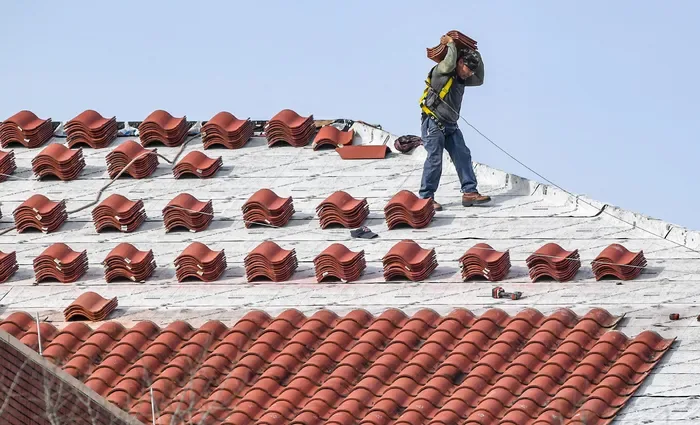
Payroll is usually the single biggest driver for a roofing contractor, because it scales both your workers compensation and a large part of your general liability. It is not just the dollar figure — it is which work the payroll covers. Roofing is among the highest-severity workers-compensation classes of any trade, for one plain reason: the crew works at height, and in Maine it works at height on snow and ice for much of the year. A fall is exactly the severe injury the line is built for, which is why the Occupational Safety and Health Administration treats fall protection as the defining roofing safety regime, and why a carrier reads your crew’s cold-weather safety discipline as closely as its size.
Because Maine is a mandatory private-market comp state, the decision is not whether to carry comp but how well your operation manages the exposure behind it. Documented fall-protection practice, ice-work training, and a clean injury record are the levers that let a carrier price the crew accurately rather than defensively.
The completed-operations tail — roofs that must survive Maine winters
Your revenue is a rating basis for general liability, but the exposure that defines the roofing class is completed operations — the work you leave behind. A roof keeps existing after your crew is gone, and in Maine it has to survive snow load, ice-dam cycles, and coastal wind for years. An installed roof that leaks or fails downstream can become a serious third-party property-damage or injury claim long after the job closes. The completed-operations side of general liability is the signature line built to answer for it, and because a Maine roof carries such a demanding tail, your revenue and your workmanship-and-inspection record are inputs a carrier weighs closely. This is the roofing contractor’s defining cost driver — the thing that separates installed roofing from trades that leave nothing behind.
Real-World Scenario: A Portland residential crew re-roofs through a short, intense fall season, racing to close installs before the first hard freeze, while an Augusta commercial contractor runs low-slope work on schools and municipal buildings that must shed heavy snow load all winter. Both leave finished roofs behind that have to perform through Maine’s worst months, but the underwriter reads them differently — the residential crew’s exposure rides fall risk and storm-driven volume across many pitched roofs, the commercial contractor’s on completed-operations performance under snow load on fewer, larger jobs. Same Maine, same roofing class — but the work mix and the completed-work picture price differently. The owner who can describe that picture clearly gets a sharper quote than the one who cannot.
Work type, slope, and the coastal factor
The kind of roofing you do moves the number as much as how much you do. A residential steep-slope crew carries a fall-and-completed-operations profile driven by shingle and pitched work at height and by winter storm volume. A commercial and industrial low-slope operation carries a different signature: membrane and hot-work application concentrates a genuine fire exposure during the job, and larger contracts pull in additional-insured and higher-limit requirements. A specialty metal and tile installer carries high material values and install-precision risk — and on the Maine coast, metal and standing-seam work is common precisely because it sheds snow and resists salt air. Same trade, three genuinely different cost conversations, which is why a carrier wants to know your work mix before it prices anything.
Trucks, tools, and staged materials
Beyond the crew and the completed work, a carrier prices what you drive and what you own. Commercial auto covers the trucks and trailers hauling crews, tear-off debris, and materials over Maine’s long rural routes and through winter conditions, and it grows with the size of your rolling stock. Contractors’ equipment — inland marine — covers the tools, harnesses and fall-protection gear, metal-forming equipment, and the materials you stage on the jobsite and in transit, where cold and weather add their own risk. For a roofing contractor these are real but usually secondary to the crew and the completed-operations tail, and they are drivers you control by scheduling your trucks and equipment to real value rather than guessing. Underinsuring the gear that gets your crews to a finished roof is a false economy.
How to get an accurate Maine quote
The path to a real number is to describe your real operation. Tell a broker your crew payroll and the work it covers, your revenue and the kind of roofs you leave behind, your work mix across steep-slope and low-slope and specialty, your trucks and equipment values, your claims history through Maine winters, the limits your contracts require, and where in the state you work. The limits your general contractors and project contracts require also push you toward an umbrella, and the full coverage overview shows how each line fits together. From there a carrier with genuine roofing appetite can price it — and you can compare apples to apples instead of chasing a headline rate. When you are ready, start a quote and tell us how your crews work, or see the Maine roofing contractor insurance page for the market and regulatory picture behind these drivers. The number at the end will reflect your business, which is the only number worth having.