
This is general education, not legal, tax, or licensing advice — requirements vary by state and locality, so confirm the specifics with the U.S. Small Business Administration, your state and local authorities, and a qualified professional before you rely on them. With that caution up front, starting a roofing business follows a sequence you can plan around, and this post walks it from the business structure through your first jobs.
The short version: choose and register a business structure, get a federal tax ID, confirm the licensing and permits that apply where you work, put the right insurance in place, and line up your first crew, trucks, and customers. Roofing adds a safety obligation on top of the general startup path, because a roofing employer takes on the fall-from-height exposure that OSHA regulates. Two steps — licensing, which varies by state, and insurance, which is foundational rather than optional — deserve extra care, and this post gives them their own sections.
What starting a roofing business actually takes
At the core, a roofing startup is a small business like any other with a few trade-specific layers stacked on top. The general path is well mapped: the U.S. Small Business Administration’s “Launch your business” guide lays out the standard steps — choose a business structure, register the business, get a federal tax ID or EIN, apply for the licenses and permits that apply to you, and get business insurance. What makes roofing distinct is what sits on top of that framework: a crew that works at height, trucks and equipment, a way to win work, and a safety obligation that is unusually consequential for this trade. The rest of this post follows the SBA sequence and calls out where roofing changes the picture, so you can see both the general startup path and the trade-specific layers in one place.
Choose a business structure and register
The first real decision is legal structure, because it shapes your liability, your taxes, and your paperwork from day one. The common options — sole proprietorship, partnership, LLC, or corporation — differ in how much they separate your personal assets from the business, how you are taxed, and how much administrative overhead they carry. The SBA’s launch guide explains each, but the choice has genuine legal and tax consequences that turn on your situation, so it is worth confirming with an attorney and a CPA rather than defaulting to whatever seems simplest. Once you have chosen, you register the business with the appropriate state authority and secure the name. For a trade like roofing, where the liability exposure is real and physical, the structure decision is not a formality — it is part of how you protect yourself, working alongside, not instead of, the insurance you will carry.
Get a tax ID and set up your finances
With a structure chosen and registered, the next step in the SBA sequence is a federal tax ID — an EIN — which you will need to hire employees, open a business bank account, and handle taxes as a business rather than an individual. This is also the moment to set up clean finances from the start: a separate business bank account, a bookkeeping system, and a habit of keeping business and personal spending apart. That discipline feels like overhead when you are small, but it is the foundation everything else rests on — it is how you will price jobs accurately, survive tax season, qualify for financing, and, much later, present a legible business if you ever sell. Starting clean is far easier than untangling commingled books years in.
Licensing and permits: confirm what applies where you work
This is the step where roofing startups most often go wrong by assuming a single national rule exists — it does not. Roofing licensing genuinely varies by state and locality. Some states license roofing contractors directly, some cover roofing through a general-contractor license, some handle it through local or municipal registration, and some do not require a specific roofing license at all — and permit requirements for individual jobs vary on top of that. Because the rules differ so much from place to place, the only reliable approach is to confirm what applies in the specific state and city where you will work, rather than copying what a roofer in another state did. Our overview of whether roofing contractors need a license walks the framework and the questions to ask; this post’s point is narrower and important — do not assume, and do not treat any one state’s rule as universal. Getting licensing right early is often a precondition for winning work at all, because many general contractors and property owners will not hire an unlicensed roofer.
Your first crew, trucks, and equipment
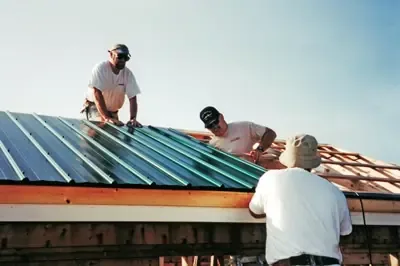
A roofing business is its people and its ability to get on a roof, so early on you assemble a crew and the trucks and equipment to do the work. This is where the trade’s defining reality arrives: the moment you hire, you take on the fall-from-height exposure that makes roofing one of the highest-severity trades there is. That means two things happen at once. Operationally, you need fall-protection equipment and a real plan for using it — not just harnesses in the truck, but a working safety program with training and the right gear. Legally and financially, hiring triggers the safety obligation that OSHA regulates and the workers-compensation requirement that follows employment in most places. Building the safety culture from your first hire, rather than bolting it on later, is both the right thing to do and the single biggest lever on your future insurance cost, because the losses a roofer is rated on are precisely the falls a good program prevents.
Getting your first customers
Early work in roofing tends to come through relationships and reputation rather than advertising alone. Many new roofers start by subcontracting for established roofing companies or general contractors, taking referrals, and building a visible track record of steady, safe, well-finished work. A crucial and often underappreciated point: being properly licensed and insured is frequently a precondition for getting hired at all. General contractors and many property owners will not put an uninsured roofer on a job, and they will ask for proof of coverage before you set foot on the roof — so the licensing and insurance steps above are not just compliance, they are how you become eligible to win work. There is no shortcut here; a few jobs done well, documented, and delivered safely are what generate the referrals and repeat work that compound into a real book of business.
Real-World Scenario: A skilled installer who has spent years working on someone else’s crew decides to go out on his own. He forms an LLC and registers it, gets his EIN and a business bank account, and confirms — for his specific state and city, not by copying a friend in another state — exactly what licensing and permits apply to him. Before he takes a single job, he puts general liability in place and, as soon as he brings on his first two crew members, adds workers compensation and stands up a written fall-protection program with training. When he approaches a general contractor for subcontract work, he can hand over proof of coverage and a licensed, insured operation on day one — which is the reason he gets the work, while an equally skilled but uninsured installer down the road cannot get past the first question.
The insurance a new roofer needs
For a roofing startup, insurance is foundational, not an afterthought — it is often what makes you eligible to bid and what stands between an ordinary accident and the end of the business. General liability is the base layer, responding to third-party bodily injury and property damage that roofing work can cause. Once you hire, workers’ compensation becomes essential and is legally required in most places; it covers job injuries in a trade defined by the fall from height, and it is the coverage most directly tied to the safety program discussed above. Depending on how you operate, you may also need commercial auto for your trucks and coverage for the tools and equipment you carry. The practical sequence is to line up coverage before you take on work and to treat it as part of standing the business up, not something to add once you are busy. When you are ready, browse the coverage overview to see how a roofing program fits together, or start a quote and tell us how your crews will work.
Putting the sequence together
Started in order, the path is manageable: choose and register a structure, get your tax ID and clean finances, confirm the licensing and permits that actually apply where you work, put general liability and — once you hire — workers compensation in place, build the safety program from your first crew, and win your first jobs by being the licensed, insured, capable roofer a general contractor is willing to bet on. None of the steps is exotic, but skipping one — especially licensing or insurance — is how a promising start turns into a job you cannot legally do or a claim you cannot absorb. Confirm the specifics for your situation with the SBA, your state and local authorities, and a qualified attorney and CPA, because this post is general education about the startup path, not legal, tax, or licensing advice — and the details that matter most for a roofer genuinely vary by where you work.