Roofing insurance by state
Roofing Contractor Insurance in Washington
The fact that reorders a Washington roofing program before any policy is written: workers comp is available only through the state fund, with no private option — and the private lines that sit alongside it answer a wet, moss-driven rain climate that keeps water on the roof.
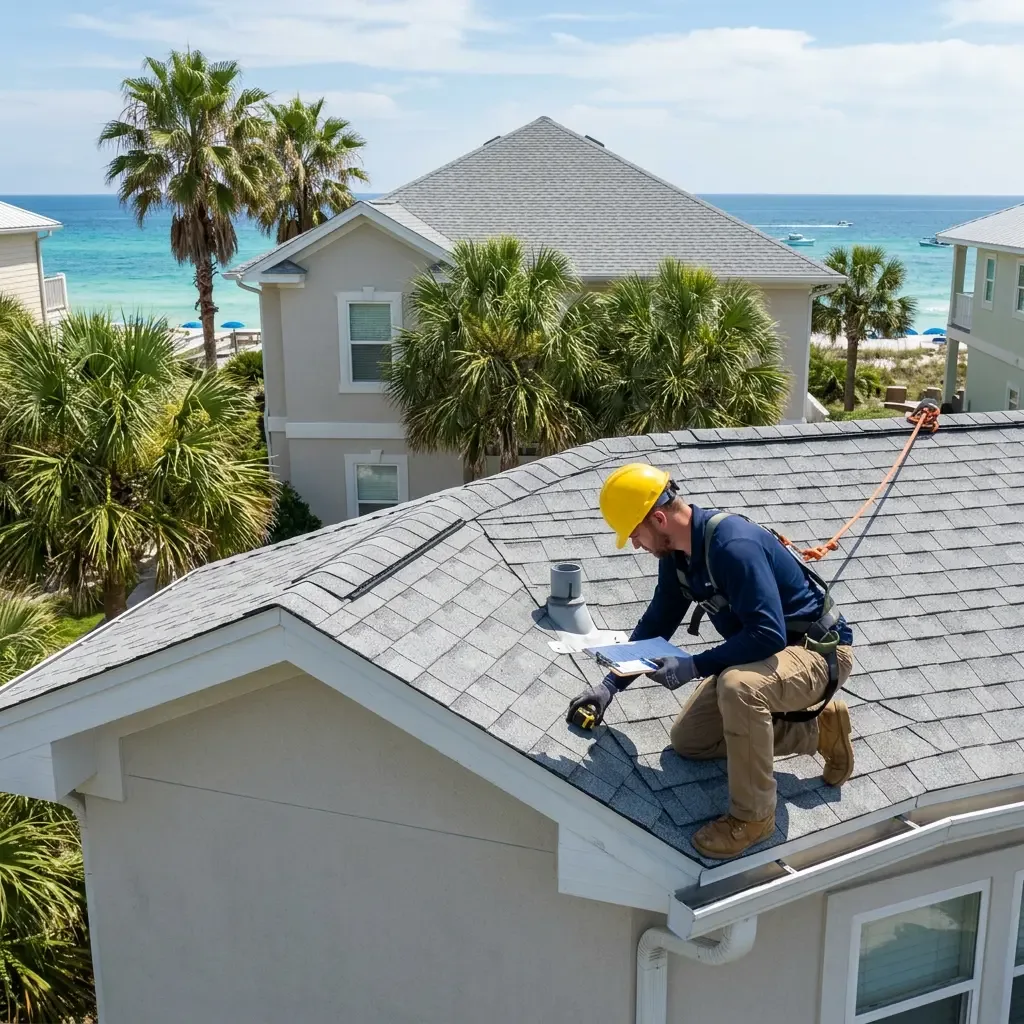

Roofing in Washington answers to one structural fact no other line of coverage sets up the way it does here: a Washington roofer does not buy workers compensation on the open market. Washington is one of a small group of monopolistic states, which means comp coverage is available only through the state fund the Department of Labor and Industries administers — or, for a few qualifying large employers, through certified self-insurance. There is no private workers-comp market to shop. That single fact reorders how a roofing program is built in Washington, because the private insurance a roofer does place — general liability, commercial auto, contractors equipment, and umbrella — has to be assembled around a comp line that lives with the state, not with a carrier.
The second Washington fact is the weather. Washington roofing is dominated by persistent rain and moisture and moss across Puget Sound and western Washington, Pacific coastal wind-driven rain, and snow load and freeze-thaw in the Cascades and eastern Washington. That wet, moss-driven profile keeps water on the roof and puts moisture-driven completed operations at the center of the private program. This page leads with the workers-comp system because it is the most distinctive thing about insuring a Washington roofer, then works through the Labor and Industries contractor registration, the wet-climate risks, what actually drives the cost of the private lines, the claims we see, and the major markets. The coverage lines themselves — general liability, workers compensation, commercial auto, contractors equipment, and umbrella — are covered in depth on their own pages; here the focus is how Washington changes the emphasis.
Workers Compensation in Washington — the State-Fund System
Washington is a monopolistic workers compensation state — coverage is available only through the state fund administered by the Department of Labor and Industries (or certified self-insurance); no private workers-comp market exists. Stated plainly: in Washington you cannot compare comp quotes from competing insurers, because there are none to compare — the medical and wage-replacement coverage for an on-the-job injury is obtained through the state fund the Department of Labor and Industries administers, and the only alternative is certified self-insurance for employers large enough to qualify. This is not a coverage we place, and it is not one we would ever imply a private carrier writes in Washington. The workers compensation page explains how the state-fund reality shapes a Washington roofer’s obligations honestly, without pretending a private option exists.
What that means for the program we build is a shift of weight onto the private lines. Because comp runs through the state fund, the coverage decisions a Washington roofer actually makes with a broker are on general liability, commercial auto, contractors equipment, and umbrella. General liability becomes the anchor: it answers the moisture-driven completed-operations claims this climate produces and carries the additional-insured endorsements a general contractor demands. The state-fund comp handles the injured-worker side, but the third-party liability, the property, and the fleet exposures are all private-market work.
Why the falls exposure still matters. It would be a mistake to treat the height risk as someone else’s problem just because the comp runs through the state. A fall from a roof is the defining injury of this trade, and its severity shapes how a crew is staffed, supervised, and documented on wet, low-friction Washington roofs — and it bears directly on the liability a third party might assert. We read the falls-from-height exposure as a core part of a Washington program even though the comp itself is placed with the state fund. Alongside all of this, every Washington roofer also registers with Labor and Industries as a contractor, which ties the licensing posture and the comp system to the same agency.
Washington Roofing Regulations & Licensing
Washington requires all construction contractors, including roofers, to register with the Department of Labor and Industries — a registration with surety-bond and liability-insurance minimums, not a trade-specific roofing license.
The practical effect is that in Washington the registration and the certificate of insurance do the gatekeeping a competency license does elsewhere. Because there is no roofing exam or trade license to check, a general contractor, developer, or building owner leans on your active Labor and Industries registration, your bond, and your general liability limits and additional-insured endorsements to decide whether to let you on the job. That is why the liability program and its endorsements carry so much weight in a state whose credential is a registration plus proof of coverage rather than a license.
Common Roofing Risks in Washington
Washington uniquely combines a wet, moss-driven roofing climate, mandatory Labor and Industries contractor registration, and a monopolistic state-fund workers-comp system with no private option. The wet-climate profile drives the exposures underwriters key on:
- Moisture-driven completed operations. Persistent rain, moisture, and moss keep water on Puget Sound and western-Washington roofs long after installation, so a seam, flashing, or detail that fails months later and lets moisture into the building is the signature completed-operations claim here.
- Falls from height on wet roofs. The height exposure the state-fund comp answers on the injured-worker side — but which still shapes supervision, documentation, and the liability a third party may assert on low-friction surfaces.
- Coastal wind-driven rain. Pacific and Puget Sound wind pushes rain under and against roofing assemblies, combining uplift with intrusion in the coastal and north-Sound markets.
- Snow load and freeze-thaw east of the Cascades. Around Spokane and eastern Washington the profile shifts to winter load and ice, a cold-climate detailing exposure distinct from the western-Washington moss problem.
What Roofing Contractor Insurance Costs in Washington
There is no single Washington price, and here an extra structural point applies: because workers compensation runs through the state fund, the private-market premium levers are on general liability, commercial auto, contractors equipment, and umbrella — not on a comp policy you shop. The cost drivers that matter most on those private lines:
- The roofing you do. Steep-slope residential, low-slope hot-work commercial, and metal or tile each carry a different completed-operations and fire profile, and each rates differently against the wet Washington climate.
- Moisture-driven completed-operations exposure. A wet-climate roofer’s completed-operations tail — water finding a failed detail long after the job — is the exposure underwriters weigh most on the liability line here.
- Fleet and equipment. The trucks, crews, and gear that move across a rain-heavy service area drive the commercial-auto and contractors-equipment pieces of the program.
- Coastal versus eastern operations. A wind-driven-rain coastal contractor looks different to an underwriter than a snow-country Spokane roofer working freeze-thaw exposure.
- Claims history and subcontractor use. Prior losses and how you handle the additional-insured status of the crews you sub to both move the number on the liability line.
We price the private program to the real operation rather than quoting a figure off the state name, and we never treat the state-fund comp as a line to shop.
Common Washington Roofing Claims We See
Described qualitatively, with generic carrier language — every private-lines claim is handled by the carrier, never named here, and with no fabricated figures:
- The moisture-intrusion completed-operations claim. A roof or detail installed in a rain-heavy season that later lets water into the building interior — the wet-climate completed-operations claim the carrier answers under general liability.
- The coastal wind-driven-rain uplift claim. Wind off Puget Sound driving rain under an assembly and lifting roofing on a coastal or north-Sound job, producing third-party property damage answered under general liability.
- The fleet-and-equipment loss. A truck or a load of tools damaged moving across a wet, spread-out service area — the commercial-auto and contractors-equipment side of the private program at work.
Why Washington Roofers Choose Roofing Guard Insurance
We write one class — roofing contractors — and we place the private program with carriers that actually want the work. In Washington that focus shows up in the questions we ask before we quote: how you handle the state-fund comp registration and the falls exposure that goes with it; whether you pour your risk into steep-slope residential, low-slope hot-work, or metal and tile; how your work splits between the wet Puget Sound corridor and the snow country east of the Cascades; and whether your general liability carries the completed-operations and additional-insured terms a Washington general contractor will demand in place of the license the state does not issue. When a certificate request lands on your desk with requirements you do not recognize, that is a call we take.
Major Washington Roofing Markets
Washington is not one roofing market but several, each with its own peril and operating profile:
Seattle and the central Puget Sound
The state’s largest metro sits in the wettest, most moss-prone corridor in Washington, where persistent rain keeps moisture on steep-slope residential and low-slope commercial roofs alike — concentrating moisture-driven completed-operations exposure and, because comp runs through the state fund, putting the private program’s weight on general liability.
Spokane and eastern Washington
East of the Cascades the profile flips from rain to snow load and freeze-thaw, so an eastern-Washington roofer faces winter uplift and ice exposure rather than persistent moss — a different weathering pattern that shifts the completed-operations question toward cold-climate detailing.
Tacoma and the South Sound
A dense stock of older housing and commercial buildings takes the same Puget Sound rain and moss as Seattle, so re-roof and moisture-repair demand runs steady and the falls-from-height exposure on wet, low-friction surfaces stays front of mind on every job.
Vancouver and the lower Columbia
Southwest Washington shares the wet western-Washington climate while anchoring the Portland-adjacent metro, where cross-border commercial work and heavy rainfall put weight on completed-operations detailing and on the additional-insured terms a general contractor will demand.
Bellevue and the Eastside
High-value custom homes and commercial campuses raise material-cost and installation-precision stakes on top of the region’s persistent moisture, so premium and specialty roofing carry a heavier completed-operations tail when water finds a poorly detailed seam.
Everett and the north Puget Sound
Coastal wind-driven rain off Puget Sound meets a mix of residential re-roof and marine-adjacent commercial work, so wind uplift and moisture intrusion combine — and the state-fund comp system means the private lines lead with liability rather than the medical coverage a roofer might expect to shop.
Related reading
Coverage for a Washington roofing business works as a system, but with a Washington twist: workers compensation runs through the state fund, so the lines you actually place are led by general liability (moisture-driven completed operations on a wet-climate trade), alongside commercial auto, contractors equipment, and umbrella liability when a contract demands higher limits. The workers compensation page explains the state-fund reality honestly. How the program is written also differs by the roofing you do across the three service pillars.
Coverage for Washington roofers
- General Liability Insurance
- Workers Compensation Insurance
- Commercial Auto Insurance
- Contractors Equipment Insurance
- Umbrella Liability Insurance
The roofing you do
- Residential Roofing Insurance
- Commercial and Industrial Roofing Insurance
- Specialty, Metal, and Tile Roofing Insurance
Get covered
Washington sources
Frequently asked questions about roofing insurance in Washington
Can a Washington roofer buy workers compensation from a private insurer?
No. Washington is a monopolistic workers-compensation state, which means comp coverage is available only through the state fund the Department of Labor and Industries administers — or, for a small number of qualifying large employers, through certified self-insurance. There is no private workers-comp market to shop in Washington, so a roofer does not compare comp quotes from competing carriers the way a business in most states would. What a Washington roofer does place on the private market is the rest of the program — general liability, commercial auto, contractors equipment, and umbrella — and that is the part we market to carriers that write the roofing class.
If comp runs through the state fund, what does Roofing Guard place for a Washington roofer?
The private lines that sit alongside the state-fund coverage. General liability is the center of a Washington roofing program — it answers the moisture-driven completed-operations claims this wet climate produces and carries the additional-insured endorsements a general contractor checks. Around it sit commercial auto for the trucks and crews, contractors equipment for the tools and gear, and umbrella liability when a contract demands higher limits. The medical and indemnity side of an on-the-job injury runs through the state fund, but the liability, property, and auto exposures are all private-market decisions we build around that fact.
Does the falls-from-height risk still matter if workers comp is handled by the state fund?
Yes. A fall from a roof is the signature injury of this trade, and it does not stop mattering because the medical and wage-replacement side runs through the state fund rather than a private carrier. The severity of a height injury shapes how you staff, supervise, and document a wet-roof crew, and it bears directly on the liability exposure a third party might assert. We read the falls exposure as a core part of a Washington program even though the comp itself is placed with the state.
Do roofing contractors need a license in Washington?
Washington does not issue a trade-specific roofing license, but it does require every construction contractor, roofers included, to register with the Department of Labor and Industries. That registration carries surety-bond and liability-insurance minimums rather than a roofing exam, so the gate is a registration plus proof of coverage, not a competency license. In practice a general contractor or building owner leans on your registration status and your certificate of insurance to decide whether to let you on the job, which is one more reason the general liability program does the work here.
How does Washington’s wet, moss-driven climate change a roofing insurance program?
Persistent rain, moisture, and moss across Puget Sound and western Washington keep water and organic growth on roofs far longer than in a drier state, and Pacific coastal wind-driven rain adds an uplift-and-intrusion element on top of that. The result is a completed-operations profile centered on water: a seam, flashing, or detail that fails months after installation and lets moisture into the building. East of the Cascades the pattern shifts to snow load and freeze-thaw. We build the general liability and completed-operations emphasis around the wet western-Washington reality rather than pricing the state as if it were dry.
Do you write roofing insurance across all of Washington?
Yes. Roofing Guard Insurance places the private roofing program for contractors across Washington — from the wet Puget Sound corridor around Seattle, Tacoma, and Bellevue to Spokane and the snow country of eastern Washington — and across the rest of the 48 states we serve. Comp itself runs through the state fund; we handle the general liability, commercial auto, contractors equipment, and umbrella lines that go around it, matched to how the operation actually runs.
Get a quote for your Washington roofing business
Tell us where in Washington you work and the roofing you do — comp runs through the state fund, so we will market your general liability, commercial auto, contractors equipment, and umbrella to carriers that write the class.