
There is no published price for roofing contractor insurance in Wyoming, and the reason starts before any other state’s does. Wyoming is a monopolistic workers-compensation state, so the coverage that anchors a roofer’s cost everywhere else is not even a private-market question here — it runs through the state fund alone. What a private carrier builds instead is your general liability, your completed-work tail, and your wind-and-snow loss picture. This guide walks the drivers that decide what a Wyoming roofer pays.
That structure surprises owners who expect one carrier to quote everything, but it is the honest starting point, and it changes how you read the number. A crew riding the wind belt around Cheyenne and a mountain operation clearing snow load in the western ranges are the same trade only in name, and the cost is assembled from different pictures. Below is what moves the number for a Wyoming roofing operation, beginning with the piece no private-market state has.
Why Wyoming roofing cost starts with the state comp fund
In most states a roofer’s single largest line is private workers compensation. Wyoming removes that from the private market entirely. Required workers compensation is available only through the state fund administered by the Wyoming Department of Workforce Services, and private insurers may not write standard coverage. For a fall-exposed roofing crew — the trade where a fall is exactly the severe injury the line is built for — that means the mandatory crew-injury coverage is set by the fund, not shopped.
What a private carrier still prices is the layer that sits beside it: a stop-gap employer’s-liability piece bought separately, and your general liability with its completed-operations tail. So when a broker talks Wyoming cost, the private conversation is really about liability, not comp. The Wyoming Department of Insurance oversees that private market. Reading the split between the fund and the private layers is the first thing a Wyoming roofer has to get right, and it is why a statewide “average” means even less here than elsewhere.
Why there is no published price — and how local licensing plays in
A premium is the output of an underwriting model, not a sticker. A carrier takes your specific exposures — the crew and what it does on the roof, the revenue behind your completed work, your loss history, and the limits your contracts require — and prices each private line against them. Change any input and the number moves. In Wyoming the model runs on top of the fund-and-private split, so the private number reflects liability more than comp.
Wyoming’s licensing posture reinforces why an average is hollow. The state issues no statewide roofing or general-contractor license; contractor licensing is handled locally by cities and counties, and forested counties add wildland-urban-interface construction requirements. That means your certificate-of-insurance obligations come from the general contractors, project owners, and local jurisdictions you actually work for — not from one state credential. Two Wyoming roofers of the same size can carry different requirements simply because they work different counties, which is another reason the cost has to be built from your operation rather than read off a chart.
Wind, snow load, and chinook — Wyoming’s roof-peril signature
Wyoming’s climate is its own cost driver. It is among the windiest states in the country, and its roofs carry heavy mountain snow load, chinook downslope winds that hammer the Front Range foothills, southeast-corner hail exposure near Cheyenne, and wildfire-ember risk in the forested western ranges. That peril mix concentrates roof damage and drives the demand your crews respond to. For a carrier, that shows up in two ways: it reads the revenue behind storm-and-winter work, and it reads your claims history as the story of how your crews performed when the wind and snow arrived.
A clean record through a punishing Wyoming winter carries real weight, because the underwriter knows how hard the climate pushes on installed roofs here. Wind uplift and snow-load stress are exactly the conditions that turn a marginal installation into a completed-operations claim, so the loss picture and the completed-work tail are tightly linked in this state.
Real-World Scenario: A Casper crew spends the winter chasing wind-driven and snow-load repairs across the high plains, its trucks and payroll climbing to keep up, while a Jackson-area operation in the western ranges works mountain snow-load re-roofs with a wildland-interface overlay. Both leave finished roofs that have to hold through the next chinook and the next heavy snow, but the underwriter reads them differently — the plains crew’s exposure rides wind and hail volume, the mountain operation’s rides snow load and ember risk. Same Wyoming, same monopolistic comp fund behind both — but the work mix and loss picture price differently, and the owner who can describe that picture clearly gets a sharper quote.
Crew payroll and the work at height
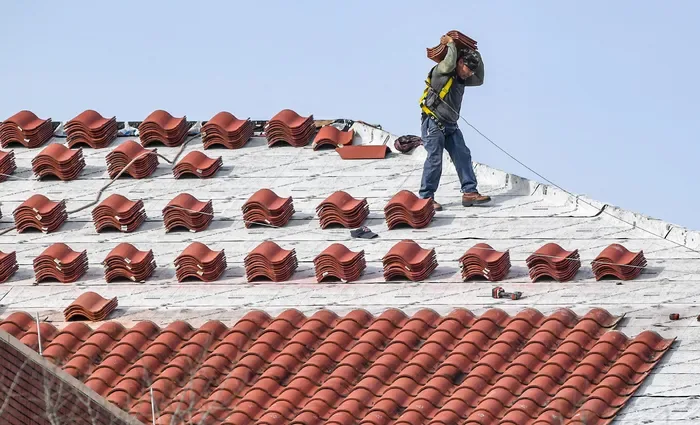
Even with mandatory comp in the state fund, payroll still drives your cost, because it scales a large part of your general liability and it shapes the injury profile the fund sees. Roofing is among the highest-severity trades for crew injury, for one plain reason: the work is at height, and a fall is the severe injury the whole system is built for. That is why the Occupational Safety and Health Administration treats fall protection as the defining roofing safety regime, and why a carrier reads your crew’s safety discipline as closely as its size when it prices your private liability layers.
Which work the payroll covers matters as much as the total. A residential steep-slope crew and a commercial and industrial low-slope operation carry different exposure signatures, and documented fall-protection training is one of the few levers that pushes both your fund experience and your private liability in the right direction over time.
Revenue and the completed-operations tail — the roof you leave behind
Your revenue is a rating basis for general liability, but for a roofing contractor the exposure that defines the class is completed operations — the work you leave behind. A roof keeps existing after your crew is gone, and an installed roof that leaks or fails downstream can become a serious third-party claim long after the job closes. The completed-operations side of general liability is the signature line built to answer for it, and because an installed roof carries such a long tail, your revenue and your workmanship-and-inspection record are inputs a carrier weighs closely. In Wyoming’s wind-and-snow climate the tail is especially live — the peril that stresses a roof arrives every year — so this is the defining cost driver that separates installed roofing from trades that leave nothing behind.
Trucks, equipment, and the coverage choices that move the number
Beyond the crew and the completed work, a carrier prices what you drive and what you own. Commercial auto covers the trucks and trailers hauling crews, tear-off debris, and materials across Wyoming’s long distances, and it grows with your rolling stock. Contractors’ equipment — inland marine — covers the tools, harnesses and fall-protection gear, specialty metal and tile forming equipment, and the materials you stage on the jobsite and in transit, where wind can turn loose material into a loss.
Then there is what you choose to buy. The limits your general contractors and project owners require push you toward an umbrella, and a single completed-operations failure or a wind-driven event can run well above a primary limit. Whether you carry the products-completed-operations aggregate your revenue actually calls for, schedule your equipment to value, and set your limits to your contracts all feed the number. The full coverage overview shows how each line fits together — and none of them are places to under-buy blindly.
How to get an accurate Wyoming quote
The path to a real number is to describe your real operation. Tell a broker your crew payroll and the work it covers, your revenue and the kind of roofs you leave behind, your work mix across steep-slope, low-slope, and specialty, your trucks and equipment values, your claims history through wind and snow seasons, the limits your contracts require, and which Wyoming counties you work. Because your mandatory comp already runs through the state fund, the private conversation moves quickly to the liability picture that actually varies. When you are ready, start a quote and tell us how your crews work, or see the Wyoming roofing contractor insurance page for the market and regulatory picture behind these drivers. The number at the end will reflect your business, which is the only number worth having.