Roofing insurance by state
Roofing Contractor Insurance in Wisconsin
Two things shape a Wisconsin roofing program before a policy is written: winters that load a roof with heavy seasonal and lake-effect snow and back ice dams under the shingles, and a state Dwelling Contractor credential that gates the permits residential re-roof work runs on.
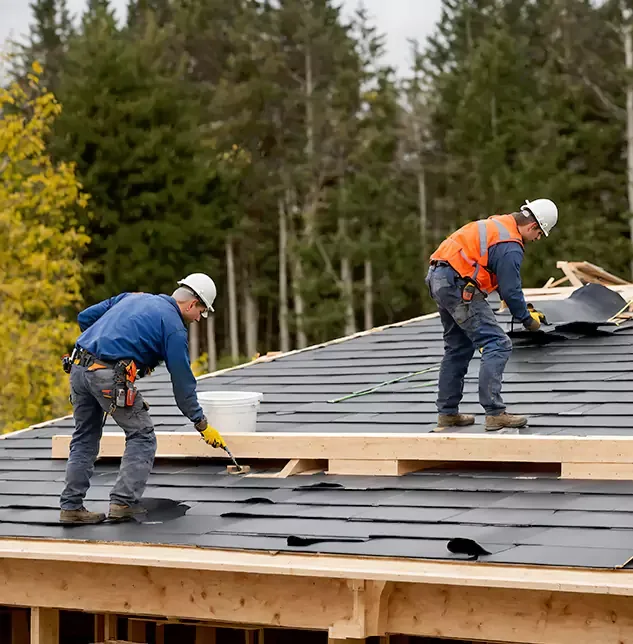

Roofing in Wisconsin is defined first by its winters, and no off-the-shelf business policy is built around them. Wisconsin roofs carry heavy seasonal and lake-effect snow load that stresses a deck and its fasteners, and freeze-thaw at the eaves backs ice dams up under the shingles — a structural-and-water peril that a roof is judged against every season. And roofing eligibility here runs through a specific state credential: Wisconsin issues no dedicated roofing license, but a Dwelling Contractor certification — with a named Dwelling Contractor Qualifier behind it — is what lets a contractor pull building permits on the one- and two-family dwellings that make up much of the re-roof market. Put the two together and a Wisconsin roofing program is built around a structural winter-load exposure and a credential gate, both of which a generic policy ignores.
This page walks the Wisconsin-specific realities a roofing program has to answer for, in the order they matter here: the snow-load and ice-dam peril first, then the Dwelling Contractor licensing posture, what drives cost, the claims we see, and the major markets across Wisconsin. The coverage lines themselves — general liability, workers compensation, commercial auto, contractors equipment, and umbrella — are detailed on their own pages; here the focus is how Wisconsin changes the emphasis.
Common Roofing Risks in Wisconsin
Wisconsin roofs carry heavy seasonal and lake-effect snow load with ice-dam formation, plus warm-season hail and severe straight-line or tornadic wind. In Wisconsin the winter is not a nuisance to work around — it is the structural design load a roof is judged against, and it drives the exposures underwriters key on:
- Snow load and structural stress. Heavy seasonal and lake-effect accumulation loads a roof deck and its fasteners; whether an install can carry that load without deflection or failure is a completed-operations question that can surface mid-winter, months after the work.
- Ice dams and meltwater. Freeze-thaw at the eaves backs meltwater up under the shingles and into ceilings and walls — the signature Wisconsin interior-water loss, and one that turns on whether the underlayment and ventilation were built for the climate.
- Falls from height. The workers compensation exposure on every roof, sharpened by ice, snow, and steep-slope winter footing — the crew is working at height in the hardest conditions of the year.
- Warm-season hail and severe wind. Summer brings hail and straight-line or tornadic wind that drive their own re-roof surges, so the completed-operations tail on fast general liability work runs across both seasons.
Wisconsin Roofing Regulations & Licensing
Wisconsin issues no dedicated roofing license, but a state Dwelling Contractor certification (plus a Dwelling Contractor Qualifier) from the Department of Safety and Professional Services is required to pull building permits for one- and two-family dwellings; some localities add roofing permit requirements.
The practical effect is that roofing eligibility in Wisconsin runs through the Dwelling Contractor credential rather than a standalone roofing license. The Dwelling Contractor certification and its named Qualifier are what let a business pull the permits residential re-roof work depends on, so the credential and the insurance program travel together — a general contractor or building owner will check both. Where the state stops short of a roofing-specific license, the certificate of insurance and its completed-operations and additional-insured terms carry the rest of the weight, which is why the general liability program matters as much here as the credential does. Some Wisconsin localities layer their own roofing permit requirements on top, so a contractor working several jurisdictions answers to more than one rulebook while carrying one program.
What Roofing Contractor Insurance Costs in Wisconsin
There is no single Wisconsin price, because premium is driven by your operation rather than the state name. The cost drivers that matter most here:
- Payroll and crew classifications. Roofing is among the highest-severity workers compensation classes, and payroll is the base the exposure is rated on — the single biggest lever in most Wisconsin programs.
- Winter structural exposure. Snow-load and ice-dam completed-operations risk raises the stakes on the general liability tail in a way a milder-climate state does not, and underwriters weigh how you handle winter work and documentation.
- The roofing you do. Steep-slope residential, low-slope hot-work commercial, and metal and tile systems that shed snow load differently than asphalt each carry a distinct profile and price on their own terms.
- Two-season storm swing. Winter ice and summer hail both drive re-roof surges that pull in temporary and subcontracted crews, and that swing is something underwriters look at closely.
- Claims history and subcontractor use. Prior losses and how you handle the additional-insured status of the crews you sub to both move the number.
We price to the real operation rather than quoting a figure off the state name.
Common Wisconsin Roofing Claims We See
Described qualitatively, with generic carrier language — every claim is handled by the carrier, never named here, and with no fabricated figures:
- The ice-dam interior loss. Meltwater backing up under a roof at the eaves and soaking the ceilings and walls below, raising the question of whether the underlayment and ventilation were built for Wisconsin winters — a completed-operations claim answered under general liability.
- The snow-load structural claim. A roof that deflects or fails under heavy accumulation, putting the load-carrying question of the install itself at the center — a completed-operations exposure.
- The commercial hot-work fire. A torch-down operation on a low-slope roof that ignites, damaging the building and its contents — third-party property damage answered under general liability.
- The falls-from-height injury. A crew member hurt in a fall on icy or snow-covered footing, where the workers compensation coverage is the line that responds — the reason we keep it central in a winter state.
Why Wisconsin Roofers Choose Roofing Guard Insurance
We write one class — roofing contractors — and we place coverage with carriers that actually want the work. In Wisconsin that focus shows up in the questions we ask before we quote: how your winter work and its snow-load and ice-dam exposure are handled and documented; how the Dwelling Contractor credential and your insurance line up for the general contractors who check both; whether your risk runs to steep-slope residential re-roofs, low-slope hot-work, or metal and tile; and whether your general liability carries the completed-operations and additional-insured terms a Wisconsin general contractor will demand. When a certificate request lands on your desk mid-season with requirements you do not recognize, that is a call we take.
Major Wisconsin Roofing Markets
Wisconsin is not one roofing market but several, each with its own peril and operating profile:
Milwaukee and the lakeshore
The state’s largest metro pairs Lake Michigan lake-effect snow and freeze-thaw with a dense stock of older urban homes and low-slope industrial roofs — concentrating ice-dam interior-water losses and hot-work fire exposure in one market.
Madison and the isthmus
The capital and university market’s steady growth pushes new residential and commercial build-out between the lakes, so new-construction completed-operations exposure lands alongside the same heavy snow-load winter as the rest of the state.
Green Bay and the far north
The northernmost major market carries some of the heaviest seasonal snow load in the state, putting structural deck-load and collapse exposure at the front of the risk on both residential and low-slope commercial roofs.
Kenosha and the I-94 corridor
The southeast logistics and warehouse corridor near the Illinois line is dense with large low-slope distribution roofs, concentrating completed-operations and hot-work exposure on big commercial spans.
Racine and the southern lakeshore
A lakeshore market with a legacy industrial base and older housing stock takes freeze-thaw and lake-effect load, driving re-roof demand and hot-work fire exposure on aging low-slope roofs.
Appleton and the Fox Valley
An inland Fox Valley market that carries heavy snow load and takes severe warm-season hail and wind, so structural winter exposure and summer re-roof surges land on the same crews across two seasons.
Related reading
Coverage for a Wisconsin roofing business works as a system built around the winter. The lines that carry the most weight here are general liability (completed operations on snow-load and ice-dam work) and workers compensation (falls from height in the hardest footing of the year), alongside commercial auto, contractors equipment, and umbrella liability when a contract demands higher limits. How the program is written also differs by the roofing you do across the three service pillars.
Coverage for Wisconsin roofers
- General Liability Insurance
- Workers Compensation Insurance
- Commercial Auto Insurance
- Contractors Equipment Insurance
- Umbrella Liability Insurance
The roofing you do
- Residential Roofing Insurance
- Commercial and Industrial Roofing Insurance
- Specialty, Metal, and Tile Roofing Insurance
Get covered
Wisconsin sources
Frequently asked questions about roofing insurance in Wisconsin
Do roofing contractors need a license in Wisconsin?
Wisconsin issues no dedicated roofing license, but roofing eligibility runs through a state credential. A Dwelling Contractor certification — with a named Dwelling Contractor Qualifier behind it — from the Department of Safety and Professional Services is required to pull building permits for one- and two-family dwellings, which covers much of the residential re-roof market. Some localities add their own roofing permit requirements on top. So the practical gate in Wisconsin is the Dwelling Contractor credential plus local permitting and the contract, and a general contractor or building owner will check both the credential and your insurance before a crew goes up.
How do snow load and ice dams affect a Wisconsin roofing program?
They are the defining structural exposure. Wisconsin roofs carry heavy seasonal and lake-effect snow load with ice-dam formation, plus warm-season hail and severe straight-line or tornadic wind. Snow load stresses a roof deck and its fasteners, and freeze-thaw at the eaves backs meltwater up under the shingles into ceilings and walls — the signature Wisconsin interior-water loss. Both are completed-operations questions that surface mid-winter, months after the work, and turn on whether the install, its underlayment, and its ventilation were built for the climate. It is why we build the general liability program around the winter rather than treating it as a seasonal footnote.
Does a Wisconsin roofer have to carry workers compensation?
Wisconsin is a private-market workers compensation state, so when comp is carried it is placed with a private carrier rather than a state fund. For roofers it is central regardless of the rule: a fall from a roof is the signature injury of this trade, sharpened here by ice, snow, and steep-slope winter footing, and general contractors and project contracts commonly require comp before a crew is allowed on site. We read the comp program against your crews and the seasons they work rather than treating it as a box to check.
What is the Wisconsin Dwelling Contractor certification?
It is the state credential that lets a business pull building permits on one- and two-family dwellings, issued by the Department of Safety and Professional Services, and it comes with a named Dwelling Contractor Qualifier who carries the qualifying credential for the business. Wisconsin does not issue a standalone roofing trade license, so for residential re-roof work the Dwelling Contractor certification is what gates the permits the work depends on. The credential and the insurance program travel together — a general contractor or building owner checks both, and where the state stops short of a roofing-specific license the certificate of insurance carries the rest of the weight.
How much does roofing contractor insurance cost in Wisconsin?
There is no single price, because premium is driven by your specific operation. The biggest factors here are your payroll and crew classifications — roofing is a high-severity workers compensation class and payroll is the base the exposure is rated on — plus the winter structural exposure and how snow-load and ice-dam completed-operations risk raise the general liability tail, the type of roofing you do (steep-slope residential, low-slope hot-work, or metal and tile that sheds snow differently), your two-season storm swing between winter ice and summer hail, and your claims history and subcontractor use. A Milwaukee lakeshore re-roofer and a Green Bay far-north contractor look different to an underwriter. We price to the real operation.
Do you write roofing insurance across all of Wisconsin?
Yes. Roofing Guard Insurance places coverage for roofing contractors across Wisconsin — from the Milwaukee lakeshore and the Madison isthmus to the Green Bay far north, the Kenosha corridor, and the Racine and Appleton markets — and across the rest of the 48 states we serve. We write residential, commercial and industrial, and specialty metal and tile roofers, matched to how the operation actually runs through the Wisconsin winter and its warm-season storms.
Get a quote for your Wisconsin roofing business
Tell us where in Wisconsin you work, how you handle winter snow-load and ice-dam work, and the roofing you do — and we will market it to carriers that write the class.