Roofing insurance by state
Roofing Contractor Insurance in Oregon
Oregon does not roof for the storm — it roofs for the rain. West of the Cascades, persistent moisture and moss are the slow, patient forces that age a roof, and every contractor doing construction for pay has to hold a Construction Contractors Board license first. That pairing — a moisture-driven risk and a mandatory license — sets an Oregon roofing program apart.
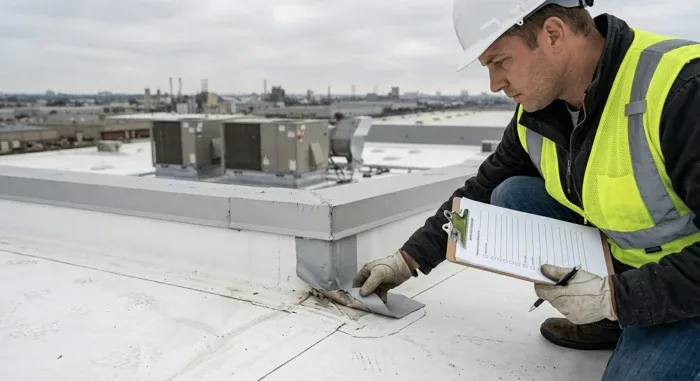

Most of the states we write roof for the storm — for hail, wind, or a hurricane landfall. Oregon roofs for the rain. West of the Cascades, Oregon roofing is driven by heavy rain and moisture and moss loading west of the Cascades, coastal wind-driven rain, and snow load and freeze-thaw in mountain and eastern regions. That is a slow-failure profile: moss and moisture do their damage over months and years, not in a single afternoon, and the roofs that fail here fail quietly, from the underlayment and the details outward. It changes what a roofing program has to protect against.
Oregon also gates the trade seriously. Every contractor doing construction for pay — roofers included — must hold a Construction Contractors Board license before working, with a required surety bond. This page walks the Oregon-specific realities in the order they matter here: the mandatory CCB license first, then what drives cost, the moisture-driven perils, the claims we see, and the major markets. The coverage lines themselves — general liability, workers compensation, commercial auto, contractors equipment, and umbrella — are covered in depth on their own pages; here the focus is how Oregon changes the emphasis.
Oregon Roofing Regulations & Licensing
Oregon requires anyone doing construction for compensation, including roofing, to hold a Construction Contractors Board (CCB) license, with residential or commercial endorsements and a required surety bond; roofing is explicitly named as covered construction activity.
The practical effect for a roofing program is that in Oregon the CCB license and the certificate of insurance are both mandatory gates, and general contractors verify both. The license is a real credential, and the surety bond and insurance requirements behind it mean your general liability program, your limits, and your additional-insured endorsements are part of staying compliant and winning work. A clean, active CCB license paired with a well-built liability program is what keeps an Oregon roofer eligible for the commercial and institutional projects across the state.
Workers compensation. Oregon is a private-market workers compensation state (a competitive market with SAIF as a competitive state fund, not a monopoly). Because a fall from a roof is the defining injury of this trade — and wet, moss-covered surfaces do not make it safer — the workers-comp line is one of the most consequential coverage choices an Oregon roofer makes. We walk through it against your crews and your contracts on the workers compensation page.
What Roofing Contractor Insurance Costs in Oregon
There is no single Oregon price, because premium is driven by your operation, not your ZIP code alone. The cost drivers that matter most here:
- Payroll and crew classifications. Roofing is among the highest-severity workers compensation classes, and payroll is the base the exposure is rated on.
- The roofing you do. Steep-slope residential, low-slope hot-work commercial, and metal or tile each carry a different completed-operations profile — and in Oregon, a different moisture-detailing exposure.
- West-of-Cascades versus central Oregon. A valley-moisture contractor looks different to an underwriter than a Bend snow-and-ember roofer.
- Revenue, crew size, and fleet. The scale of the operation and the trucks you run move the liability and commercial-auto lines.
- Claims history and workmanship documentation. Because moisture failures surface downstream, how you document detailing and warranties affects the completed-operations picture and the number.
We price to the real operation rather than quoting a figure off the state name.
Common Roofing Risks in Oregon
The moisture-driven profile is what shapes Oregon roof risk, and it drives the exposures underwriters key on:
- Moisture intrusion and moss. Persistent rain and moss loading age underlayment and work into flashing details, causing slow leaks — the signature Oregon completed-operations pattern.
- Completed operations that surface downstream. A detailing or underlayment shortfall that reveals itself months after the install, when moisture has worked into the assembly, is the products-completed-operations claim this trade turns on here.
- Falls from height on wet surfaces. Roofing is among the highest-severity workers compensation classes of any trade, and wet, moss-covered decks raise the fall exposure.
- Central-Oregon snow and ember. East of the Cascades, snow load, freeze-thaw, and wildland-interface ember exposure replace valley moisture as the driver.
Common Oregon Roofing Claims We See
Described qualitatively, with generic carrier language — every claim is handled by the carrier, never named here, and with no fabricated figures:
- The slow moisture leak. A valley re-roof where months of rain find a missed detail and enter the building interior — a completed-operations claim the carrier answers under general liability.
- The moss-aged underlayment failure. A roof where moss loading and standing moisture degrade the assembly downstream, raising a workmanship and completed-operations question the carrier evaluates.
- The wet-surface fall. A crew member hurt in a fall on a rain-slick or moss-covered deck — the high-severity workers compensation exposure that defines the roofing trade.
Why Oregon Roofers Choose Roofing Guard Insurance
We write one class — roofing contractors — and we place coverage with carriers that actually want the work. In Oregon that focus shows up in the questions we ask before we quote: how your moisture-detailing and warranty practices shape the completed-operations exposure; whether your work leans west-of-Cascades moisture or central-Oregon snow and ember; whether you pour your risk into steep-slope residential, low-slope hot-work, or metal and tile; and whether your general liability carries the completed-operations and additional-insured terms an Oregon general contractor will demand alongside your CCB license. When a certificate request lands on your desk with requirements you do not recognize, that is a call we take.
Major Oregon Roofing Markets
Oregon is not one roofing market but several, split between the wet valley and the drier, colder east:
Portland metro
The state’s largest market sits in the wettest part of the Willamette Valley, where persistent rain and moss loading drive slow moisture-intrusion failures and a dense stock of residential and low-slope commercial roofs keeps re-roof and re-cover volume steady year-round.
Salem and the mid-Willamette Valley
The capital-area market pairs government and institutional low-slope roofs with valley moisture exposure, so membrane and flashing detailing against standing water sits at the center of the completed-operations question.
Eugene and the southern valley
A university-anchored market where heavy seasonal rain and moss growth age roofs steadily, keeping the durability of underlayment and detailing — not storm impact — the driver of claims.
Gresham and the eastern suburbs
A growing residential market east of Portland where steep-slope re-roof volume and the same valley-moisture exposure keep completed-operations and additional-insured requirements in steady play.
Hillsboro and the western suburbs
A tech-corridor market with high-value residential and commercial campuses, where premium and metal roofing raise material-cost and installation-precision stakes on top of the persistent moisture load.
Bend and central Oregon
East of the Cascades the profile flips — snow load, freeze-thaw, and wildland-interface ember exposure replace valley moisture, shifting the claim pattern toward cold-climate and fire-adjacent detailing.
Related reading
Coverage for an Oregon roofing business works as a system. The lines that carry the most weight here are general liability (moisture-driven completed operations) and workers compensation (the falls-from-height exposure on wet surfaces), alongside commercial auto, contractors equipment, and umbrella liability when a contract demands higher limits. How the program is written also differs by the roofing you do across the three service pillars.
Coverage for Oregon roofers
- General Liability Insurance
- Workers Compensation Insurance
- Commercial Auto Insurance
- Contractors Equipment Insurance
- Umbrella Liability Insurance
The roofing you do
- Residential Roofing Insurance
- Commercial and Industrial Roofing Insurance
- Specialty, Metal, and Tile Roofing Insurance
Get covered
Oregon sources
Frequently asked questions about roofing insurance in Oregon
Do roofing contractors need a license in Oregon?
Yes — Oregon requires anyone doing construction for compensation, including roofing, to hold a Construction Contractors Board (CCB) license, with residential or commercial endorsements and a required surety bond; roofing is explicitly named as covered construction activity. The CCB license is a genuine, mandatory state credential, not a registration formality, so it is the first gate to legally bidding and performing roofing work in Oregon. General contractors and project owners verify your active CCB license alongside your insurance before letting you on the job.
How does Oregon’s wet climate change the roofing risk profile?
Oregon roofing west of the Cascades is driven by heavy rain and moisture and moss loading rather than storm impact — a slow-failure profile. Persistent moisture and moss age underlayment, work into flashing details, and cause leaks over time, so the completed-operations question is often about whether a roof was detailed to shed water and resist moss and standing moisture, not whether it survived a single event. Coastal areas add wind-driven rain, and the mountains and eastern Oregon add snow load and freeze-thaw. We build the general liability around that patient, moisture-driven failure pattern.
Does an Oregon roofer have to carry workers compensation?
Oregon is a private-market workers compensation state — a competitive market with a state fund available as a competitive option, not a monopoly. Coverage is written by private carriers and is generally required once you have employees. Because roofing is among the highest-severity workers compensation classes of any trade, and a fall from a roof is the signature injury — made no safer by wet, moss-covered surfaces — the workers-comp line is one of the most consequential parts of an Oregon roofing program. We read the exposure against your actual payroll and crew classifications.
Why does the completed-operations exposure matter so much in Oregon?
Because moisture failures show up downstream, not on the day of the install. A roof installed in Oregon may not reveal a detailing or underlayment shortfall until months of rain have worked into the assembly — and when the leak appears, it is a products-completed-operations claim under general liability. In a storm state the failure is often tied to a single event; in Oregon it is tied to time and moisture. That makes the completed-operations coverage, and the workmanship documentation behind it, central to how we build an Oregon program.
How much does roofing contractor insurance cost in Oregon?
There is no single price, because premium is driven by your specific operation. In Oregon the biggest factors are your payroll and crew classifications (roofing is a high-severity workers compensation class), the type of roofing you do — steep-slope residential, low-slope hot-work, or metal and tile — your west-of-Cascades versus central-Oregon footprint, your revenue and crew size, and your claims history. A Portland valley-moisture contractor and a Bend snow-and-ember roofer look very different to an underwriter, so we price to the real operation rather than the state name.
Do you write roofing insurance across all of Oregon?
Yes. Roofing Guard Insurance places coverage for roofing contractors across Oregon — from Portland and Salem through Eugene, Hillsboro, and Bend in central Oregon — and across the rest of the 48 states we serve. We write residential, commercial and industrial, and specialty metal and tile roofers, matched to how the operation actually runs in its part of the state.
Get a quote for your Oregon roofing business
Tell us where in Oregon you work, your CCB endorsements, and the roofing you do — and we will market it to carriers that write the class.