
Roofing insurance by state
Roofing Contractor Insurance in New Mexico
The fact that leads a New Mexico roofing program: high-elevation desert sun ages roofing faster than the hail does, the state licenses roofers for real through the Construction Industries Division, and monsoon hail, high wind, and northern snow load layer on top — a program built for aging first and storms second.
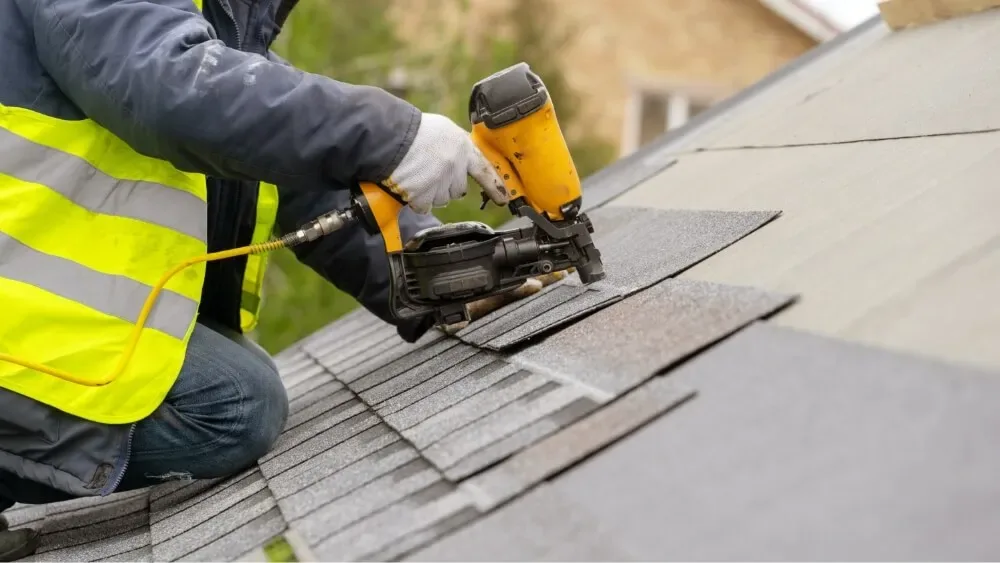

Roofing in New Mexico is shaped first by the sun, not the storm. Intense high-elevation UV and solar exposure accelerates roof-material aging, while summer monsoon storms bring hail and high winds to the central corridor and northern mountain areas add snow load. At elevation, that solar exposure is the input a generic business policy never accounts for: a roof here is aging on a clear, calm day, and the material fatigue it drives is what surfaces in a claim seasons later. What also sets New Mexico apart from the license-free desert states nearby is that the trade is genuinely licensed — the state runs a real statewide roofing credential, so the contractor comes to the job already vetted for competency, and the insurance program builds on that foundation rather than substituting for a missing one.
This page walks the New Mexico-specific realities a roofing program has to answer for: the statewide licensing posture that leads here, the peril profile the high desert builds, what actually drives cost, the claims we see, why New Mexico roofers work with us, and the major markets across the state. The coverage lines themselves — general liability, workers compensation, commercial auto, contractors equipment, and umbrella — are covered in depth on their own pages; here the focus is how New Mexico changes the emphasis.
New Mexico Roofing Regulations & Licensing
New Mexico licenses contractors statewide through the Construction Industries Division of the Regulation and Licensing Department; roofing has a dedicated classification, and roofing work also falls within the scope of the GB-2 general-building license, both requiring exam, financial responsibility, and workers-comp and liability coverage.
The practical effect for a roofing program is that New Mexico is a statewide-licensed state, which puts the contractor on a firmer regulatory footing than the license-free states — but the certificate of insurance still does work the license does not. A general contractor, developer, or building owner reads your coverage, your limits, and your additional-insured endorsements alongside your Construction Industries Division license to decide whether to let you on the job. Because the roofing classification and the GB-2 scope both require proof of coverage, your insurance is part of staying licensed here, which is why the general liability program and its completed-operations and additional-insured terms are not optional fine print.
The workers-comp reality. New Mexico is a private-market workers compensation state; coverage is written by private carriers. Comp also intersects with licensing directly, since the Construction Industries Division requires proof of workers-comp and liability coverage. Because a fall from a roof is the defining injury of this trade, workers compensation is a core coverage for any New Mexico roofer with a crew — one we read against your payroll and crew mix rather than treating as a box to check.
Common Roofing Risks in New Mexico
The high desert produces a peril profile weighted toward material aging first and storm impact second, and it changes by region:
- High-elevation UV and solar aging. Intense sun accelerates the fatigue of membrane and coatings, so a roof installed today can fail seasons later — the products-completed-operations claim this trade turns on, and the signature New Mexico exposure statewide.
- Monsoon hail and high wind. Summer storms bring hail and high winds to the central corridor, adding an impact-and-uplift exposure and a storm-driven residential re-roof cycle, best carried through residential roofing work.
- Northern snow load. The mountain areas in the north add structural snow load, a different exposure than the southern desert sees.
- Falls from height. The workers compensation exposure on every job — the crew works at height on each roof regardless of region.
- Craft-specialty and premium roofs. Metal, tile, and flat parapet restoration through specialty metal and tile work raise the material-cost and installation-precision stakes on the completed-operations side.
What Roofing Contractor Insurance Costs in New Mexico
There is no single New Mexico price, because premium is driven by your operation, not your ZIP code alone. The cost drivers that matter most here:
- Payroll and crew classifications. Roofing is among the highest-severity workers compensation classes, and payroll is the base the exposure is rated on.
- The roofing you do. Steep-slope, low-slope hot-work commercial, and metal or tile each carry a different completed-operations and fire profile, and each prices differently.
- The UV-aged completed-operations tail. A long tail on solar-fatigued roofs is the exposure underwriters weigh most closely in New Mexico, and installation quality speaks to it.
- Where in the state you work. A UV-driven southern-desert operation, a monsoon-hail central-corridor re-roofer, and a snow-load northern contractor look different to an underwriter.
- Claims history and subcontractor use. Prior losses and how you handle the additional-insured status of crews you sub to both move the number.
We price to the real operation rather than quoting a figure off the state name.
Common New Mexico Roofing Claims We See
Described qualitatively, with generic carrier language — every claim is handled by the carrier, never named here, and with no fabricated figures:
- The UV-fatigue leak. A membrane or coating installed at elevation that fatigues after seasons of intense sun and lets water in, damaging the building interior — a completed-operations claim the carrier answers under general liability long after the install.
- The monsoon hail re-roof dispute. A residential re-roof rushed through a monsoon-season surge that later leaks, turning a storm-repair job into a completed-operations claim on work turned around fast.
- The falls injury. A crew member hurt in a fall at height, the workers compensation claim that defines the trade — placed with a private carrier in this private-market state.
Why New Mexico Roofers Choose Roofing Guard Insurance
We write one class — roofing contractors — and we place coverage with carriers that actually want the work. In New Mexico that focus shows up in the questions we ask before we quote: whether your work concentrates in the UV-driven southern desert, the monsoon-hail central corridor, or the snow-load north; the roofing you do and how long the completed-operations tail runs on solar-aged roofs; how the coverage the Construction Industries Division requires squares with the certificate and additional-insured terms your general contractors demand; and how your monsoon-season surge is staffed and documented. When a certificate request lands on your desk with requirements you do not recognize, that is a call we take.
Major New Mexico Roofing Markets
New Mexico is not one roofing market but several, each with its own peril and operating profile:
Albuquerque and the Rio Grande corridor
The state’s largest metro sits at elevation against the Sandia foothills, where intense high-desert UV ages membrane and coatings while summer monsoon hail drives re-roof volume — concentrating both the completed-operations tail and the storm-surge staffing question in one market.
Las Cruces and the Mesilla Valley
A southern desert market where intense sun and dust dominate over hail, shifting the claim pattern toward UV-driven surface fatigue on low-slope and coated roofs rather than impact damage.
Rio Rancho and the West Mesa
Fast-growing residential subdivisions put new roofs up at volume, landing new-construction completed-operations exposure and tight production schedules on the same crews at once.
Santa Fe and the high-elevation historic core
Flat parapet roofs and premium restoration on historic and pueblo-style buildings raise the hot-work and installation-precision stakes, so a completed-operations claim here carries craft-specialty repair cost a standard shingle job would not.
Roswell and the southeastern plains
The eastern plains take more monsoon hail and high straight-line wind than the western desert, adding an impact-and-uplift exposure that pushes the program toward storm-driven residential re-roof risk.
Farmington and the San Juan Basin
The northern high country pairs winter snow load with energy-sector commercial and industrial roofs, so structural load and low-slope hot-work fire exposure weigh more heavily here than farther south.
Related reading
Coverage for a New Mexico roofing business works as a system. The lines that carry the most weight here are general liability (completed operations on UV-aged and storm-hit roofs) and workers compensation (the falls exposure the state license also requires you to carry), alongside commercial auto, contractors equipment, and umbrella liability when a contract demands higher limits. How the program is written also differs by the roofing you do across the three service pillars.
Coverage for New Mexico roofers
- General Liability Insurance
- Workers Compensation Insurance
- Commercial Auto Insurance
- Contractors Equipment Insurance
- Umbrella Liability Insurance
The roofing you do
- Residential Roofing Insurance
- Commercial and Industrial Roofing Insurance
- Specialty, Metal, and Tile Roofing Insurance
Get covered
New Mexico sources
Frequently asked questions about roofing insurance in New Mexico
Do roofing contractors need a license in New Mexico?
Yes. New Mexico licenses contractors statewide through the Construction Industries Division of the Regulation and Licensing Department. Roofing has a dedicated classification, and roofing work also falls within the scope of the GB-2 general-building license — both of which require an exam, financial responsibility, and workers-comp and liability coverage. Unlike the states that license no roofers, New Mexico sets a real statewide competency floor. That does not replace what a general contractor or building owner asks for: they still layer certificate-of-insurance and additional-insured requirements on top of the state license.
How does New Mexico’s high-desert climate affect a roofing insurance program?
It is the defining factor, and it is about aging as much as storms. Intense high-elevation UV and solar exposure accelerates roof-material aging, so a membrane or coating installed today can fatigue and fail seasons later — the products-completed-operations claim this trade turns on. We build the general liability program around that long tail, then add the storm side: summer monsoon hail and high wind in the central corridor and snow load in the northern mountains. The result is a program weighted toward material aging first and storm impact second, which is a different balance than a pure hail state.
Does a New Mexico roofer have to carry workers compensation?
New Mexico is a private-market workers compensation state, so coverage is written by private carriers rather than through a state monopoly. It is not one of the four monopolistic states. Workers comp also intersects with licensing here: the Construction Industries Division requires proof of workers-comp and liability coverage as part of contractor licensing. Because a fall from a roof is the signature injury of this trade, comp is a core line for any New Mexico roofer with a crew, and we place it with carriers that write the roofing class.
What perils drive New Mexico roofing claims beyond UV?
Beyond the year-round UV aging that defines the state, summer monsoon storms bring hail and high winds to the central corridor, and the northern mountain areas add meaningful snow load. That gives a New Mexico roofer three distinct exposures depending on where the work is: UV surface fatigue in the low southern desert, monsoon hail and wind uplift through the central and eastern corridor, and structural snow load in the north. The coverage emphasis shifts with the region even though the core lines are the same statewide.
How much does roofing contractor insurance cost in New Mexico?
There is no single price, because premium is driven by your specific operation. In New Mexico the biggest factors are your payroll and crew classifications (roofing is a high-severity workers compensation class), the roofing you do — steep-slope, low-slope hot-work, or metal and tile — the length of the completed-operations tail on UV-aged roofs, whether your work concentrates in the UV-driven southern desert, the monsoon-hail central corridor, or the snow-load north, and your claims history. An Albuquerque re-roofer, a Las Cruces low-slope contractor, and a Farmington commercial roofer each look very different to an underwriter. We price to the real operation rather than quoting a figure off the state name.
Do you write roofing insurance across all of New Mexico?
Yes. Roofing Guard Insurance places coverage for roofing contractors across New Mexico — from the Albuquerque and Rio Rancho central corridor to Las Cruces, Santa Fe, Roswell, and Farmington — and across the rest of the 48 states we serve. We write residential, commercial and industrial, and specialty metal and tile roofers, matched to how the operation actually runs in its part of the state.
Get a quote for your New Mexico roofing business
Tell us where in New Mexico you work, the roofing you do, and how your monsoon-season crews are staffed — and we will market it to carriers that write the class.