Roofing insurance by state
Roofing Contractor Insurance in New Jersey
Two forces shape a New Jersey roofing program before a policy is written: a long Atlantic shoreline that takes nor’easter and hurricane wind and salt, and a contractor regime in motion — the state is converting Home Improvement Contractor registration into true licensure through 2026, so your coverage and your certificate carry the weight while the rules shift.
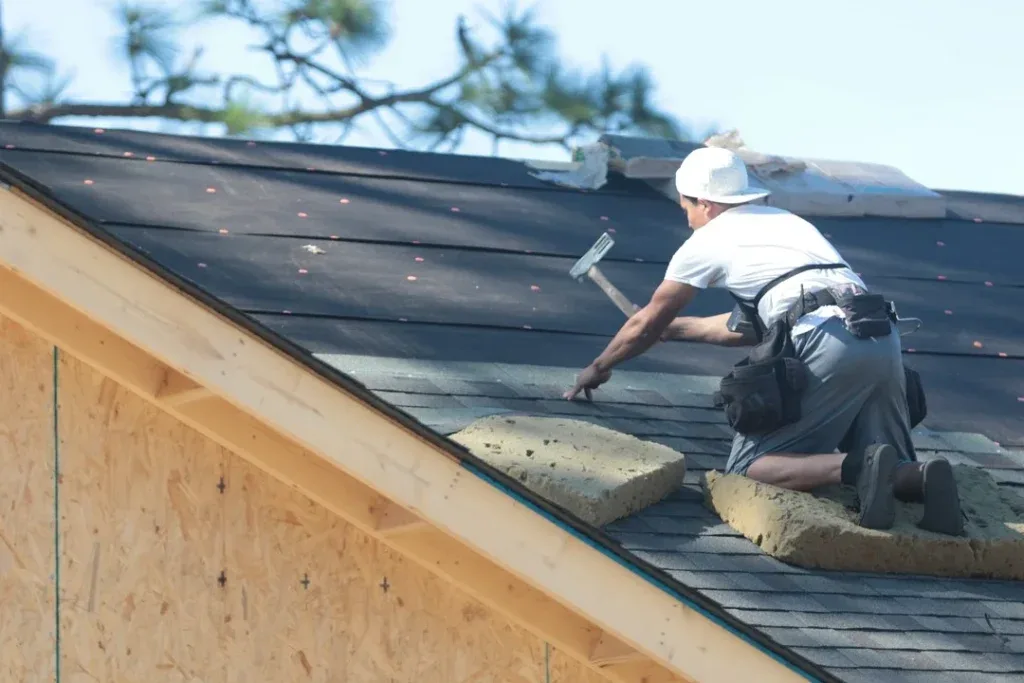

Roofing in New Jersey starts at the water. The Jersey Shore gives the state one of the longest, most exposed Atlantic coastlines on the eastern seaboard, and that shoreline takes nor’easter and tropical or hurricane wind — the same fetch that drove Superstorm Sandy — plus year-round salt air that corrodes fasteners and flashing faster than an inland roof ever sees. Then the picture inverts as you move north and west, where the interior adds winter snow load and freeze-thaw. A New Jersey roofer is underwriting weather from two directions at once.
The second force is regulatory motion. New Jersey has run its contractor market on Home Improvement Contractor registration, but a 2024 law is converting that registration into true state licensure, phasing in through 2026 — so the rules a roofing business works under are actively changing. What has not changed is that commercial general-liability insurance is already required to register, which means your coverage and your certificate carry the weight through the whole transition. This page walks the New Jersey-specific realities a roofing program has to answer: the coastal and winter peril profile, the licensing transition, what actually drives cost, the claims we see, and the major markets across the state. The coverage lines — general liability, workers compensation, commercial auto, contractors equipment, and umbrella — are covered in depth on their own pages; here the focus is how New Jersey changes the emphasis.
Common Roofing Risks in New Jersey
The Jersey Shore’s long Atlantic coast takes nor’easter and tropical or hurricane wind (as in Superstorm Sandy) plus salt exposure, while the northern interior adds winter snow load and freeze-thaw. That split — coastal wind and salt on the shore, snow load and freeze-thaw inland — is what makes New Jersey a demanding roofing market, and it drives the exposures underwriters key on:
- Coastal windstorm and salt. On the shore and coastal counties, tropical and nor’easter wind uplift, driven rain, and salt corrosion put the emphasis on wind detailing and the question of whether a roof was installed to survive the next storm.
- Completed operations on storm-driven work. A roof installed fast during a post-storm surge that later leaks or fails is the products-completed-operations claim this trade turns on — and coastal New Jersey generates plenty of it.
- Falls from height. The workers compensation exposure that defines the trade — a crew working at height on every job, whether a shore re-roof or a Newark high-rise membrane.
- Winter snow load and ice-dam wear. Northern and interior roofs face freeze-thaw cycling that works shingles and flashing loose, a different weathering profile from the coast.
- Hot-work and torch-down fire. Concentrated on the low-slope commercial and industrial roofs of the northern metros and the logistics corridor.
New Jersey Roofing Regulations & Licensing
New Jersey requires Home Improvement Contractors performing residential work above a low threshold to register with the Division of Consumer Affairs, selecting a classification such as roofing and siding, and to carry commercial general-liability insurance; a 2024 law is converting this registration into true state licensure, phasing in through 2026.
The practical effect for a roofing program is that the certificate of insurance is doing the heavy lifting while the state rewrites the rules. Because commercial general-liability coverage is a condition of registration today — and licensure is phasing in through 2026 — a general contractor, property manager, or public owner leans on your coverage, your limits, and your additional-insured endorsements to decide whether to let you on the job. That is why the general liability program and its completed-operations and additional-insured terms matter so much here, and why the certificate has to be right through every stage of the transition.
The workers compensation reality. New Jersey is a private-market workers compensation state; coverage is written by private carriers. Because a fall from a roof is the signature injury of this trade, the workers compensation line carries real weight — and general contractors routinely require proof of it before a crew is allowed on site, so we place it with carriers that actually write the roofing class.
What Roofing Contractor Insurance Costs in New Jersey
There is no single New Jersey price, because premium is driven by your operation, not your ZIP code alone. The cost drivers that matter most here:
- Payroll and crew classifications. Roofing is among the highest-severity workers compensation classes, and payroll is the base the exposure is rated on.
- Coastal versus interior operations. A shore or coastal-county contractor working the wind-and-salt belt looks different to an underwriter than a northern residential crew working snow-load country.
- The roofing you do. Steep-slope residential, low-slope hot-work commercial, and metal or tile each carry a different completed-operations and fire profile, and each prices differently.
- Contract requirements. The additional-insured, certificate, and limit demands that New Jersey property managers, public owners, and general contractors carry can move the program structure.
- Claims history and subcontractor use. Prior losses and how you handle the additional-insured status of the crews you sub to both move the number.
We price to the real operation rather than quoting a figure off the state name.
Common New Jersey Roofing Claims We See
Described qualitatively, with generic carrier language — every claim is handled by the carrier, never named here, and with no fabricated figures:
- The coastal wind-uplift failure. A shore-county roof whose edge or field membrane lifts in a nor’easter and lets water into the interior — a completed-operations claim the carrier answers under general liability when the installation is in question.
- The fall on a steep-slope job. A crew member injured working at height on a northern residential re-roof — the workers compensation claim the trade turns on.
- The commercial hot-work fire. A torch-down operation on a low-slope roof along the logistics corridor that ignites, damaging the building and its contents — third-party property damage answered under general liability.
Major New Jersey Roofing Markets
New Jersey is not one roofing market but several, each with its own peril and operating profile:
Newark and the Gateway
The state’s largest city anchors a dense corridor of older masonry and mixed-use commercial stock, where low-slope hot-work re-roofs on occupied buildings concentrate torch-down fire exposure and additional-insured demands from property managers.
Jersey City and the Hudson waterfront
High-rise and mid-rise redevelopment along the Hudson puts membrane and built-up work at height over occupied units and public right-of-way, so falling-object liability and the completed-operations tail on flat-roof systems dominate the risk.
The Jersey Shore and coastal counties
From the barrier islands inland, roofs sit in the nor’easter and tropical-wind belt with salt-air corrosion, so wind-uplift detailing and the post-storm re-roof surge push coastal contractors toward heavier windstorm and completed-operations emphasis.
Paterson and Passaic County
An older industrial-mill housing stock with steep-slope residential work at volume raises the falls-from-height workers compensation exposure and the interior-water-damage completed-operations claim on fast shingle re-roofs.
Trenton and the Delaware Valley
The capital region mixes government, institutional, and residential roofs, where public and institutional contracts carry stricter certificate-of-insurance and additional-insured requirements that a program has to be built to satisfy.
Edison and the Route 1 corridor
Warehouse and distribution growth along central New Jersey’s logistics spine drives large low-slope commercial roofs, so square-footage-scale hot-work fire exposure and contract-scale liability limits define the underwriting.
Why New Jersey Roofers Choose Roofing Guard Insurance
We write one class — roofing contractors — and we place coverage with carriers that actually want the work. In New Jersey that focus shows up in the questions we ask before we quote: whether you work the coastal wind-and-salt belt or the northern interior; how your storm-season volume and crew surge are staffed and documented; whether your risk runs into steep-slope residential, low-slope hot-work, or metal and tile; and whether your general liability and certificate carry the completed-operations and additional-insured terms a New Jersey general contractor or public owner will demand today and through the 2026 licensure transition. When a certificate request lands on your desk with requirements you do not recognize, that is a call we take. For premium and slate work the specialty, metal, and tile emphasis differs again from a fast shingle re-roof, and we underwrite to which one you actually run.
Related reading
Coverage for a New Jersey roofing business works as a system. The lines that carry the most weight here are general liability (completed operations on coastal and storm-driven work) and workers compensation (the falls exposure on a work-at-height trade), alongside commercial auto, contractors equipment, and umbrella liability when a contract demands higher limits. How the program is written also differs by the roofing you do across the three service pillars.
Coverage for New Jersey roofers
- General Liability Insurance
- Workers Compensation Insurance
- Commercial Auto Insurance
- Contractors Equipment Insurance
- Umbrella Liability Insurance
The roofing you do
- Residential Roofing Insurance
- Commercial and Industrial Roofing Insurance
- Specialty, Metal, and Tile Roofing Insurance
Get covered
New Jersey sources
Frequently asked questions about roofing insurance in New Jersey
Do roofing contractors need a license in New Jersey?
Today the requirement is registration, not a trade license. A contractor doing residential home-improvement work above a low threshold must register as a Home Improvement Contractor with the Division of Consumer Affairs, select a classification such as roofing and siding, and carry commercial general-liability insurance. A 2024 law is converting that registration into true state licensure, phasing in through 2026 — so the regime is in transition. Either way, the commercial general-liability requirement is already law, which means your coverage is the credential that lets you register and work while the rules evolve.
Is New Jersey moving to a real roofing license?
Yes — a 2024 law is converting the Home Improvement Contractor registration into true state licensure, phasing in through 2026. For a roofing business the practical takeaway is that the certificate of insurance and the general-liability requirement carry the weight now and will keep doing so as licensure phases in. We build the program so a certificate request from a general contractor, property manager, or public owner is answered cleanly no matter which stage of the transition the state is in when it lands.
How does the Jersey Shore climate change a roofing insurance program?
A contractor working the shore and coastal counties operates in the nor’easter and tropical-wind belt that produced Superstorm Sandy, with salt-air corrosion accelerating fastener and flashing wear. That raises wind-uplift detailing stakes and puts more weight on the completed-operations question of whether an installed roof will hold through the next coastal storm. Inland and northern contractors face a different profile — winter snow load and freeze-thaw — so the coastal emphasis shifts the program toward windstorm and storm-surge completed-operations exposure.
Does a New Jersey roofer have to carry workers compensation?
New Jersey is a private-market workers compensation state, and comp is required for employers — it is written by private carriers, not a state fund. Because a fall from a roof is the defining injury of this trade, the workers compensation line carries real weight in a New Jersey program, and general contractors and project contracts routinely require proof of it before a crew is allowed on site. We place it with carriers that write the roofing class rather than treating it as a generic add-on.
How much does roofing contractor insurance cost in New Jersey?
There is no single price, because premium is driven by your operation. In New Jersey the biggest factors are your payroll and crew classifications (roofing is a high-severity workers compensation class), whether you work the coastal wind-and-salt belt or the northern interior, the roofing you do — steep-slope residential, low-slope hot-work, or metal and tile — the additional-insured and certificate demands your contracts carry, and your claims history. A shore re-roofer, a Newark commercial contractor, and a northern residential crew each look different to an underwriter. We price to the real operation rather than the state name.
Do you write roofing insurance across all of New Jersey?
Yes. Roofing Guard Insurance places coverage for roofing contractors across New Jersey — from the Newark and Jersey City corridor and the Jersey Shore coastal counties to Paterson, Trenton, and the Edison logistics belt — and across the rest of the 48 states we serve. We write residential, commercial and industrial, and specialty metal and tile roofers, matched to how the operation actually runs in its part of the state.
Get a quote for your New Jersey roofing business
Tell us where in New Jersey you work — the shore or the northern interior — and the roofing you do, and we will market it to carriers that write the class.