Roofing insurance by state
Roofing Contractor Insurance in Nevada
Nevada is a heat-and-UV roofing market, not a hail market: extreme year-round sun and heat age the roof while summer monsoon microbursts drive wind — and every roofer works under a State Contractors Board C-15 or C-15a classification that frames the whole program.
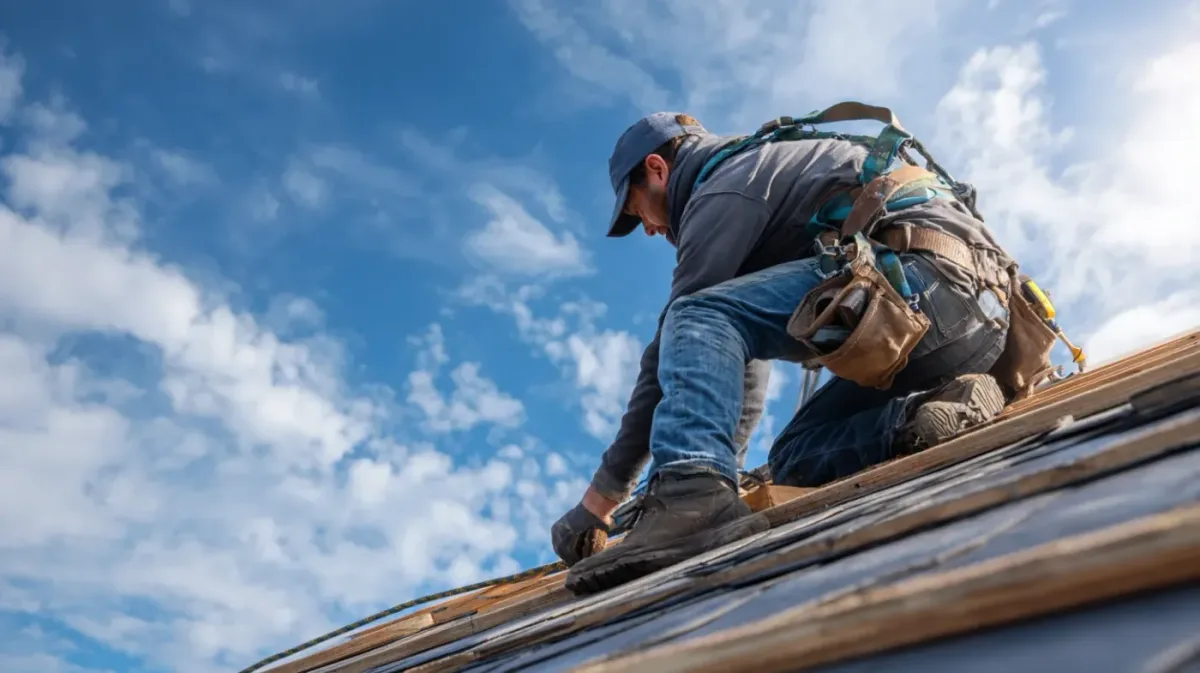

Roofing in Nevada is shaped by a peril most out-of-state programs get wrong: this is a heat-and-UV market, not a hail market. Nevada roofs endure extreme desert UV and heat plus summer monsoon microburst wind across southern Nevada, with cold-climate and snow exposure at higher northern elevations. The sun does the damage here — sustained ultraviolet exposure and desert heat break roofing materials down year-round — while summer monsoon microbursts add sudden wind rather than the frequent hail that drives re-roof cycles in the plains. Underwrite a Nevada roofer as if hail were the story and you miss the exposure entirely.
The second Nevada fact is regulatory and, unlike many states, clear-cut: roofing runs under a defined State Contractors Board classification. This page leads with the desert-peril profile because it is the most distinctive thing about insuring a Nevada roofer, then works through what actually drives the cost, the C-15 and C-15a licensing, the claims we see, and the major markets. The coverage lines themselves — general liability, workers compensation, commercial auto, contractors equipment, and umbrella — are covered in depth on their own pages; here the focus is how Nevada changes the emphasis.
Common Roofing Risks in Nevada
Nevada’s high-UV desert-and-monsoon climate is paired with a defined State Contractors Board roofing classification (C-15 and C-15a), placing it among the specific-license states. That UV-and-monsoon profile — heat aging in the south, freeze-thaw at northern elevation — is what sets the Nevada claim pattern apart, and it drives the exposures underwriters key on:
- Heat-degradation completed operations. Sustained desert UV and heat age asphalt, coatings, and low-slope membranes faster than a milder climate does, so a roof that fails prematurely in the sun and later leaks is the signature Nevada completed-operations claim — the exposure the general liability program is built around.
- Monsoon microburst wind. Summer monsoon downdrafts across southern Nevada produce sudden, localized wind uplift on roofs already stressed by heat — a wind exposure distinct from a hail-driven market.
- Falls from height. The workers-compensation exposure that defines this trade, worked on hot, high-UV roofs where crew supervision and staffing matter.
- Higher-elevation snow and freeze-thaw. Around Reno, Sparks, and Carson City the northern high desert adds cold-climate load and ice, a different detailing exposure under the same classification.
What Roofing Contractor Insurance Costs in Nevada
There is no single Nevada price, because premium is driven by your operation, not your ZIP code alone. The cost drivers that matter most here:
- Payroll and crew classifications. Roofing is among the highest-severity workers-compensation classes, and payroll is the base the exposure is rated on — which puts real weight on how your crews are classified and documented.
- The roofing you do. Steep-slope residential, low-slope hot-work commercial, and metal or tile each carry a different heat-degradation and fire profile, and each prices differently against the desert climate.
- Heat-driven completed-operations exposure. A UV-aged roof’s completed-operations tail is the exposure underwriters weigh most in Nevada, and how you document material selection and installation bears on it.
- Southern heat versus northern elevation. A Las Vegas residential re-roofer working pure desert heat looks different to an underwriter than a Reno operation contending with freeze-thaw and snow.
- Claims history and subcontractor use. Prior losses and how you handle the additional-insured status of the crews you sub to both move the number.
We price to the real operation rather than quoting a figure off the state name.
Nevada Roofing Regulations & Licensing
Nevada requires a State Contractors Board license for roofing — the C-15 Roofing and Siding classification or the narrower C-15a Roofing classification.
Because Nevada runs a real state classification rather than leaving roofing to local permitting, the C-15 or C-15a license is itself part of how a general contractor or owner qualifies you for a job — and the certificate of insurance sits right alongside it. A developer or building owner checks your classification and then leans on your general liability limits, completed-operations coverage, and additional-insured endorsements to decide whether to let you on the project. In a specific-license state the two credentials work together: the classification proves the trade, and the coverage proves you can stand behind the work.
Workers compensation in Nevada. Nevada is a private-market workers compensation state; coverage is written by private carriers. Because a fall from a roof is the defining injury of this trade, the workers compensation line carries real weight in a Nevada program — we place it with carriers that write the roofing class and read the falls exposure against how your crews work hot, high-UV roofs rather than treating it as a box to check.
Common Nevada Roofing Claims We See
Described qualitatively, with generic carrier language — every claim is handled by the carrier, never named here, and with no fabricated figures:
- The heat-aged leak. A roof degraded by years of desert UV and heat that fails prematurely and lets water into the building interior — a completed-operations claim the carrier answers under general liability.
- The monsoon-wind uplift. A summer microburst lifting roofing on a southern-Nevada job, producing third-party property damage the carrier answers under general liability.
- The falls-from-height injury. A crew member hurt in a fall on a hot roof, answered on the workers-compensation line the private market writes in Nevada.
Why Nevada Roofers Choose Roofing Guard Insurance
We write one class — roofing contractors — and we place coverage with carriers that actually want the work. In Nevada that focus shows up in the questions we ask before we quote: whether you hold the C-15 or C-15a classification and what work it covers; whether you pour your risk into steep-slope residential, low-slope hot-work, or metal and tile; how your work splits between the hot southern metros and the higher-elevation north; and whether your general liability carries the heat-degradation completed-operations and additional-insured terms a Nevada general contractor will demand. When a certificate request lands on your desk with requirements you do not recognize, that is a call we take.
Major Nevada Roofing Markets
Nevada is not one roofing market but several, each with its own peril and operating profile:
Las Vegas and the Strip
The state’s largest metro sits in the heart of the Mojave, where relentless UV and summer heat age asphalt and low-slope membrane roofs fast and monsoon microbursts drive sudden wind — concentrating heat-degradation completed-operations exposure across a dense stock of residential subdivisions and commercial and resort roofs.
Henderson
Rapid master-planned growth southeast of Las Vegas pushes new residential and commercial build-out at volume, so UV-driven material aging and new-construction completed-operations exposure land on the same crews working the same desert-heat conditions at once.
Reno and the higher-elevation north
Northern Nevada’s high-desert elevation flips the profile toward cold-climate and snow exposure alongside strong UV, so a Reno roofer contends with freeze-thaw and winter load rather than the pure heat problem of the south — a different weathering pattern under the same State Contractors Board license.
North Las Vegas
A fast-growing industrial and residential corridor adds low-slope warehouse and distribution roofs to the metro’s housing stock, concentrating hot-work fire exposure and heat-aged membrane completed-operations questions on commercial crews.
Sparks
Adjacent to Reno with heavy logistics and light-industrial build-out, Sparks carries the same higher-elevation freeze-thaw and UV mix on a growing base of large low-slope commercial roofs, raising the additional-insured and completed-operations stakes on contract work.
Carson City
The capital’s smaller high-desert market pairs strong UV with northern-Nevada cold and snow exposure, so a mixed residential-and-public-building roofer weighs both heat aging and winter load on the same operation under the C-15 or C-15a classification.
Related reading
Coverage for a Nevada roofing business works as a system. The lines that carry the most weight here are general liability (heat-degradation completed operations on UV-aged work) and workers compensation (the falls exposure on a height-driven trade), alongside commercial auto, contractors equipment, and umbrella liability when a contract demands higher limits. How the program is written also differs by the roofing you do across the three service pillars.
Coverage for Nevada roofers
- General Liability Insurance
- Workers Compensation Insurance
- Commercial Auto Insurance
- Contractors Equipment Insurance
- Umbrella Liability Insurance
The roofing you do
- Residential Roofing Insurance
- Commercial and Industrial Roofing Insurance
- Specialty, Metal, and Tile Roofing Insurance
Get covered
Nevada sources
Frequently asked questions about roofing insurance in Nevada
Do roofing contractors need a license in Nevada?
Yes. Nevada requires a State Contractors Board license to perform roofing — either the C-15 Roofing and Siding classification or the narrower C-15a Roofing classification. Unlike states that leave roofing to local permitting, Nevada runs a defined state classification, so the license itself is part of how a general contractor or owner qualifies you for a job. The certificate of insurance still matters — additional-insured and completed-operations terms are checked alongside the license — but in Nevada the C-15 or C-15a classification is a real state credential, not just a local registration.
Is Nevada a hail market?
No — and that distinction matters for how the program is built. Nevada’s roof peril is driven by extreme desert UV and heat that age roofing materials year-round, plus summer monsoon microburst wind across southern Nevada, rather than the frequent hail that defines the plains and parts of the South. At higher northern elevations around Reno and Carson City the profile adds cold-climate and snow exposure. The result is a claim pattern centered on heat degradation and wind uplift, so we build the general liability and completed-operations emphasis around UV aging rather than pricing Nevada as if it were a hail state.
How does desert UV and heat change a Nevada roofing insurance program?
Sustained UV and high heat break down asphalt shingles, coatings, and low-slope membranes faster than a milder climate does, which pushes the completed-operations question to the front: a roof that ages or fails prematurely in the desert sun and later leaks is the signature Nevada exposure. Summer monsoon microbursts add sudden wind uplift on top of that. We read the heat-degradation completed-operations tail and the monsoon-wind exposure as the core of a southern-Nevada program, and shift toward freeze-thaw and snow load for the higher-elevation northern markets.
Does a Nevada roofer have to carry workers compensation?
Yes. Nevada is a private-market workers-compensation state, and coverage is written by private carriers and required for employers. Because a fall from a roof is the defining injury of this trade, the workers-compensation line carries real weight in a Nevada program, and we place it with carriers that write the roofing class rather than treating it as a commodity. We read the falls-from-height exposure against how your crews are staffed and supervised on hot, high-UV roofs.
How much does roofing contractor insurance cost in Nevada?
There is no single price, because premium is driven by your specific operation. In Nevada the biggest factors are your payroll and crew classifications (roofing is a high-severity workers-compensation class), the roofing you do — steep-slope residential, low-slope hot-work commercial, or metal and tile — your heat-driven completed-operations profile, whether you work the hot southern metros or the higher-elevation north, and your claims history. A Las Vegas residential re-roofer, a North Las Vegas commercial membrane contractor, and a Reno mixed operation each look different to an underwriter. We price to the real operation rather than a generic guess.
Do you write roofing insurance across all of Nevada?
Yes. Roofing Guard Insurance places coverage for roofing contractors across Nevada — from the Las Vegas, Henderson, and North Las Vegas desert-heat corridor to the higher-elevation Reno, Sparks, and Carson City markets — and across the rest of the 48 states we serve. We write residential, commercial and industrial, and specialty metal and tile roofers holding the C-15 or C-15a classification, matched to how the operation actually runs in its part of the state.
Get a quote for your Nevada roofing business
Tell us where in Nevada you work, whether you hold the C-15 or C-15a classification, and the roofing you do — and we will market it to carriers that write the class.