
Roofing insurance by state
Roofing Contractor Insurance in Minnesota
Two things set a Minnesota roofing program apart before a policy is written: the state licenses residential roofers directly through the Department of Labor and Industry — a credential most states never issue — and a severe snow-load, ice-dam, and warm-season-hail climate that keeps the trade among the most claim-active in the country.
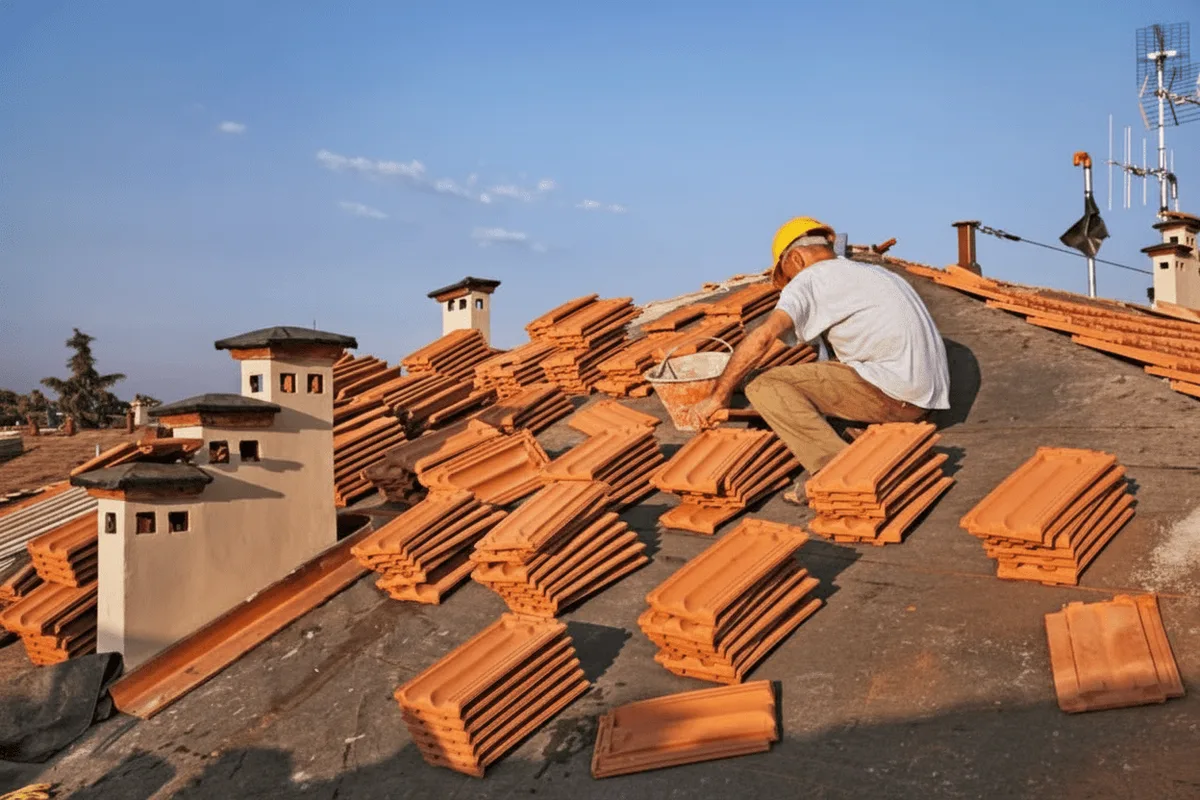

Roofing in Minnesota starts from something most states never give a roofer: an actual state license. Minnesota licenses residential roofers directly through the Department of Labor and Industry, a credential the majority of states leave to local rules or skip entirely. Pair that with a climate that runs the trade hard — heavy snow load and ice damming through a long, severe winter, then frequent hail and damaging wind in the warm season — and you have a licensed trade operating in one of the most roof-claim-active environments in the country. That combination is what a Minnesota roofing program has to answer for, and it is why a generic business policy sold on the state name alone tends to miss.
This page walks the Minnesota-specific realities a roofing program has to answer for: the licensing posture first, because it is genuinely different here, then what actually drives cost, the state’s snow-and-hail peril profile, the claims we see, and the major markets across the state. The coverage lines themselves — general liability, workers compensation, commercial auto, contractors equipment, and umbrella — are covered in depth on their own pages; here the focus is how Minnesota changes the emphasis.
Minnesota Roofing Regulations & Licensing
Minnesota licenses residential roofers statewide through the Department of Labor and Industry — roofing work requires a Residential Roofer, Residential Building Contractor, or Residential Remodeler license (with a qualifying-person exam); the smallest operations are exempt and roofing subcontractors register instead.
The practical effect for a roofing program is that in Minnesota a general contractor, developer, or building owner checks two things — the license and the certificate of insurance — and the second one carries real weight in the decision to let you on the job. When the state issues a credential, the coverage that sits behind it is read closely: your limits, your completed-operations terms, and your additional-insured endorsements are how you prove the license is backed by a business that can stand behind its work. That is why the general liability program and its additional-insured endorsements matter so much here, licensed trade or not.
What Roofing Contractor Insurance Costs in Minnesota
There is no single Minnesota price, because premium is driven by your operation, not your ZIP code alone. The cost drivers that matter most here:
- Payroll and crew classifications. Roofing is among the highest-severity workers compensation classes, and payroll is the base the exposure is rated on — a severity that climbs further when crews work snow- and ice-covered roofs through a Minnesota winter.
- Winter versus warm-season work. A contractor doing snow-load and ice-dam repair in January carries a different injury and completed-operations profile than a summer hail re-roofer, and underwriters weigh how much of each you do.
- The roofing you do. Steep-slope residential, low-slope hot-work commercial, and metal each carry a different completed-operations and fire profile, and each prices differently.
- Storm-season revenue swing. A hail-belt re-roofer’s volume spikes after a storm and pulls in temporary and subcontracted crews; that surge, and how you document and supervise it, is something underwriters weigh closely.
- Claims history and subcontractor use. Prior losses and how you handle the additional-insured status of the crews you sub to both move the number.
We price to the real operation rather than quoting a figure off the state name.
Common Roofing Risks in Minnesota
Minnesota roofs face heavy snow load and ice damming in a severe winter climate plus frequent warm-season hail and damaging convective wind. That two-season weather profile — winter snow load and ice dams, warm-season hail and wind — is what makes Minnesota a high-frequency roofing market, and it drives the exposures underwriters key on:
- Completed operations on winter and storm work. A roof or ice-dam repair that later lets meltwater or storm water into the building interior is the products-completed-operations claim this trade turns on — and the length of the Minnesota winter makes it a year-round exposure.
- Falls from height. The workers compensation exposure at the center of the trade — sharpened here because crews work at height on snow- and ice-covered surfaces.
- Hot-work and torch-down fire. Concentrated on the low-slope commercial and institutional membrane roofs of the Minneapolis, Rochester, and Bloomington markets.
- Hail and convective wind. Warm-season storms drive the residential re-roof surge and the completed-operations tail on shingle work installed fast.
Common Minnesota Roofing Claims We See
Described qualitatively, with generic carrier language — every claim is handled by the carrier, never named here, and with no fabricated figures:
- The ice-dam leak. A winter repair or a re-roof that later lets meltwater back up under the shingles and into the building interior, damaging finishes below — a completed-operations claim the carrier answers under general liability.
- The fall-from-height injury. A crew member hurt in a fall on a snow- or ice-covered roof — the workers compensation claim the trade’s severity turns on, placed with a private carrier in this state.
- The commercial hot-work fire. A torch-down operation on a low-slope membrane roof that ignites, damaging the building and its contents — third-party property damage answered under general liability.
Why Minnesota Roofers Choose Roofing Guard Insurance
We write one class — roofing contractors — and we place coverage with carriers that actually want the work. In Minnesota that focus shows up in the questions we ask before we quote: whether you hold the Residential Roofer, Residential Building Contractor, or Residential Remodeler license or register as a subcontractor; how much of your year is winter snow-load and ice-dam repair versus warm-season hail re-roofing; whether your work runs to steep-slope residential, low-slope hot-work, or metal; and whether your commercial auto and general liability carry the terms a Minnesota general contractor will demand alongside the license the state does issue. When a certificate request lands on your desk mid-storm-season with requirements you do not recognize, that is a call we take.
Major Minnesota Roofing Markets
Minnesota is not one roofing market but several, each with its own peril and operating profile:
Minneapolis
The state’s largest metro carries a dense mix of steep-slope residential and downtown low-slope commercial stock, so warm-season hail re-roof surges and winter snow-load on flat membrane roofs land on the same market — concentrating completed-operations and hot-work fire exposure in one place.
St. Paul
The capital’s older housing stock and historic districts run heavy to steep-slope work with ice-dam-prone eaves, which drives freeze-thaw repair volume and permit-heavy jobs where a licensed contractor’s certificate of insurance is checked closely.
Rochester
A medical-corridor economy pushes institutional and commercial campus build-out, putting more low-slope hot-work roofing and high-value installations on local crews — a completed-operations profile that looks different from a purely residential market.
Duluth
The Lake Superior shore takes heavy lake-effect snow load and repeated freeze-thaw on steep terrain, so the structural snow-load and ice-dam exposure dominates the risk here rather than hail.
Bloomington
A large-format retail and commercial corridor means expansive low-slope membrane roofs, where torch-down and hot-work fire exposure and hail damage to single-ply membrane are the underwriting questions that matter most.
St. Cloud
The central-Minnesota growth corridor mixes residential re-roof demand with agricultural and commercial metal roofing, so hail and convective wind on metal installations, and the precision that metal work demands, shape the exposure.
Related reading
Coverage for a Minnesota roofing business works as a system. The lines that carry the most weight here are general liability (completed operations on winter and storm work) and workers compensation (the falls exposure on a snow-and-ice trade), alongside commercial auto, contractors equipment, and umbrella liability when a contract demands higher limits. How the program is written also differs by the roofing you do across the three service pillars.
Coverage for Minnesota roofers
- General Liability Insurance
- Workers Compensation Insurance
- Commercial Auto Insurance
- Contractors Equipment Insurance
- Umbrella Liability Insurance
The roofing you do
- Residential Roofing Insurance
- Commercial and Industrial Roofing Insurance
- Specialty, Metal, and Tile Roofing Insurance
Get covered
Minnesota sources
Frequently asked questions about roofing insurance in Minnesota
Do roofing contractors need a license in Minnesota?
Yes — Minnesota is one of the few states that licenses residential roofers directly. The Department of Labor and Industry requires a Residential Roofer, Residential Building Contractor, or Residential Remodeler license to perform residential roofing work, and the license involves a qualifying-person exam. The smallest operations are exempt, and roofing subcontractors register rather than hold the full license. Because Minnesota actually issues a roofing credential, a building owner or general contractor here checks both the license and the certificate of insurance — which makes your coverage part of how you prove you belong on the job.
Does a Minnesota roofer have to carry workers compensation?
Minnesota is a private-market workers compensation state, so coverage is written by private carriers rather than a state fund, and it is generally required once you have employees. Roofing is among the highest-severity workers compensation classes because a fall from a roof is the signature injury of the trade, and that severity is amplified in Minnesota by winter work on snow- and ice-covered roofs. We place comp with carriers that write the roofing class and read your crew classifications and payroll against the exposure rather than treating it as a form to file.
How do snow load and ice dams affect a Minnesota roofing insurance program?
Minnesota roofs face heavy snow load and ice damming in a severe winter climate, which shapes the completed-operations exposure the general liability program has to answer for. A roof or an ice-dam repair that later lets meltwater into the building interior is the products-completed-operations claim this trade turns on, and the length and severity of the Minnesota winter makes it a year-round consideration rather than a seasonal one. It is the operational reality we build the program around.
Does hail matter for a Minnesota roofer if the winters are the bigger story?
Yes. Alongside its severe winters, Minnesota sees frequent warm-season hail and damaging convective wind, and hail is a primary engine of the residential re-roof business. For an insurance program that means storm-season surge periods, temporary and subcontracted crews coming on fast, and a completed-operations tail on work installed in a hurry — the same exposures underwriters watch in any hail-active state, layered on top of the winter perils that never leave.
How much does roofing contractor insurance cost in Minnesota?
There is no single price, because premium is driven by your specific operation. In Minnesota the biggest factors are your payroll and crew classifications (roofing is a high-severity workers compensation class, and winter work adds to the severity), the mix of steep-slope residential, low-slope hot-work commercial, and metal work you do, your storm-season revenue swing and use of temporary crews, and your claims history. A Duluth snow-load repair specialist, a Twin Cities hail re-roofer, and a Rochester commercial contractor each look very different to an underwriter. We price to the real operation rather than a generic guess.
Do you write roofing insurance across all of Minnesota?
Yes. Roofing Guard Insurance places coverage for roofing contractors across Minnesota — from the Minneapolis and St. Paul metro and Rochester to Duluth, Bloomington, and St. Cloud — and across the rest of the 48 states we serve. We write residential, commercial, and specialty metal roofers, matched to how the operation actually runs in its part of the state.
Get a quote for your Minnesota roofing business
Tell us where in Minnesota you work, whether you hold the state roofer license or register as a subcontractor, and the roofing you do — and we will market it to carriers that write the class.