
In Alabama a roofing contractor is licensed by the size of the job, not by the trade itself, and is exposed to weather from two directions at once. There is no standalone state roofing license here; roofing rides on the general-contractor board for larger commercial work and the home-builder board for residential, sorted by project value. Overhead, the state runs two wind regimes — an inland tornado-and-hail corridor and a Gulf-coast hurricane front. There is no published price for roofing contractor insurance in Alabama, because a carrier builds the number from that reality: your crew, your finished roofs, and which wind is testing them.
That frustrates owners chasing a single figure, but the Alabama drivers are specific enough that understanding them beats any average. A Huntsville hail crew and a Mobile Gulf-wind operation share a trade name and little else, and a carrier prices them from separate pictures. Below is what moves the number, starting with the licensing route that tells a carrier what kind of roofs you build.
Licensed by what you build: Alabama’s two-board route
Alabama frames roofing licensure around project value rather than the roofing trade as such, and how your work sorts across two boards tells a carrier something before it ever sees a loss run. Larger commercial and industrial work is licensed through the Alabama Licensing Board for General Contractors; residential work runs through the Home Builders Licensure Board. Which board — or both — your projects answer to is a shorthand for the roofs you build and the exposures trailing them. A residential-only shop and a general-contractor-licensed commercial operation carry different completed-work pictures, and the board split frames which one a carrier is pricing. The route does not set your price; it tells the underwriter which story to read. The Alabama roofing contractor insurance page lays out the full market and regulatory picture behind it.
Two wind regimes on one map: tornado inland, hurricane on the coast
Alabama’s weather is really two loss stories sharing a border. Inland — Birmingham, Montgomery, Huntsville, Tuscaloosa — sits in the Dixie Alley severe-storm corridor, where tornado and hail strike hard and often. The Gulf coast around Mobile faces a different threat: tropical-storm and hurricane wind, plus the slow corrosion of salt air on finished roofs. For a roofing contractor each regime shapes cost twice over. It drives demand, so revenue can surge after a spring outbreak inland or a late-summer landfall on the coast and then settle, and a carrier reads the revenue behind that spike. And it clusters losses into seasons, so your claims history — how your crews and your roofs performed when the work poured in — is a driver weighed closely. A clean record through a violent tornado spring or a hard hurricane season is worth more here than a quiet stretch anywhere calmer. The market itself is overseen by the Alabama Department of Insurance.
Real-World Scenario: A Tuscaloosa crew works a violent spring of tornado and hail, payroll and trucks swelling to re-roof torn-up neighborhoods, while a Mobile contractor grinds through hurricane season against wind uplift and salt. Both leave finished roofs that must hold for years, yet an underwriter reads them apart — the inland crew on hail frequency, fall risk across many pitched roofs, and sudden demand spikes; the coastal contractor on uplift resistance and a salt-worn completed-work tail. Same state, same class, two different quotes. The owner who can describe which story is theirs gets the sharper one.
Why payroll sets the pace
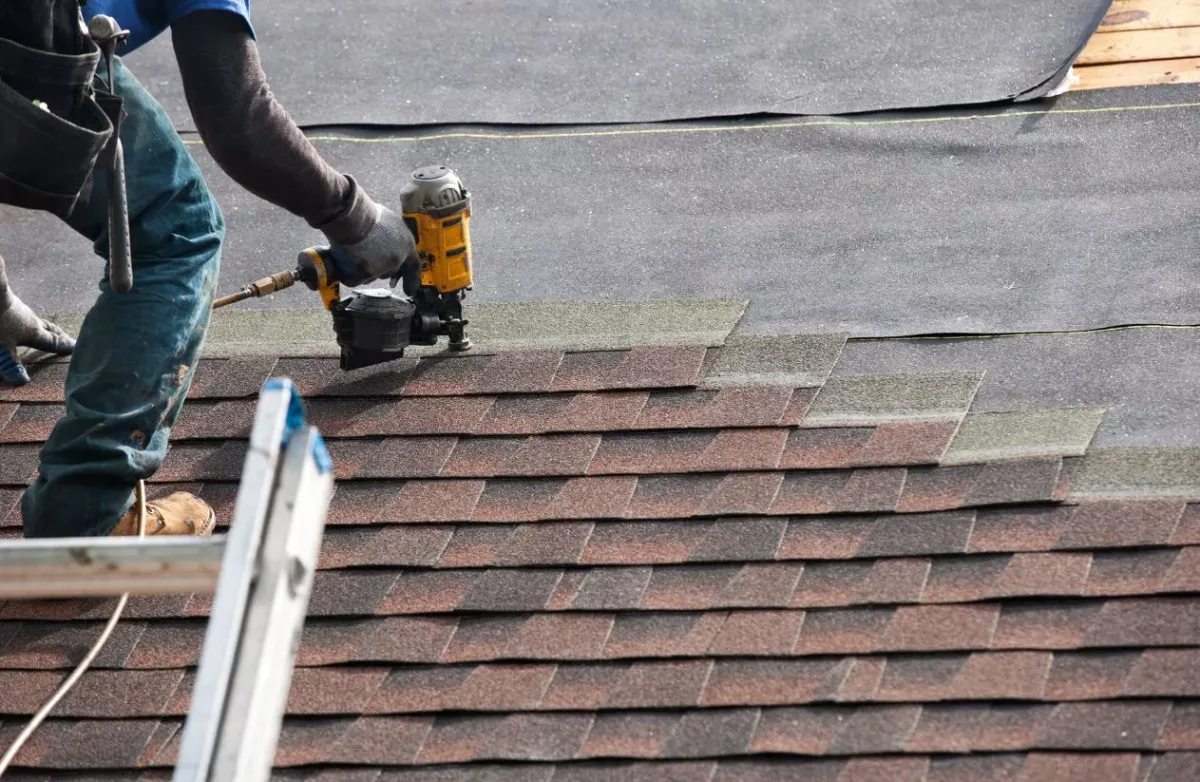
Payroll usually paces a roofing contractor’s whole cost, because a single figure feeds two of the largest lines. It is the rating basis for workers compensation and a heavy input into general liability. Yet the raw dollar amount is only part of the read — the deciding detail is which work that payroll pays for. Roofing ranks among the highest-severity comp classes of any trade, and the reason is plain: the crew works at height, and a fall is the severe injury the line was written for. That is why the Occupational Safety and Health Administration makes fall protection the centerpiece of roofing safety, and why a carrier weighs your crew’s discipline alongside its size. Alabama writes comp through the private market — no state fund — and it is mandatory for most employers; on a crew that spends its day on a pitch, it is exactly the protection the line exists to provide. Squaring that requirement against the contracts your general contractors actually sign is part of pricing this driver right. And when a spring outbreak or a Gulf landfall pushes re-roof demand up, a shop scales its crew fast — that surge is precisely when a carrier watches the injury profile hardest, because a payroll that doubled overnight with green hands on steep pitches reads differently from one that grew slowly under trained supervision. Documenting who is on the roof, and the training behind them, is how a growing Alabama roofer keeps this driver from running away.
What you leave on the rafters: the completed-operations tail
Revenue rates your general liability, but the exposure that defines a roofing contractor is completed operations — the work left behind. A roof keeps standing after the crew clears out, and one that leaks or fails downstream can become a serious third-party property or injury claim long after closing. In Alabama that finished roof is tested hard and from two sides: tornado and hail inland, hurricane uplift and salt on the coast. So the completed-operations side of general liability is the signature line built to answer for it, and because a storm-battered roof carries a long tail, your revenue and your workmanship-and-inspection record are inputs a carrier studies closely. This is the roofing contractor’s defining cost driver — the thing that separates installed roofing from trades that walk away with nothing left on site to fail. The two-wind reality stretches that tail in different directions: an inland roof answers for how its fasteners and flashing held through repeated hail and tornado-force gusts, while a coastal roof answers for uplift resistance and how its edges and seams weathered salt over years. A carrier reading your completed-operations exposure wants to know which of those tests your finished work most often faces.
Steep-slope, low-slope, and the hot-work window
The kind of roofing you run moves the number as much as the volume. A residential steep-slope crew carries a fall-and-completed-operations profile driven by pitched shingle work and storm re-roof demand. A commercial and industrial low-slope operation opens a different exposure: torch-down and hot-work application creates a real fire window during the job, and larger contracts pull in additional-insured and higher-limit terms. A specialty metal and tile installer runs high material values and precision-install risk — and on the Gulf coast, how metal systems stand up to salt is a conversation of its own. One trade, three genuinely different cost pictures, which is why a carrier wants your work mix named before it prices. In Alabama the storm cycle tilts many residential shops toward high-volume steep-slope re-roofing, while commercial low-slope crews with a torch-down book carry the added fire exposure year-round; where your revenue actually falls across that spread is a detail a carrier would rather have than assume.
Rolling stock, gear, and the limits your contracts demand
Beyond the crew and the finished roof, a carrier prices what you drive, what you own, and what you choose to buy. Commercial auto covers the trucks and trailers moving crews, tear-off debris, and materials, and it grows with your rolling stock. Contractors’ equipment — an inland-marine line — covers tools, fall-protection rigging, metal-forming gear, and the materials you stage on site and in transit. Then the limits your general contractors and developers require push you toward an umbrella, because a single completed-operations failure or a hot-work fire can run well past a primary limit. On the coast, salt shortens the life of tools and rigging as surely as it does a metal roof, so the equipment schedule a Mobile operation carries tends to turn over faster than an inland one — one more reason to value the gear honestly rather than let a stale schedule drift below what replacement would actually cost. None of these reward under-buying on autopilot; they reward buying deliberately. The coverage overview shows how each line locks into the next.
Getting an honest Alabama quote
A real number starts with a real operation described plainly. Tell a broker your crew payroll and the work it buys, your revenue and the roofs you leave behind, your mix across steep-slope, low-slope, and specialty, whether you ride the inland corridor or the Gulf coast, your trucks and equipment values, your claims record, the board your license answers to, and the limits your contracts set. From there a carrier with genuine roofing appetite can price it, and you can weigh like against like instead of chasing a headline rate. When you are ready, start a quote and tell us how your crews work, or read the Alabama roofing contractor insurance page for the market and regulatory picture behind these drivers. The number at the end will reflect your business, which is the only number worth carrying.